By BK, Athletic Hitting Development
Complete Hitters Aren’t Born. They’re Built… and Earned.
Key takeaways
- Robbie Word went from a lightly used JUCO backup to an All-Tournament infielder at the 1987 JUCO World Series, then played for Miami from 1988 to 1990.
- His edge was irrational confidence: belief that didn’t wait for the scoreboard to agree.
- Your current performance is information, not your identity. The player you are today is not the player you have to be tomorrow.
- Confidence doesn’t replace development. It makes development possible. Confidence without work is a wish.
Some players teach you how to hit. Some teach you how to compete. And every once in a while, somebody comes along who teaches you something about life you never forget. For me, one of those guys was Robbie BLEEPING Word.
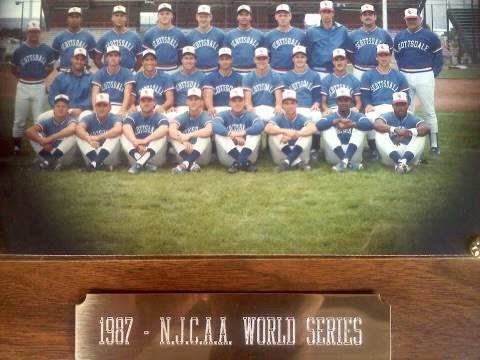
Robbie Word went from a seldom-used Scottsdale CC backup to an All-Tournament infielder at the 1987 NJCAA World Series and a Miami Hurricane. His story shows hitters that confidence built before results, combined with real development, can change a career.
Train it: Mental Approach →This is the next chapter of my series on the 1987 Scottsdale Community College Artichokes, the ’87 Chokes. In the opener I promised you a Texan who came to Arizona and eventually became a Cane in Miami. Here he is.
Believe me, this one is worth telling.
1. The backup shortstop nobody was worried about
Go back to Scottsdale Community College in the mid-1980s. The Fighting Artichokes. Great baseball program, great characters, some incredibly talented players.
And then there was Robbie Word.
Robbie was an older junior college infielder playing behind Lou Frazier, who went in the first round of the 1986 draft and later reached the big leagues. Being Lou Frazier’s backup at the JUCO level was kind of like being Tom Brady’s backup quarterback. Not a lot of pressure. Not a lot of playing time. A pretty good seat to watch the show.
In the interest of complete transparency, I don’t have Robbie’s exact numbers from that first season in front of me. My memory says something like 1-for-15 with a boatload of strikeouts. He didn’t play much. When he did, he didn’t exactly light the world on fire. Nobody was confusing him with Ozzie Smith.
But here’s the thing. Robbie didn’t seem to care what the rest of us thought. In Robbie’s mind, he was ROBBIE BLEEPING WORD.
2. The Texas drawl, the bowlegs and the blonde rattail
You had to see this guy to appreciate him. Blonde hair. Athletically bowlegged. A six-inch blonde rattail hanging out the back of his ball cap. An interesting-looking baseball player, to say the least.
Then he’d open his mouth, and out came that unmistakable Texas drawl. Suddenly everything made sense. 🤣
Great dude. Good athlete. Decent baseball player. Kind of. But Robbie had one trait I didn’t fully appreciate at the time, one I’ve spent decades trying to teach young athletes.
Robbie Word possessed IRRATIONAL CONFIDENCE.
Not the kind that comes from going 4-for-4. Not the kind you borrow from a coach telling you how good you are. Confidence that seemed completely disconnected from the available evidence.
He could strike out three times, go home, wake up the next morning and still believe he was the best shortstop on the planet. And I watched that belief survive for roughly 300 straight days.
3. Then came 1987
Fast-forward a season. Lou Frazier was gone, and Robbie Word was our shortstop. Most of us weren’t expecting greatness. We were hoping for a serviceable JUCO infielder who would compete his tail off, make the routine plays and give us something at the plate.
Robbie apparently hadn’t gotten the memo. That bowlegged, blonde-haired, Texas-talking strikeout machine turned into the JUCO version of Cal Ripken Jr. It was one of the most remarkable individual transformations I’ve ever seen in baseball.
Here are his numbers as I remember them. I’m still working to confirm the exact 1987 statistics:
- Around 65 games, including our postseason run.
- A batting average over .400.
- More than 10 home runs.
- Nearly 100 hits, batting second behind Kevin Long.
- Somewhere around 100 runs scored.
- And approximately FIVE errors at shortstop.
FIVE. Let that sink in. The guy I remembered fielding ground balls deep between his legs was suddenly playing nearly flawless defense while absolutely raking. He wasn’t filling a hole. He was a massive reason the ’87 Chokes were such an outstanding team.
And here’s the part that isn’t my memory talking. Robert Word of Scottsdale was named an infielder on the official 1987 NJCAA World Series All-Tournament Team. That’s in the record books.
THE ’87 CHOKES
BACKUP TOALL-TOURNAMENT.
- Lou Frazier’s backup at Scottsdale
- 1987 shortstop, batting 2nd
- JUCO World Series All-Tournament
- Miami Hurricane, 1988–1990
BELIEF FIRST. PROOF LATER.
4. From the Artichokes to the Miami Hurricanes
By the time we got to the 1987 Junior College World Series in Grand Junction, Colorado, the big Division I programs were interested. Scholarship offers were coming. And Robbie ended up at the University of Miami.
For younger readers: late-’80s Miami under legendary coach Ron Fraser was what a premier SEC program is today. The Hurricanes had won national titles in 1982 and 1985, and the roster was loaded with prospects and expectations.
Miami’s records list Rob Word as a Hurricane from 1988 through 1990. Those clubs went 52-14-1, 49-18 and 52-13. That’s 153 wins in three seasons, with trips to the College World Series in 1988 and 1989 and the NCAA Tournament in 1990.
I haven’t verified Robbie’s individual Miami statistics, so I’m not going to manufacture numbers to make the story sound better. I don’t need to. The kid who couldn’t get on the field at Scottsdale earned his way into one of the most prestigious baseball environments in the country.
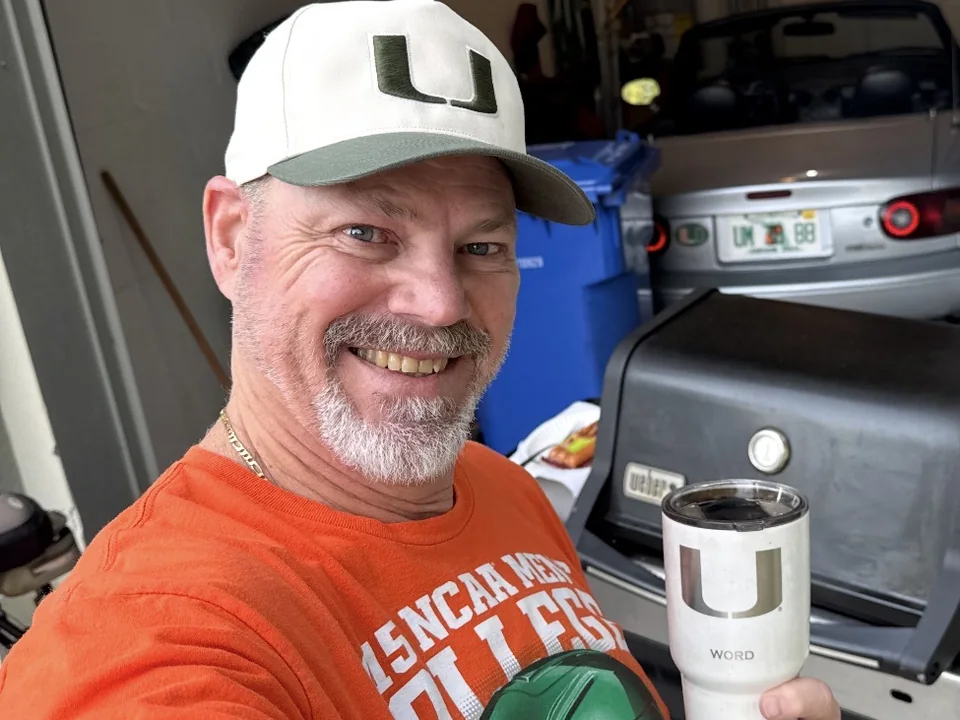
Years later he was still a Cane. In a 2004 message Miami Athletics published during the team’s postseason run, he told the players, “Go out and make us alumni proud.” That’s the Robbie Word I remember. Still confident. Still full of personality. Still believing.
5. What the Robbie Word story teaches hitters, coaches and parents
I’ve coached outstanding players, struggling players, pros, college players and kids just trying to figure the game out. I keep coming back to Robbie, because his story holds some of the most important lessons a hitter, coach or parent can learn.
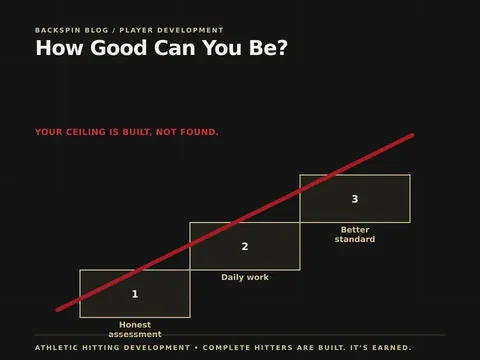
Lesson 1: Your view of yourself is the most important view. Coaches, scouts, teammates and parents all have opinions. Statistics provide information. None of them gets to permanently decide who you’re capable of becoming. You can be hitting .180 today and still believe you’re becoming a .350 hitter.
Your current performance is information. It is not your identity.
Lesson 2: Irrational confidence is a beautiful thing. Too many players wait for three hits, a homer or a good BP before they let themselves feel confident. Then the next strikeout takes it away. That’s fragile confidence. Robbie believed when the numbers gave him almost no reason to, so when the performance finally showed up, his belief was already there waiting for it.
Lesson 3: The player you are today is not the player you have to be tomorrow. Same guy, same blonde hair, same bowlegs, same drawl, and an entirely different level of play. Your swing can improve. Your strength, your pitch recognition, your defense and your understanding of the game can all improve. Never mistake your present ability for your permanent ceiling.
Lesson 4: Don’t let someone else’s expectations become your limitations. Nobody expected Robbie to become Cal Ripken Jr. Certainly not me. Too small, too slow, not a varsity player, not a D-I player: those assessments may describe where you are now, not where you can go. Coaches need to be careful about placing ceilings on developing athletes, and athletes need to be careful about accepting them. Listen to coaching. Accept honest evaluation. But never confuse someone’s prediction with your destiny.
Lesson 5: Confidence doesn’t replace development. It makes development possible. I’m not saying kids can believe their way into being great. The swing matters. Strength and explosiveness matter. Pitch recognition and decision-making matter. But confidence changes how an athlete attacks all of it: more willing to compete, to attack a pitch, to recover after failure and to keep working when results aren’t immediate. That’s why the Mental Approach is one of the 4 Pillars of a Complete Hitter.
Confidence without work is a wish. Confidence combined with development is powerful.
Lesson 6: Your last at-bat has nothing to do with your next at-bat. Struck out looking? That at-bat is gone. Booted a ground ball? That play is over. 0-for-4? Tomorrow is another opportunity. You don’t pretend the strikeout never happened. You just don’t drag it into the box with you. Learn from the last pitch. Compete on the next one.
Lesson 7: Sometimes the most important development happens between the ears. We spend a lot of time on bat path, sequence, contact position, Mechanically Advantaged Angles (MAA), strength and bat speed, and we should. But the kid stepping into the box must believe he or she belongs there, be willing to fail and trust the work. The goal isn’t a hitter who thinks every swing is a homer. It’s a hitter who believes he can compete, adjust and succeed no matter what happened last time up.

THELESSON.
- Believe before you have proof
- Performance is info, not identity
- Confidence plus work is power
- Next pitch, not last pitch
Complete Hitters Are Built…Earned.
6. One last thing about Robbie Word
Almost 40 years later, I’ve forgotten plenty of ballgames, scores and statistics, some of them from players with more natural gifts than Robbie. I’ve never forgotten Robbie. The blonde rattail. The bowlegs. The drawl. The confidence that made absolutely no sense, and a transformation that made me rethink what’s possible for a developing player.
Somewhere right now there’s a 15-year-old hitting .160. A JUCO freshman buried on the depth chart. A softball player who thinks she isn’t good enough. A kid who just got cut. Maybe that athlete needs to hear about a bowlegged kid from Texas who couldn’t buy a hit one year and was one of the best shortstops in junior college baseball the next.
- Believe in yourself before you have proof.
- Work to become the player you believe you can be. Start by finding your first priority with SwingChecker.
- Never let today’s failures define tomorrow’s possibilities.
And every once in a while, allow yourself a little irrational confidence. You might surprise a few people. You might even surprise yourself.
BE ROBBIE BLEEPING WORD.
Want to go deeper? Read The 1987 Scottsdale Artichokes: What a Year. What a Team. and Kevin Long: Not Just a Great Hitting Coach. A Winner..
Quick answers
Who is Robbie Word?
Robbie (Rob) Word was the shortstop on the 1987 Scottsdale Community College Artichokes, an All-Tournament infielder at the 1987 NJCAA World Series, and a University of Miami Hurricane from 1988 to 1990.
What is irrational confidence in baseball?
It is belief in yourself that does not depend on your last at-bat or your current numbers. It is most powerful when it is paired with real work on the swing, the body, the eyes and the mental game.
Can a backup player become a starter in one season?
Yes. A player’s current level is not a permanent ceiling. With honest evaluation, focused development and belief that survives failure, a backup can become the player a team counts on the next year.
How do I help my hitter stay confident in a slump?
Separate performance from identity, judge at-bats by the plan and the quality of contact instead of hits, give them a simple reset routine between pitches, and keep them working on one clear priority.
Sources: 1987 NJCAA Baseball World Series All-Tournament Team (BR Bullpen) · JUCO World Series Grand Junction: 1987 All-Tournament Team · SABR: Lou Frazier biography · Miami Hurricanes year-by-year records · Miami Hurricanes baseball alumni listing (Rob Word, 1988–1990) · Rob Word’s 2004 message to Miami baseball
Don’t collect drills. Build a complete hitter.
Complete Hitters Aren’t Born. They’re Built… and Earned.