By BK, Athletic Hitting Development
Complete Hitters Aren’t Born. They’re Built… and Earned.
Key takeaways
- There is an emotional swing on every swing — elation, indifference or misery — and caring that much is a good sign.
- A hitter who goes 90-for-120 in a workout and remembers only the 30 bad ones is letting the 25% steer the 75%.
- Don’t be happy with bad swings and don’t accept them — tolerate them: notice, learn, move on.
- The conqueror mindset is trainable: count your wins, name one fix, grade by percentage, reset every swing.
Great hitters remember their good swings. A hitter who takes 120 swings, executes 90 at a high level and walks out talking only about the other 30 isn’t being tough — he’s letting the 25% steer the whole development process.
A conqueror mindset in hitting means judging a workout by the whole picture, not the last few swings. If 90 of 120 swings were good, the hitter remembers the 90, tolerates the 30, and names one fix for next time.
Train it: Mental Approach →Hitting a ball with a bat is just plain FUN. Put up a reachable fence and you’ll have nuns fighting over who gets the next swing. That’s the magic of this game.
For some of us, fun turns into competition, and competition turns into obsession. That’s when the rollercoaster starts.
1. Why does every swing feel so emotional?
Every hitter wants results — from the game at-bats all the way down to the first warmup cut. So every swing comes with a ride:
- Elation when it’s barreled.
- Indifference when it’s just “okay.”
- Anger and misery when it doesn’t turn out the way you wanted.
There is an emotional swing on EVERY swing.
That rollercoaster is real, and it’s actually a good sign. It means being a good hitter matters to you.
The problem is the bottom of the ride. When the negative emotion takes the wheel, it starts steering your development — and it steers it the wrong way.
2. What does a “bad” workout really look like?
Picture a hitter in a solid development session. Drills built to clean up one specific inefficiency, followed by competitive, game-speed rounds. Here’s the 10,000-foot view:
| The workout | Swings |
|---|---|
| Total swings | 120 |
| Executed at a high level | 90 (75%) |
| Not up to standard — mostly at the end | 30 (25%) |
| How the hitter felt walking out | 👎 |
Negative talk about the workout. Worse, negative talk about who they are as a hitter.
75% of that workout was GOOD. The hitter remembered the 25%.
Caring that much is a good sign. Dwelling on it is a bad plan.
THE 10,000-FOOT VIEW
120 SWINGS.90 GOOD.
- 90 executed at a high level
- 30 not up to standard
- 75% good, 25% not
- Hitter remembers… the 25%
A GOOD SIGN. A BAD PLAN.
3. Should a hitter be okay with bad swings?
No. I don’t want hitters happy with bad swings. I don’t want them accepting bad swings either.
I want them to tolerate them. Notice it. Learn from it. Move on to the next one.
The champion, conqueror mindset looks at that exact same workout and says: “I was dang good for most of that session.”
That isn’t fluff. Positivity, when you’re trying to become a good hitter, is ENORMOUSLY important. You’re getting better physically and mentally at the same time — good reps build confidence, and confidence builds better hitters. Negativity just wastes the work you already put in.
4. What if the numbers were flipped?
Heck, flip those numbers around — 30 good, 90 bad — and I know hitters who would still walk out of the cage like the best in the building.
Irrational confidence? Sure. They’re also in the top 1%. I wrote a whole post on it: the #1 trait of elite hitters is irrational confidence.
The hitters who last don’t have perfect workouts. They have the Mechanically Advantaged Angles (MAA) we build at AHD, and they have a mind that keeps the misses in proportion. Both are built. Neither is luck.
And keep this in perspective: hitting is very, VERY difficult. Here’s how I grade a game:
- Right on ONE pitch in a game? You’re a useful player.
- Right TWICE in a game? You’re probably the game MVP.
- Right THREE times? I’ll see ya on TV hitting!
One pitch. That’s the bar for a useful player.
5. How do you train the conqueror mindset?
The mental approach is one of the 4 Pillars of a Complete Hitter, right next to the swing, strength & explosiveness and the Hitting Processor. It gets trained like the others. Here’s what we do at AHD so the 25% can’t steal the 75%:
- Count the wins out loudBefore you leave the cage, name 3 specific things you did well — “stayed connected,” “on time with the fastball,” “drove the outside pitch.”
- Name ONE fix, not tenPick the single thing to clean up next session, write it down and let the rest go.
- Grade by percentage, not the last swing90 of 120 is a great day. Know your number before you judge the workout.
- Grade your missesWere they “good misses,” the way your coach explained them? A hard ground ball the other way isn’t sexy — but it can mean a LOT of good things are happening.
- Reset between swingsA breath, a tap of the bat, a look at a focal point. The last swing is over — own the next one.
- Watch your words“I’m terrible” becomes “That round wasn’t my standard. Here’s the adjustment.” Same honesty, different direction.

THELESSON.
- Count 3 wins out loud
- Name ONE fix
- Grade by percentage
- Reset every swing
Complete Hitters Are Built…Earned.
Great hitters aren’t the ones who never miss. They’re the ones who keep the misses in proportion. Remember your good. Fix your one thing. Come back hungry. If you’re not sure which pillar is holding your hitter back, run SwingChecker™ free — and when you’re ready to train the mind like a skill, start the Mental Approach course.
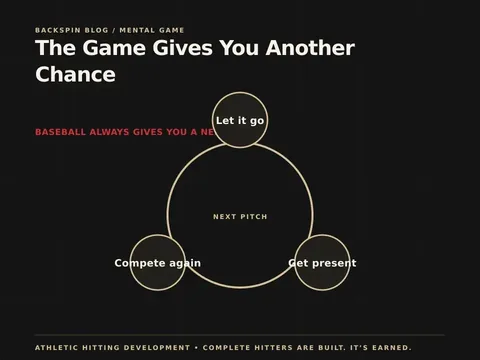
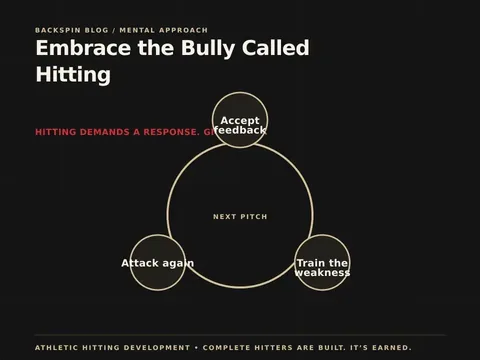
Want to go deeper? Read The #1 Common Trait of Elite Hitters and The Game Gives You Another Chance.
Quick answers
How do I help my kid stay positive after a bad hitting practice?
Ask them to name three things they did well before talking about anything else, then pick one thing to fix next time. Most practices are far better than the last few swings make them feel.
Is it bad for a hitter to get frustrated?
Frustration means they care, which is a good sign. It only becomes a problem when it takes over and steers the workout, the next at-bat or how they see themselves as a hitter.
What is a winner or conqueror mindset in hitting?
It is a hitter who judges a workout by the whole picture, focuses on what went well, tolerates the misses without accepting them, and attacks the next swing.
Can the mental game of hitting be trained?
Yes. Routines, self-talk, resets between pitches and how a hitter grades a workout are all trainable, just like the swing.
Don’t collect drills. Build a complete hitter.
Complete Hitters Aren’t Born. They’re Built… and Earned.