
By BK, Athletic Hitting Development
Complete Hitters Aren’t Born. They’re Built… and Earned.
Key takeaways
- In a 2026 study, med ball side throws raised bat speed only for players who started slower and less powerful.
- The already-fast, strong players didn’t gain. The right dose depends on the athlete.
- Find the gap before you add a drill: power, lower-half organization, timing or decisions.
- Baseline, train, retest. If the throw improves and the swing doesn’t, the transfer needs coaching.
Medicine ball throws can increase bat speed, mostly for hitters who start with lower bat speed and less rotational power. In a 2026 study of college players, the slower, weaker hitters gained and the already-fast hitters didn’t.
They can, mostly for hitters who start with lower bat speed and less rotational power. In a 2026 study, 11 college players did 3 kg side throws twice a week for 7 weeks; the slower hitters gained and the already-fast hitters didn’t.
Train it: Athletic Development → Free tool: Exit Velocity & Bat Speed Calculator →Walk into any training facility in America and somebody is slamming a medicine ball into a wall. Good. Rotational throws teach athletes to organize force, move with intent and connect the lower half, the core and the upper body.
But the medicine ball isn’t magic. It won’t fix a hitter who can’t recognize spin. It won’t clean up a bad bat path. And throwing a heavy ball hard doesn’t make anybody game-ready.
1. What did the 2026 medicine ball study find?
A case study published in October in the Research Journal of Sports Performance put 11 college baseball players through seven weeks of side throws with a 3 kg (about 6.6 lb) medicine ball, twice a week.
Bat speed went up for the players who started slower, roughly 72 to 76 mph, and who threw the ball shorter distances to begin with. The players who were already fast and strong didn’t gain.
Now, be careful. Eleven players. No control group. And it measured swing speed, not hits in games. It does NOT mean every hitter should grab a 3 kg ball and copy the plan.
THE 2026 STUDY
WHOGAINED?
- 11 college baseball players
- 7 weeks, twice a week
- 3 kg side throws
- Slower hitters gained, fast didn’t
THE DOSE DEPENDS ON THE ATHLETE
2. Should every hitter do med ball work for bat speed?
No. Before you add any power drill, find exactly what’s missing. Is the athlete underpowered for his or her size? Is the lower half disorganized? Does the hitter have plenty of power but lose it because the processor is late? Is the swing already fast and the real problem is decisions?
At AHD, Athletic Development is one of four pillars, along with The Swing, The Hitting Processor and Mental Approach. A big pillar, but a hitter needs all four. Hitters with real bat speed get into mechanically advantageous angles (MAA) and deliver the power on time.
“Hitters who take shortcuts, get cut short…” A med ball can’t skip the work of building a complete hitter.
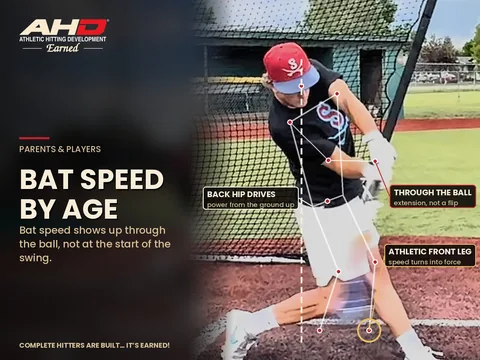
Want to know where your hitter stands? Good Bat Speed by Age has the chart.
3. How should hitters use rotational med ball throws?
For an age-appropriate athlete working with a qualified coach:
- Baseline firstMeasure throw distance or ball speed, plus bat speed or exit velo, the same way each time.
- Pick a safe loadYou want a fast, controlled, athletic throw. Not a grinding heave.
- Train with intentTwo short sessions a week can be plenty on top of practice, lifting, games and recovery.
- RetestThrow got better and the swing didn’t? The transfer needs coaching. Neither improved? Change the plan.
- Connect it to hittingFollow the power work with an on-time hitting rep. Power has to meet timing and decisions.
“See that wall… knock it down!” Every throw should have that kind of intent. Big and controlled, never sloppy.
For younger players, think movement, safe positions and fun. A lighter ball or fewer throws is often the better call. Parents, please don’t turn the backyard into a max-effort medicine ball contest.
4. How do you know if the new power is showing up in the swing?
AHD Swing Lab can show whether a hitter’s move stays athletic as they get stronger. Compare the same kind of swing over time and look at balance, direction, launch, path and contact.
It can’t certify power output. That takes proper measurement and the same testing setup every time. Use the video for the coaching question: is this hitter gaining usable movement, or just working harder?
Useful power shows up at the plate.
For the test side of this, see Rotational Med Ball Throw and Bat Speed.
THELESSON.
- Find the gap first
- Baseline, train, retest
- Fast and controlled throws
- Connect it to a swing
Complete Hitters Are Built…Earned.
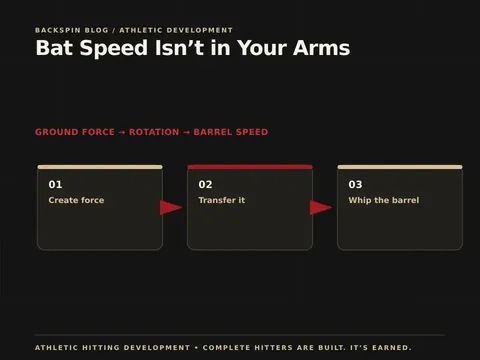
Want to go deeper? Read The Med Ball Test That Tracks Bat Speed and Bat Speed Isn’t in Your Arms.
Quick answers
Do medicine ball throws increase bat speed?
They can, mostly for hitters who start with lower bat speed and less rotational power. In a 2026 study, the already-fast college players didn’t improve.
What weight medicine ball should a high school hitter use?
Light enough that every throw stays fast and controlled. The 2026 study used 3 kg with college players. Work with a qualified strength coach on the load.
How often should hitters do med ball throws?
Two short sessions a week can be plenty when the athlete is also practicing, lifting and playing. Retest before adding more.
How do you increase bat speed in softball?
The same way: find the gap first. Rotational power, lower-half organization, the swing itself and timing all play a part, and the fix depends on which one is missing.
Don’t collect drills. Build a complete hitter.
Complete Hitters Aren’t Born. They’re Built… and Earned.