By BK, Athletic Hitting Development
Complete Hitters Are Built… It’s Earned!
Key takeaways
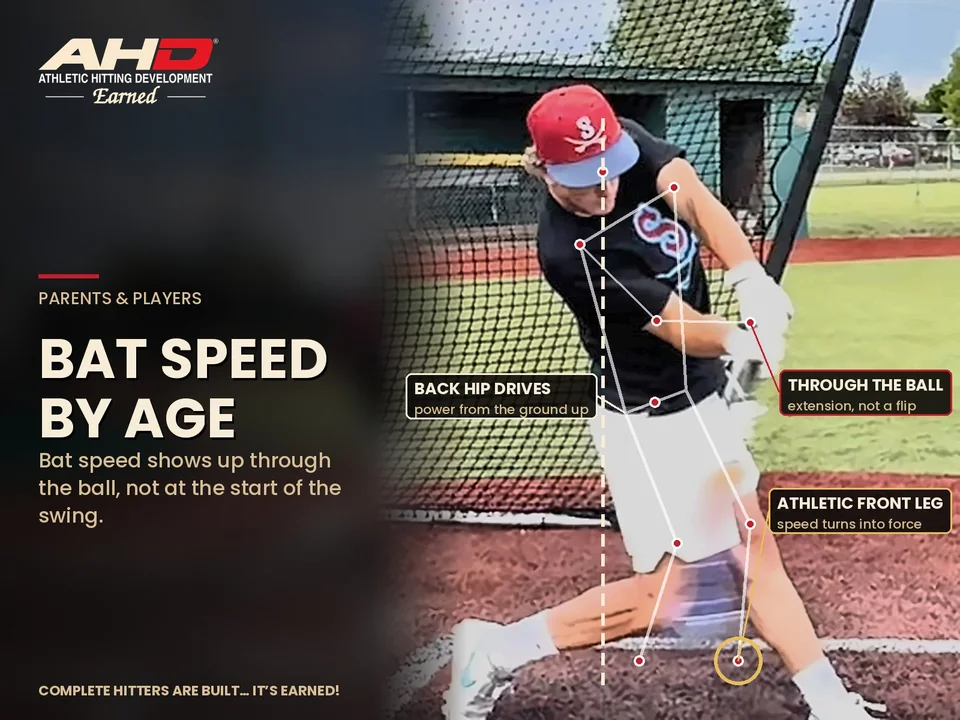
- Blast Motion publishes baseball bat speed ranges of 40–52 mph at 11–12 and 60–70 mph at 17–18, measured with its swing sensor.
- Different sensors give different numbers. Diamond Kinetics’ published averages fall within or below Blast’s ranges, especially in high school, so compare your hitter on the same device.
- Softball has its own benchmarks. Blast lists 38–52 mph for 12U–14U travel ball and 49–63 mph for high school varsity.
- Bat speed comes from the Strength & Explosiveness pillar plus the swing. A bigger kid isn’t automatically a better hitter.
Published sensor data puts baseball bat speed at roughly 40–52 mph for 11–12-year-olds, 46–62 mph at 13–14 and 60–70 mph for high school varsity hitters (Blast Motion). Fastpitch runs a little lower: 38–52 mph for 12U–14U travel ball and 49–63 mph for varsity.
Blast Motion’s published sensor ranges are 40–52 mph for ages 11–12, 46–62 mph for 13–14 and 60–70 mph for high school varsity baseball hitters. In fastpitch, Blast lists 38–52 mph for 12U–14U travel ball and 49–63 mph for varsity.
Train it: Athletic Development →🛠️ Want to see where your hitter lands? Plug the numbers into the free exit velocity calculator and bat speed calculator.
Parents ask me this every week: “Is my kid’s bat speed good for his age?” Fair question. The problem is that most charts online don’t say where their numbers came from.
So I only used numbers the device companies and scouting services actually publish. I’ll show you what each one measures, where they disagree, and how to use them without driving your hitter crazy.
1. What is the average bat speed by age in baseball?
Here are two published data sets side by side. Both come from bat sensors on practice swings. They are not the same sensor, and they don’t measure the exact same spot on the bat.
| Age / level | Blast Motion range (mph) | Diamond Kinetics average (mph) |
|---|---|---|
| 8–10 | 30–45 | Not published |
| 11–12 | 40–52 | 46.8 (12U) |
| 13–14 | 46–62 | 47.3 (13U) · 49.7 (14U) |
| 15–16 (HS JV) | 55–65 | 52.6 (15U) · 54.8 (16U) |
| 17–18 (HS varsity) | 60–70 | 56.3 (17U) · 60.5 (18U) |
| College | 65–75 | 61.1 (D2–JC) · 62.9 (D1) |
Blast Motion says its ranges come from its 400M+ swing database, measured with the Blast Baseball sensor during practice swings and tee/toss sessions. Blast lists Pro/MLB at 66–78 mph and says most college-bound varsity hitters land around 63–70 mph.
Diamond Kinetics numbers are from the Perfect Game showcase FAQ, based on 2024 swing data. Their metric is “Max Barrel Speed,” measured at a point 20% from the tip of the bat. That’s a different spot and a different sensor, which is a big reason the two columns don’t match.
BAT SPEED BENCHMARKS
KNOW THENUMBER.
- 11–12: 40–52 mph (Blast)
- 13–14: 46–62 mph (Blast)
- HS varsity: 60–70 mph (Blast)
- Same device every test
SENSOR NUMBERS, NOT GUESSES
2. What is a good bat speed for a 12-year-old?
On a Blast sensor, 40–52 mph is the published range for 11–12-year-olds. On Diamond Kinetics, the 12U average is 46.8 mph, “plus” is 54.1 and “elite” is 65.6.
So a 12-year-old swinging high 40s on either sensor is right in the middle of the pack. Low 50s is above the middle. That’s honest, and it’s good news for most families.
For a 14-year-old, Blast’s 13–14 range is 46–62 mph, and the Diamond Kinetics 14U average is 49.7 mph. That’s a wide band on purpose. Kids that age can be a year or two apart in physical maturity while sharing the same birthday year.
Compare your hitter to the same device — and to himself.
3. What is the average bat speed by age in softball?
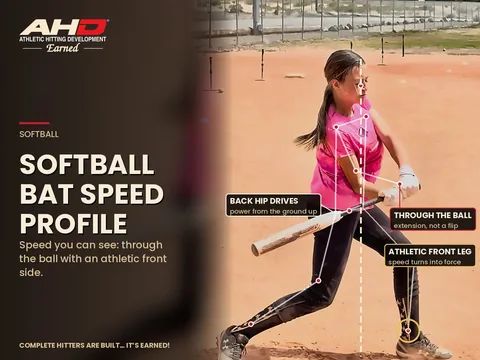
Fastpitch needs its own numbers. Blast says its softball ranges are fastpitch-native sensor measurements, not baseball numbers relabeled. Blast groups them by level, not by exact age.
| Softball level | Blast Motion range (mph) |
|---|---|
| Recreational | 32–46 |
| Travel ball 12U–14U | 38–52 |
| High school JV | 42–56 |
| High school varsity | 49–63 |
| Travel ball 16U–18U | 54–66 |
| College | 58–70 |
Blast lists professional fastpitch at 63–75 mph. Notice that 16U–18U travel ball sits above high school varsity in Blast’s table. Level of competition matters, not just age.
If you have a softball hitter, read Softball Bat Speed Test: Build a Speed Profile next. It shows you how to track her number over time instead of chasing one swing.
4. Why does my kid’s bat speed change from one device to another?
Because every tool measures something a little different. That’s why I tell parents: pick one method and stick with it.
- Sensor brand. Blast reports bat speed near contact; Diamond Kinetics reports max barrel speed 20% from the tip. Different spot, different number.
- Tee vs. toss vs. live. The published ranges above are practice swings. A game swing against real pitching is a different test.
- Radar and video. Blast’s softball guide calls radar less consistent for bat speed and treats video as a supporting read, not the benchmark.
- Bat length and weight. Change the bat, and you changed the test.
A 50 on one sensor and a 47 on another may be the same swing. Don’t panic about the gap. Compare Tuesday to Tuesday, same bat, same setup.
5. Does higher bat speed mean my kid is a better hitter?
No. Bat speed is a tool, not a batting average. I’ve watched plenty of big, early-maturing kids post huge numbers and still get beat by a fastball they never timed.
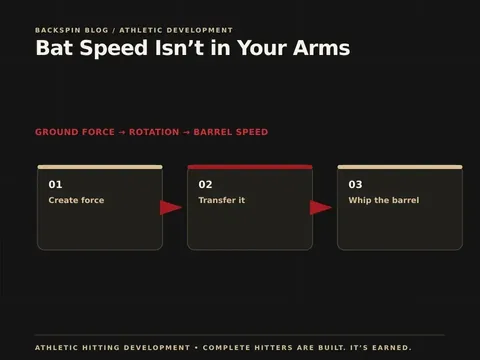
Bat speed lives in two of the 4 Pillars of a Complete Hitter. Strength & Explosiveness builds the engine. The Swing decides how much of that engine reaches the barrel. AHD hitters work into Mechanically Advantaged Angles (MAA) so the speed they have stays on plane with the pitch.
The other two pillars, the Hitting Processor and the Mental Approach, decide whether that speed shows up on time against a real pitcher. Want the full breakdown of where speed comes from? Read Bat Speed Isn’t in Your Arms. For what that speed does to the ball, see Exit Velocity by Age.
6. How should we track bat speed at home?
- Pick one deviceUse the same sensor every time and compare only to that sensor’s published numbers.
- Lock the setupSame bat, same tee height, same warm-up, same number of swings.
- Track the averageLog the average of 10 or more full-intent swings, plus the top few. One swing is noise.
- Retest every 4–6 weeksJudge the trend over months. Growth spurts and strength gains don’t show up weekly.
- Film the PRA number without a clip is a rumor.
That last step is exactly how we run the AHD PR Board. In the AHD Academy, players log exit velo, bat speed, 60-yard and vertical with a proof clip. Coach verifies it. Only verified PRs go on the board.

THELESSON.
- One device, one setup
- Average of 10+ swings
- Retest every 4–6 weeks
- Clip every PR
Complete Hitters Are Built…Earned.
Not sure what’s holding your hitter’s speed back? Run the free SwingChecker™. In about 3 minutes it ranks your hitter’s top priority across the 4 pillars. If strength is the gap, the bat speed training program is 24 lessons for $139, scaled to age.
Want to go deeper? Read Bat Speed Isn’t in Your Arms and The Softball Bat Speed Profile.
Quick answers
What is a good bat speed for a 12 year old?
Blast Motion publishes 40–52 mph for 11–12-year-olds on its sensor. Diamond Kinetics lists a 12U average of 46.8 mph, so high 40s is right in the middle of the pack.
What is the average bat speed for a high school baseball player?
Blast Motion lists 55–65 mph for 15–16-year-old JV hitters and 60–70 mph for 17–18-year-old varsity hitters, measured with its sensor on practice swings.
What is a good softball bat speed by age?
Blast Motion lists 38–52 mph for 12U–14U travel ball, 49–63 mph for high school varsity and 58–70 mph for college fastpitch hitters.
Why is my kid’s bat speed different on Blast and Diamond Kinetics?
The sensors measure at different points on the bat and use different calculations. Compare your hitter only to numbers from the same device and the same setup.
Sources: Blast Motion — What Is Bat Speed in Baseball? Age Benchmarks (May 2026, updated Sept 2026) · Blast Motion — Softball Bat Speed by Age: Youth to College Benchmarks (July 2026) · Perfect Game — FAQ Showcase Questions: Part 3 (Diamond Kinetics 2024 swing data)
Don’t collect drills. Build a complete hitter.
Complete Hitters Are Built… It’s Earned!
This article is part of the AHD guide Bat Speed & Power Training. Start there for the full picture and every related article.