By BK, Athletic Hitting Development
Complete Hitters Are Built… Not Given. Earned!
Tell a young hitter to swing harder and watch what happens. The arms tense up, the shoulders fly open, and the bat gets slower.
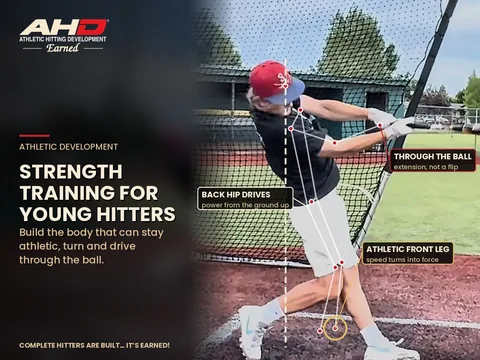
Bat speed comes from the ground up — legs, hips and torso rotating in sequence — not from the arms. Build it with rotational power work like med-ball throws, lower-body strength and swing intent, scaled to the hitter’s age and done with an adult present.
Train it: Athletic Development Masterclass →That’s because bat speed isn’t in your arms. It’s built from the ground up, and the engine is your hips and core.
1. The arm myth
Every coach has seen it. A kid wants to hit the ball farther, so he grips tighter and swings with his arms. The result is a long, slow swing, a barrel that drags, and a lot of weak contact.
The arms don’t create bat speed. They deliver it.
2. Where bat speed really comes from
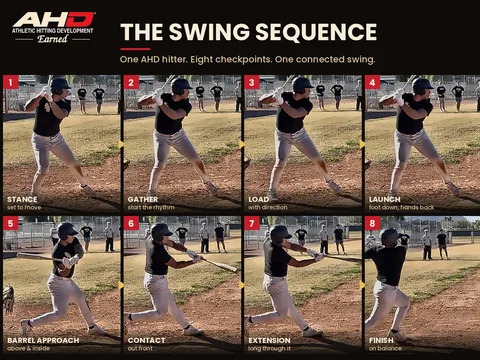
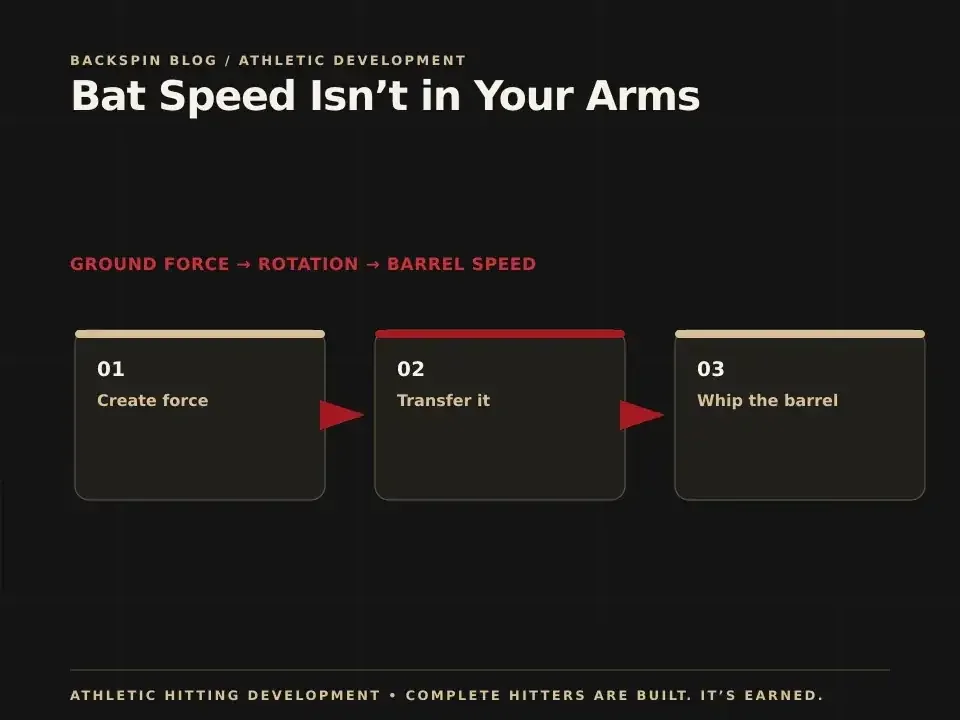
A powerful swing works like a whip. Energy starts at the ground and builds as it moves up through the body. Each piece speeds up the next. (See The Swing Sequence for the full breakdown.)
1. The ground
A strong, stable lower half pushes into the ground. No base, no power.
2. The hips
The hips start turning while the shoulders stay closed. That stretch between hips and shoulders is where rotational power is stored.
3. The core
The trunk transfers that energy up the chain. A weak core leaks power like a broken link.
4. The hands and barrel
Last in line, the hands deliver a barrel that’s already moving fast. They steer. They don’t generate.
BAT SPEED ISN'T IN YOUR ARMS
BUILT FROM THEGROUND.
- Ground
- Hips
- Core
- Hands
ARMS DON'T CREATE IT. THEY DELIVER IT.
3. Why bat speed matters
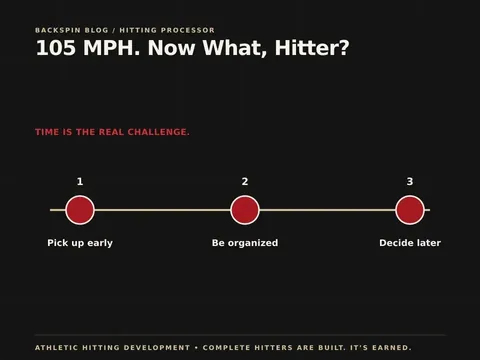
Bat speed isn’t just about hitting the ball harder. It buys time. A faster barrel lets a hitter wait longer before committing, see the pitch longer, and still get to it. That’s why it matters so much against velocity, like the 105 mph fastballs big leaguers are seeing now.
It’s also why athletic development is one of the four pillars of hitting. You can have a beautiful swing, but if the body can’t power it, the ball won’t go anywhere.
4. How to build rotational power
You don’t build it by taking 500 more swings with tired arms. You build it by training the engine.
The rotational power plan
1. Rotational med ball throws. Hitting-stance throws into a wall. Hips lead, arms follow. Fast and explosive, not heavy and slow.
2. Band-resisted rotation. Hip and trunk rotation against a band builds strength through the same turn the swing uses.
3. Jumps and bounds. Broad jumps and lateral bounds teach the legs to push hard into the ground.
4. Short sprints. Speed training builds fast-twitch power that carries straight into the swing.
5. Hip and upper-back mobility. You can’t store power in a turn you can’t make. Mobile hips and a mobile upper back let the body separate.
6. Connect it to the swing. After power work, take a few swings with the same feeling: legs and hips first, hands last.
Keep the reps fast and the quality high. Power training is about speed, not exhaustion. Match the load to the athlete’s age, and for younger kids, plenty of running, jumping, throwing and playing other sports is the best power training there is. (More in Strength & Explosiveness.)
THE ROTATIONAL POWER PLAN
TRAIN THEENGINE.
- Rotational med ball throws.
- Band-resisted rotation.
- Jumps, bounds and sprints.
- Hip and upper-back mobility.
POWER IS ABOUT SPEED, NOT EXHAUSTION.
5. A word on tools and bands
There’s a lot of good equipment out there for this. Rotational band systems, like Crossover Symmetry’s TORQ, are built specifically to train the hips, core and obliques. Tools like that can help, especially for structure and consistency.
But remember what we said in $500 Bats Don’t Build Hitters: the tool isn’t the plan. A medicine ball, a wall and a band will build a lot of power in the hands of an athlete who knows what they’re training and why.
6. For players, parents and coaches
- Players: stop trying to swing harder. Try to turn faster, from the ground up.
- Parents: if your hitter is slow to the ball, the answer is often athletic development, not another lesson on hand path.
- Coaches: put 10 minutes of rotational power work in front of hitting practice. Fresh and fast beats tired and slow.

THELESSON.
- Push into the ground.
- Hips turn first.
- Core transfers it.
- Hands deliver last.
- Turn faster, not harder.
- Fresh and fast beats tired.
Complete Hitters Are Built…Earned.
7. Build the complete hitter
Don’t collect drills. Build a complete hitter.
The AHD Athletic Development Masterclass trains strength, speed, explosive power and arm care, one lesson a day, with the first 3 lessons are free. Not sure if your hitter’s problem is the swing or the engine? Run the free SwingChecker™, or see online remote baseball and softball training with BK.
Quick answers
How do you increase bat speed?
Build rotational power from the ground up: a strong, stable lower half, hips that turn before the shoulders, and a core that transfers that energy to the hands. Train it with rotational medicine ball throws, jumps, sprints and a sound swing sequence, not just more swings.
Does arm strength create bat speed?
Not much on its own. The arms and hands deliver the barrel, but most of the speed is created by the legs, hips and trunk turning in sequence. Hitters who muscle the bat with their arms usually get slower and less consistent.
What exercises build rotational power for baseball and softball?
Rotational medicine ball throws, band-resisted hip and trunk rotation, broad jumps and lateral bounds, short sprints, and hip and thoracic mobility work. Keep the reps fast and quality high, and match the load to the athlete’s age.
At what age should hitters start power training?
Young kids build power best by playing: running, jumping, throwing and playing other sports. Light medicine ball and bodyweight work can start early with good coaching. Heavier loading should wait until the athlete has solid movement skills and proper supervision.
How fast can a hitter increase bat speed?
Most hitters see measurable gains over several weeks of consistent rotational power and strength work, especially when it’s paired with an efficient swing. Measure it the same way every time so the numbers are honest.
From the 2015 archive: Releasing the Back Side: Back Leg Swing Mechanics.
This article is part of the AHD guide Baseball Swing Mechanics. Start there for the full picture and every related article.