By BK, Athletic Hitting Development
Complete Hitters Aren’t Born. They’re Built… and Earned.
Key takeaways
- Aggressive is a committed yes to the RIGHT pitch, not a yes to everything close.
- Passive hitters take good pitches out of fear. Patient hitters take the pitcher’s pitch and punish the next mistake.
- When a hitter chases, find which step of the Hitting Processor broke.
- The green-light game scores decisions, so a good take counts as a win.
A plate discipline drill should make hitters more aggressive, not less. The green-light game does it by scoring every decision: big points for attacking a pitch in your zone, points for good takes, and a penalty for chasing or taking one you should have crushed.
Name a damage window before the round, then score every pitch: +2 for a committed swing at a green-light pitch, +1 for a correct take, 0 for a good decision you missed and –1 for a chase or a frozen meatball.
Train it: Hitting Processor → Free tool: Strike Zone Swings →Most kids hear “be aggressive” as swing early, swing hard, don’t get cheated. That brings energy. It also builds a hitter who lets the pitcher make every decision for him.
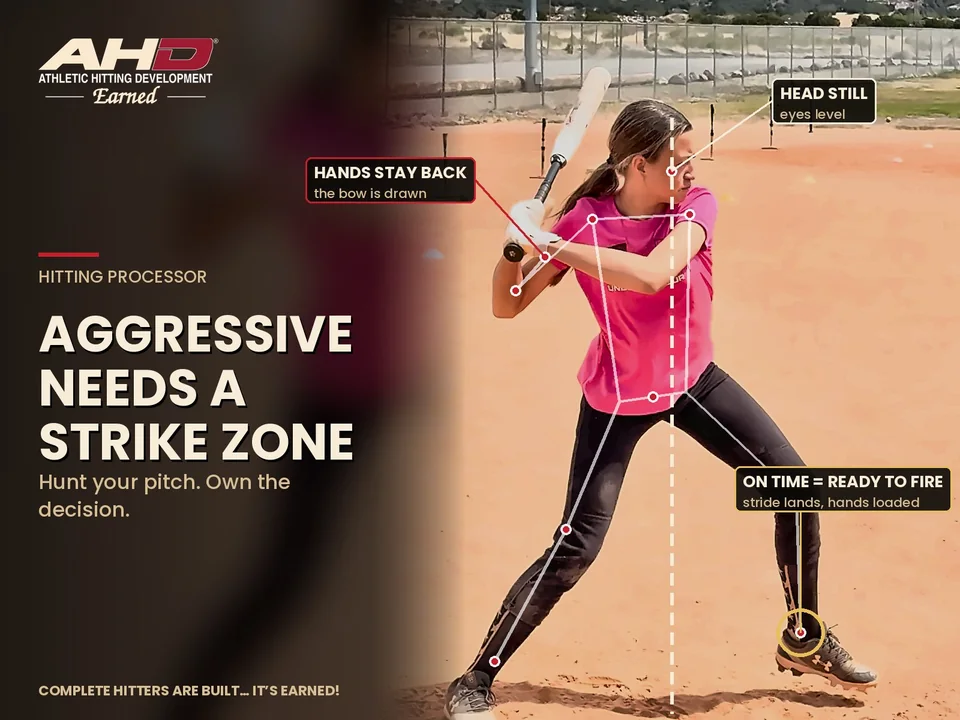
Aggressive is one of my 3 A’s of hitting, and I mean it. “I’ve never seen a really good passive hitter.” But aggressive has a strike zone.
1. Is a patient hitter the same as a passive hitter?
No. The passive hitter takes good pitches because he’s scared to fail. The patient hitter takes the pitcher’s pitch because it isn’t his pitch, then jumps all over the next mistake. That hitter is patient and aggressive at the same time.
The difference is a plan. A hitter with no plan reacts late, sees something near the zone, panics and lets the bat go. A hitter with a plan has a window: what he’s hunting, where he does damage and which pitches don’t get his best swing.
“Swing at a bad pitch? No biggie. Take a good pitch to hit? Not happening.” A chase now and then is part of being aggressive. Watching a pitch you could drive is the real mistake.
THE GREEN-LIGHT GAME
SCORE THEDECISION.
- +2 committed swing, green light
- +1 good take
- 0 good decision, missed it
- –1 chase or frozen on a meatball
A GOOD TAKE IS A WIN
2. Why does my hitter chase bad pitches?
At AHD we teach the Hitting Processor in order: see it, recognize it, time it, decide, attack it. You can’t make a clean decision on a ball you saw late, and you can’t attack with confidence if your timing has you behind.
So don’t start with “be more disciplined.” Be exact. Find which step broke:
- See it. Did the hitter pick up the ball late?
- Recognize it. Did spin or speed fool him?
- Time it. Was the move too early, forcing an emergency swing?
- Decide. Did he even have a green-light zone?
- Attack it. Did the last bad at-bat make him scared to take a strike?
Different cause, different fix. If the problem is decisions in general, Plate Discipline Is a Skill goes deeper.
3. How do you play the green-light game?
Run it in a lesson, a machine round or front toss. Before the round, the hitter names one damage window. Example: middle-in, belt to the bottom of the letters. That’s the green light. Then score it:
| Result | Points |
|---|---|
| On-time, committed swing at a green-light pitch | +2 |
| Correct take of a ball or a pitcher’s pitch | +1 |
| Good decision, missed execution | 0 |
| Chase, panic swing, or taking a pitch you should crush | –1 |
Now the hitter learns a good at-bat is more than a ball in play. A hard grounder on a bad chase isn’t a win because it found grass. A disciplined take can be.
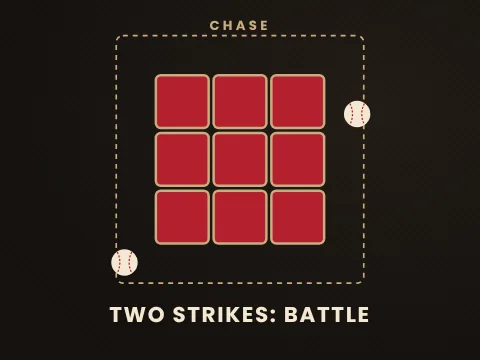
For high school and college hitters, baseball or softball, add counts, pitch families and a two-strike approach. With two strikes the window widens a little, and the game should say so.
4. What should a hitter do when he gets his pitch?
“Pitcher gets one, hitter gets one, umpire gets one… two of those aren’t in your favor. Roll the pole!!” When the green light comes on, the decision is already made. Swing it like you mean it.
That’s what we mean by aggressive and athletic. Controlled violence on the pitch you picked.
Aggressive isn’t a mood. It’s a skill.
5. Can video show a bad swing decision?
Video can’t read a hitter’s mind. It can show the result of a bad decision.
In AHD Swing Lab, compare a green-light swing and a chase from the same angles. Pause at the gather, the launch and contact. Look for the emergency move: lunging forward, losing posture, casting the barrel, pulling off. Then let the hitter explain the decision first. That builds ownership, and it tells you whether the next drill belongs to the swing, the timing, the processor or the mental side.

THELESSON.
- Name your damage window
- Take the pitcher’s pitch
- Punish the mistake
- Fix the step that broke
Complete Hitters Are Built…Earned.
Want to go deeper? Read Swing Decisions Are a Skill and A Better Approach Is Not Passive.
Quick answers
How do I teach plate discipline without making my hitter passive?
Give the hitter a green-light zone and reward committed swings there as much as good takes. Discipline is choosing the pitch, not swinging less.
What is a green-light zone in hitting?
It’s the part of the zone where a hitter does the most damage, named before the at-bat. When a pitch shows up there, the hitter attacks it.
Why does my hitter chase pitches out of the zone?
Usually one step broke: he saw it late, got fooled by spin or speed, started too early, had no plan or got scared after a bad at-bat. Find the step, then fix it.
Is it bad to swing at the first pitch?
Not if it’s in your green-light zone. Taking a pitch you could drive is a bigger mistake than an aggressive swing at a good first pitch.
Sources: Baseball America: 10 MLB Prospects With Elite Hit Tools According To 2026 Data (Nov. 16, 2026)
Don’t collect drills. Build a complete hitter.
Complete Hitters Aren’t Born. They’re Built… and Earned.