By BK, Athletic Hitting Development
Complete Hitters Are Built… It’s Earned!
“Get better hand-eye coordination” is common advice for hitters.
The best hand-eye coordination drills for hitters combine seeing and deciding: color-call toss, wiffle ball tracking, take-or-attack rounds, small-ball contact and video pitch recognition. A few focused minutes most days does more than one long session.
Train it: Hitting Processor Masterclass →It is also incomplete advice.
Hitting is not only about fast hands. The hitter has to pick up the ball, focus, track it, recognize speed or spin, time the move, decide whether to swing and then deliver the barrel.
That is a lot happening in very little time.
The drills below train the Eye Tool—the visual and decision-making side of hitting. They are useful for baseball and softball players, from youth players to advanced hitters, when done with a clear purpose.
1. 1. Color-call toss
Use two or three colors of balls, stickers, tape dots or numbers.
From short distance, have a partner toss the ball. The hitter calls the color or number as early as possible, then catches it, takes it, or hits it depending on the version.
Start easy. Then make it harder by mixing colors, changing toss height, or requiring the hitter to swing only at one color.
What it trains: early visual focus and the connection between seeing and deciding.
Coaching cue: Call it early. Do not wait until the ball is on top of you.
2. 2. Wiffle ball tracking
Wiffle balls move. That is exactly why they are useful.
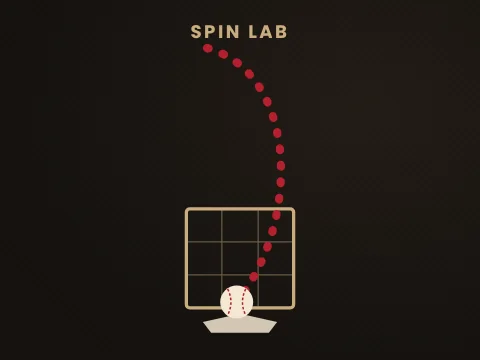
Have a partner toss or pitch wiffle balls from different angles. Start with catch-only rounds. The hitter calls “straight,” “right,” “left,” “up,” or “down” based on movement. Then progress to hitting.
You are training the player to keep the eyes on a moving object and stay adjustable.
This is one reason wiffle ball belongs in hitter development. It gives players real movement without a massive setup.
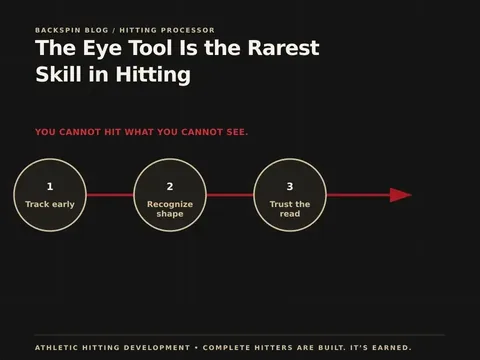
THE EYE TOOL
SEE IT.THEN SWING.
- Color-call toss
- Wiffle ball tracking
- Take / attack round
- Small-ball contact
NOT JUST QUICK HANDS.
3. 3. Take / attack round
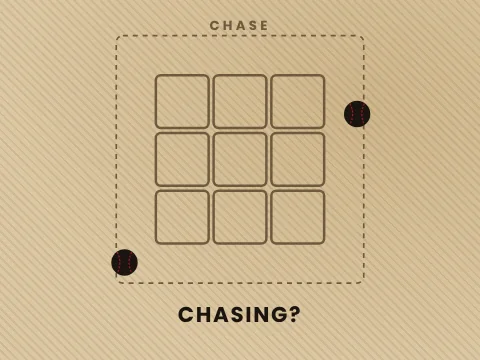
Set a small strike-zone target in the net. The coach tosses or feeds a mix of pitches. Some are in the attack zone. Some are not.
The hitter’s score is not based on how many balls they hit. It is based on how many good decisions they make.
A good take earns a point. A hard swing at a good pitch earns a point. A chase loses a point.
This drill matters because a hitter can have a solid swing and still struggle if they attack bad pitches.
What it trains: zone awareness, decision-making and competitive discipline.
4. 4. Small-ball contact
Use a tennis ball, small training ball, ping-pong ball or reduced-size wiffle ball. Use soft toss, a bounce, or a controlled side feed.
Small objects demand attention. The hitter cannot take a loose, careless swing and expect consistent contact.
Keep the first rounds slow enough for success. Then change the distance or speed. The goal is not to embarrass the hitter; the goal is to create better focus and barrel accuracy.
5. 5. Video pitch recognition
Use actual game video, a pitching app, or a clip of a pitcher throwing multiple pitch types.
Stop the clip shortly after release. Ask: fastball or spin? In or out? Would you attack it? Why?
Then let the clip finish.
This is a powerful way to get many visual repetitions without taking hundreds of physical swings. It teaches players to look for release, spin and trajectory clues.
For hitters who struggle with breaking balls, pair this with The Galvan Method.
6. How often should hitters train this?
Ten focused minutes, three to five times each week, is enough to create a habit.
Keep the work fresh:
- One day: color-call toss.
- One day: wiffle-ball movement.
- One day: take/attack decisions.
- One day: video recognition.
Do not turn every drill into a circus. Keep the connection clear: seeing better helps hitters time better and make better swing decisions.
7. The bigger point
The eyes do not hit the ball by themselves. The swing still matters. Strength still matters. Confidence still matters.
But the swing cannot hit a pitch the hitter never saw well enough to make a decision on.
Train the complete process:
See It → Recognize It → Time It → Decide → Attack It.
That is how a hitter gives their mechanics a chance to show up in a game.
If you are unsure whether the biggest issue is visual, mechanical, athletic or mental, start with SwingChecker™ and find the first priority.
Complete Hitters Are Built… It’s Earned!
THELESSON.
- Call it early.
- Track the movement.
- Score the decision.
- Ten minutes, 3–5 days a week.
Complete Hitters Are Built…Earned.
Quick answers
What are the best hand-eye coordination drills for hitters?
Color-call toss, wiffle ball tracking, a take/attack decision round, small-ball contact and video pitch recognition. Each trains seeing and deciding, not just hand speed.
How often should hitters train hand-eye coordination?
About ten focused minutes, three to five times a week, is enough to build the habit. Rotate the drills so the work stays fresh.
Does hand-eye coordination improve with practice?
The visual process can. Focus, tracking, recognition and decision speed all improve with short, regular, scored reps.
Can hand-eye coordination be improved?
Yes. Hitters improve at seeing, tracking and deciding with regular, specific practice, and the gains show up most when the drills include a decision, not just contact.
From the 2015 archive: 5 Keys to Maximize a Softball Hitter’s Potential.
This article is part of the AHD guide Pitch Recognition & Timing. Start there for the full picture and every related article.