
Pitch Recognition and Timing Training
Pitch recognition and timing are trainable skills: see the release, recognize the spin, time the fastball, decide strike or ball, then attack the right pitch. AHD calls it the Hitting Processor and trains it daily — a few focused minutes at a time.
By BK · 52 years playing, coaching and scouting · Updated October 16, 2026
Find your path
- I need help getting betterOnline baseball & softball hitting lessonsAHD Academy courses →
- What’s wrong with my swing?Casting, rolling over, dumping the barrel, balance, bat pathFree SwingChecker™ →
- What should my kid do?Plans for 8U, 10U, 12U, 14U and high schoolDrills by age →
- How do I hit this pitch?Fastball, curveball, changeup, high heat, rise and drop ballHitting Processor hub →
- How do I train at home?Practice plans, tee work, strength, drills by ageTraining plans →
- I need a real coachScottsdale lessons, remote coaching, team campsCoaching options →
The Hitting Processor: see it, time it, decide, attack it
- See it. Find the release point early and keep the eyes quiet. The eye tool.
- Recognize it. Fastball or spin, early. Occlusion training.
- Time it. Be on time for the fastball and adjust to the rest. How to hit a fastball.
- Decide. Strike or ball, attack or take. Plate discipline is a skill.
- Attack it. Commit with a full swing to the right pitch. Why great hitters predict.
Most late swings get blamed on mechanics. Often the hitter saw it late or decided late. Full explanation: The Hitting Processor explained.
How do I hit this pitch?
Baseball
- Fastball — start early, be on time
- High fastball — what to actually train
- Changeup — stay back without waiting
- Curveball — the Galvan method
- Slider — read it, lay off, drive it
- Heater, hanger — a simple approach
Fastpitch softball
Getting fooled a lot? Start with why hitters get fooled by off-speed and the off-speed test.
Timing: start early, commit late
Timing problems are rarely fixed by telling a hitter to “be quicker.” Get the gather and forward move started early enough to be ready for the fastball, then let the barrel work late. Readiness is not the same as guessing.
Time it, decide, adjust · Ready for 100 · Deciding later · Why the ball looks small or fast.
Swing decisions and plate discipline
Chasing is a decision problem before it is a swing problem. Train strike-ball calls without swinging, then add the swing back in. Have a two-strike plan before you need one.
Why kids swing at bad pitches · Two-strike approach (baseball) · Two-strike approach (softball) · The walk-off started with a take.
Daily pitch recognition drills
The Hitting Processor gets trained daily, not once a week. Five minutes of quality reads beats an hour of random swings.
The 5-minute daily plan · Train the eyes without swinging · Hand-eye drills · Wiffle ball for spin · See spin every day.
The complete pitch recognition and timing training library
Every AHD guide on this topic, in the order I’d read them.
Understand the processor
 The Hitting ProcessorThe Hitting Processor explains how hitters see, recognize, time, decide on and attack pitches. Learn why game hitting starts before the body commits.
 The Eye Tool Is the Rarest Skill in HittingWhy the eye tool is the rarest skill in hitting, what it really means beyond good eyesight, and how baseball and softball hitters can train it to improve.
 Why Great Hitters Predict, Not Just ReactLearn why great hitters predict instead of just reacting, how early visual cues and pitch tracking help, and how the AHD Hitting Processor trains it.
 The Hitter’s Brain: How Neurons Shape Hitting, and Hitting Shapes NeuronsA fastball gives a hitter about 0.4 seconds, and the brain needs 0.1 just to see it. How neurons shape hitting and how training rewires the brain.
 The Ball Never ChangesThe ball doesn’t shrink, speed up or rise. Why it looks different every pitch, and why hitters only need the barrel there on time.
 Time It, Decide, Adjust: The Order Your Brain Hits InHitting timing and decisions: a study of 23 pro hitters suggests the brain sets timing first, then decides, then adjusts the barrel. Train in that order.
Hit the pitch — baseball
 How to Hit a Fastball: Start Early and Be On Time for the HeaterHow to hit a fastball: start your move early, time the heater first, hunt it in hitter’s counts, keep the move short and still adjust to slower pitches.
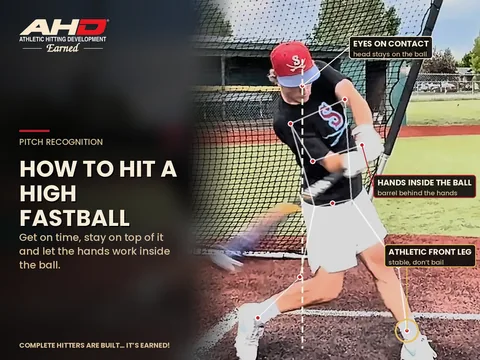 How to Hit a High Fastball: What Hitters Should Actually TrainStruggling with the high fastball? Learn why hitters miss it, what not to change, and how to train a better plan, path and decision against velocity.
 How to Hit a Changeup in Baseball: See It, Stay Back, Drive ItHow to hit a changeup in baseball: read arm speed vs ball speed, keep the hands back, sit fastball and adjust, plus drills that train the changeup.
 How to Hit a Curveball: The Galvan MethodWhy hitters struggle with curveballs and off-speed, and the Galvan Method: the visualization habit a .400 college hitter used to see spin 50 times a game.
 How to Hit a Slider: Read the Spin, Cover the Plate, Lay Off the ChaseHow to hit a slider: how it moves vs a curveball, the red dot out of the hand, plate coverage, laying off the back-foot slider, and drills that work.
 Why Your Hitter Gets Fooled by Changeups and CurveballsWhy young hitters get fooled by changeups and curveballs, the 10-pitch Fooled Test and why looking for the breaking ball makes it worse.
 The Off-Speed TestA hitter can crush velocity and still have a big development gap. The off-speed test shows if his swing and processor can adjust.
 Ready for 100: José Ramírez and Fastball TimingJosé Ramírez homered off a 99.9 mph Jordan Hicks fastball in ALDS Game 4. The hitting lesson is fastball readiness, not swinging harder.
 105 MPH. Now What, Hitter?Jacob Misiorowski threw 105.5 mph, the fastest pitch ever by a starter. Here’s how much time a hitter really gets, and how AHD trains hitters for velocity.
Hit the pitch — softball
 How to Hit Fast Pitching in Softball (60+ MPH)How to hit fast pitching in softball: start earlier, shorten the move, hunt one zone, train safely at short distance and win the mental side vs 60+ mph.
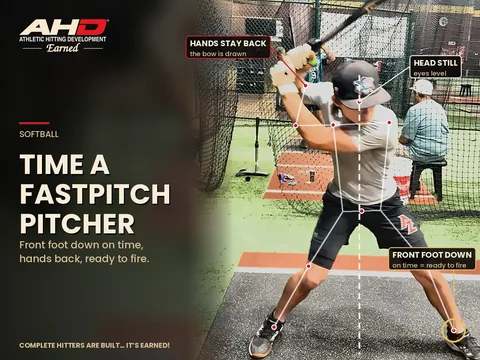 How to Time a Fastpitch Pitcher: Softball Hitting Timing Made SimpleHow to time a fastpitch pitcher: when to start the load off the windmill, how to be on time for the fastball, adjust to the change, and rhythm drills.
 How to Hit a Rise Ball in Fastpitch SoftballHow to hit a rise ball in fastpitch softball: lay off the one above your hands, set your eyes at the top of the zone, read spin early, plus drills.
 How to Hit a Drop Ball in Fastpitch SoftballHow to hit a drop ball in fastpitch softball: stay through the ball, match its plane, lay off the drop below the knees early in counts, plus 4 drills.
 How to Hit a Curveball in Softball (and the Screwball)How to hit a curveball in softball: how the curve and screwball break, reading spin, where to stand, going oppo on the curve and a screwball plan.
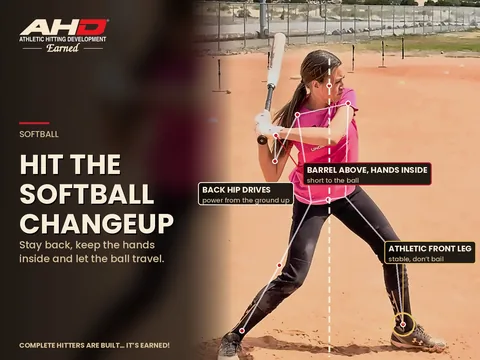 How to Hit a Changeup in Fastpitch SoftballHow to hit a changeup in softball: read the release, stay back with the hands, use the middle of the field and train pitch recognition daily.
Decisions and daily training
 Swing Decisions Are a SkillPlate discipline is a skill: in college hitters, ball/strike calls tracked OBP and walk rate. Try the 20-pitch decision test to train swing decisions.
 Why Your Kid Swings at Bad Pitches (and How to Fix It)Why young hitters chase bad pitches or freeze on strikes, a 20-pitch decision test parents can run and the daily habit that fixes it.
 Two Strike Approach in Baseball: How to Battle With Two StrikesA two strike approach in baseball: widen the zone, shorten up, look for the pitcher’s out pitch and battle. Steps, drills and the mindset that holds up.
 The 5-Minute Daily Hitting Processor PlanA free Monday–Sunday pitch recognition and decision-making routine for baseball and softball hitters: 5 minutes a day, one focus a day, with a weekly scorecard.
 Do Reaction Games Help Hitters? How AHD’s Free Tools Train the Brain Side of HittingCan phone games train a hitter’s brain? What the research says, why sport-specific games work best, and AHD’s free tools that train the read.
 Cut the Video Short: Read the Pitch EarlierOcclusion training for hitters: stop pitcher video at release and call pitch type and location. Research shows a large effect on anticipation.
 Train the Eyes Without SwingingPerceptual training for softball hitters: a study found pitch-reading reps with no swings improved speed recognition and swing timing.
 Hand-Eye Coordination Drills for Baseball and Softball HittersFive hand-eye coordination drills for baseball and softball hitters that train visual focus, tracking, timing and decision-making—not just quick hands.
 Bring Back Wiffle Ball: The Best Spin Lab for Hitting Development in the SportWant to hit curveballs and spin? Bring back Wiffle ball. Real movement, velo changes and instant swing feedback, and it’s cheap, fun and fits in any backyard.
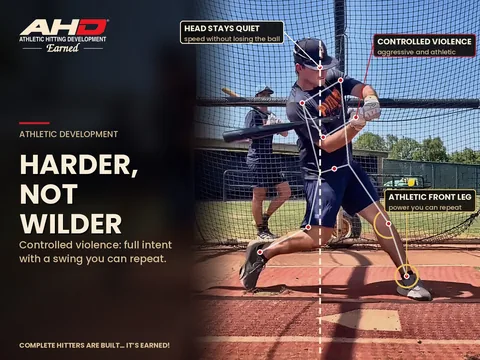 Harder Without WilderZack Gelof posted career-best bat speed and career-best contact while swinging less. How hitters build power and plate discipline together.
Your next step
About 3 minutes. Ranks your hitter’s #1 priority across the 4 pillars with cues, drills and free lessons.
Run it free →16 lessons on seeing, timing and deciding. $119, Lessons 1–3 free. For spin, add the Off-Speed course.
See the course →Remote coaching with BK: starting evaluation across all 4 pillars, a personal 90-day plan, all 7 courses, video analysis of swings and game at-bats, and direct text access. $1,995 for 90 days, limited to 12 athletes.
See remote coaching →Private and semi-private lessons for baseball and fastpitch hitters in Scottsdale and the Phoenix area. Text Coach for current rates.
Scottsdale lessons →12 to 60 players, ages 8 through high school, baseball, fastpitch or combined. Coach travels.
Camps & clinics →Questions
Can pitch recognition be trained?
Yes. Seeing release, recognizing spin, timing and swing decisions improve with daily, focused reps — a few minutes a day with video, a partner or a machine.
How do I stop swinging at bad pitches?
Train decisions without swinging first: call fastball or spin, strike or ball, attack or take. Then add the swing back in and keep score.
What is the Hitting Processor?
AHD’s name for the decision side of hitting: see it, recognize it, time it, decide and attack it. It is one of the 4 pillars of a complete hitter.
How do you time a pitcher?
Start the gather and forward move early enough to be ready for the fastball, keep the same start every pitch, and adjust to slower pitches after you read them.
More AHD guides
Don’t collect drills. Build a complete hitter.
Complete Hitters Are Built… It’s Earned!