By Athletic Hitting Development
Complete Hitters Are Built… It’s Earned!
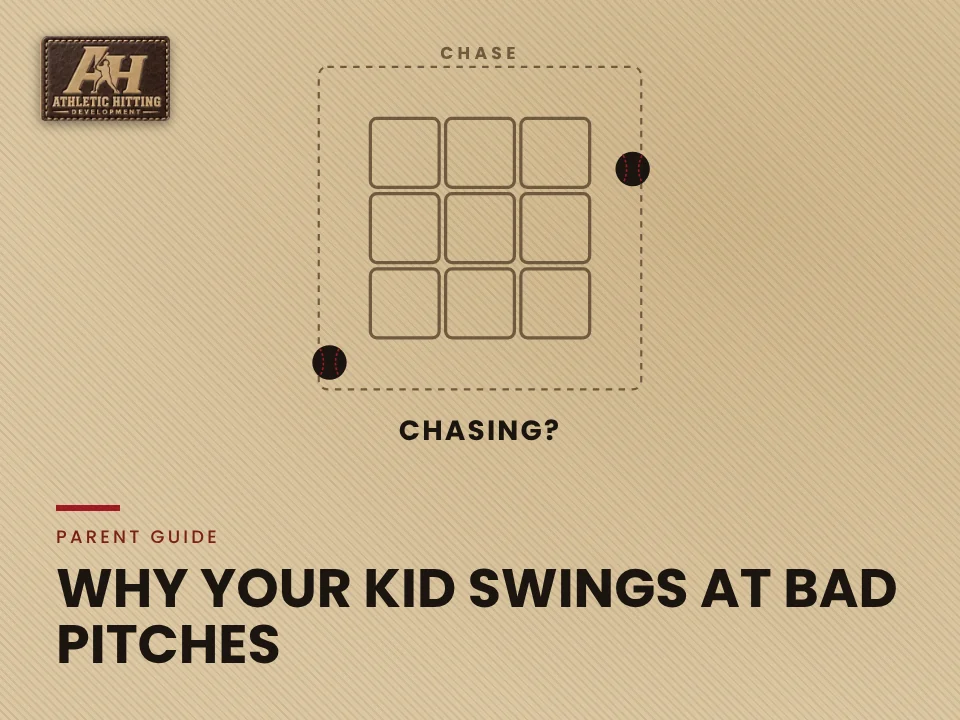
Your hitter takes a fastball down the middle for strike two, then swings at a curveball in the dirt for strike three. On the car ride home, someone says “just swing at strikes.”
Chasing is usually a decision problem, not a swing problem: a hitter has about four-tenths of a second, and a late read can’t be fixed with a faster swing. Measure it with the 20-pitch decision test, name the step that broke and train seeing the ball sooner with short, daily, scored reps.
Train it: Hitting Processor Masterclass →If it were that easy, nobody would chase. Swinging at good pitches is a skill, and like every skill, it can be measured and trained.
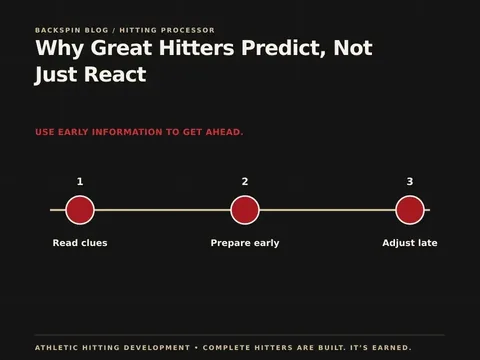
See It → Recognize It → Time It → Decide → Attack It.
1. It’s a decision problem
Most parents and coaches call every bad at-bat a mechanical problem. But a perfect swing that starts on a late read is still a bad at-bat. At AHD we call the part of hitting that turns what the eyes see into a swing decision the Hitting Processor. It’s one of the four pillars of a complete hitter, and it’s the one most hitters never train on purpose.
2. The four-tenths of a second
An 85 mph fastball from 55 feet gives a hitter about four-tenths of a second, and roughly half of that is spent deciding. There is no time to think it through. The hitters who swing at good pitches have done it so many times that it happens without thinking.
You can’t swing fast enough to fix a late read. But you can see it sooner.
DECISIONS, NOT SWINGS
SEE ITSOONER.
- See it
- Recognize it
- Time it
- Decide
0.4 SECONDS. TRAIN IT.
3. The 20-pitch decision test
This is the same baseline that opens the AHD Hitting Processor course. You need a partner or a pitching machine and a notepad.
Part 1 — Call it, don’t swing
20 pitches. The hitter doesn’t swing; they call “ball” or “strike” out loud before the ball reaches the plate. Count correct calls.
Part 2 — Swing for real
20 live or front-toss pitches. Count on-time, hard-hit swings and count chases.
| Number | Score |
|---|---|
| Correct ball/strike calls | __ / 20 |
| On-time hard-hit swings | __ / 20 |
| Chases | __ |
| Decision baseline (calls + hard-hit) | __ / 40 |
If the calls are poor but the swings are on time, the eyes and decisions need the work, not the swing. Write the numbers down. They’re what you’ll retest against.
4. Where the at-bat breaks
Watch 15 of your hitter’s at-bats or swings on video and label each miss with the step that broke: saw it late, misread it, late timing, bad decision or poor attack. Tally the five steps. The step with the most marks is where training starts. If the swing (Attack It) isn’t the top step, the swing isn’t the biggest problem.
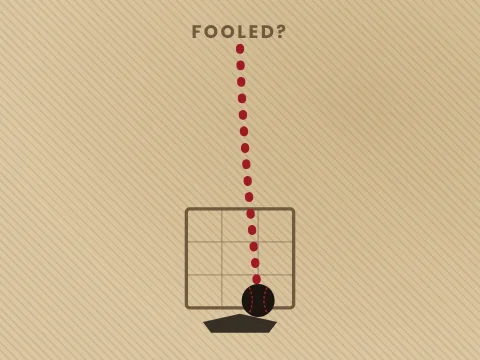
“I was late” and “I got fooled” need completely different fixes. Naming the step turns frustration into a plan.
5. See it sooner: the quick win
Start with soft focus on the pitcher, then shift to fine focus at the release window, the spot where the ball comes out of the hand. To train it, have your hitter say “now” the instant the ball leaves the pitcher’s hand, 20 pitches, on game video or live. Then retake ten yes-or-no calls. A gain of one or two correct calls in a single session is common.
6. Make it a daily habit
Decisions improve with short, regular, scored reps, not one big session before the playoffs. Our free 5-Minute Daily Hitting Processor Plan gives your hitter one focus a day, Monday through Sunday, and most of it can be done at home with a phone and a game on TV.
7. Go deeper: the Pitch Recognition Program
Sixty lessons that train all five steps in order: tracking, release and early cues, pitch shape, location and decisions, timing, and competing — with a Block Test every ten lessons against your starting baseline.
The first three lessons are free. Start with Lesson 1: Test Day: Your Decision Baseline — it takes about ten minutes and gives you a score to retest against.
See the full Pitch Recognition Program →

THELESSON.
- Run the 20-pitch test.
- Name the step that broke.
- Say “now” at release.
- Train it daily.
Complete Hitters Are Built…Earned.
Quick answers
Why does my kid swing at bad pitches?
Usually because the decision is late, not because the swing is bad. A hitter has about four-tenths of a second, and if the pitch is read late there is no time to decide well. Pitch recognition and decision-making can be trained like any other skill.
How can I test my hitter’s pitch recognition?
Have them call ball or strike out loud on 20 pitches without swinging, then take 20 real swings and count on-time hard-hit balls and chases. Write the numbers down and retest the same way every few weeks.
Can pitch recognition be trained at home?
Yes. Release-point calls, heater-or-spin calls and yes-or-no decision calls can all be done with game video and a phone. A partner or machine adds real timing when you have one.
Why does my hitter strike out looking?
Taking strikes is the other side of chasing. It often means the hitter is deciding late or isn’t sure of their zone. The same decision test shows whether it’s a seeing problem, a timing problem or a confidence problem.
How can my hitter pick up the ball out of the pitcher’s hand sooner?
Start with soft focus on the pitcher, then shift to fine focus at the release window. To train it, have your hitter say “now” the instant the ball leaves the hand for 20 pitches, live or on game video, then retake ten yes-or-no calls.
This article is part of the AHD guide Pitch Recognition & Timing. Start there for the full picture and every related article.