By BK, Athletic Hitting Development
Complete Hitters Are Built… It’s Earned!
Key takeaways
- A 95 mph fastball reaches the plate in about 0.42–0.45 seconds. The brain needs about 0.1 seconds just to process what the eyes see.
- The swing takes about 0.15 seconds, so the decision window is tiny. Hitters can’t react all the way. They predict.
- Training rewires the brain. The pathways you use the most get faster and more automatic.
- Research found college hitters’ brains work differently than non-players’ when deciding to swing or take, especially in holding off.
- Train the swing until it’s automatic, then train the decision. That’s the Hitting Processor.
Your hitter isn’t hitting the ball they see. They’re hitting the ball their brain predicts.
The brain limits hitting because a fastball arrives faster than a hitter can fully react, so he has to predict from early cues like release and arm slot. Hitting also shapes the brain: the pathways a hitter repeats get faster and more automatic, so the reps had better be built right.
Train it: Hitting Processor Masterclass →Parents ask me all the time why their kid can crush the tee and look lost against live pitching. The answer isn’t in the hands. It’s between the ears, in the wiring. Hitting a baseball or a softball is one of the hardest things the human brain is asked to do.
After 52 years of playing, coaching and scouting, here’s what I want every hitter, parent and coach to understand about neurons and hitting. It goes both ways: the brain sets the limits on hitting, and hitting changes the brain.
1. The clock your brain is fighting
A 95 mph fastball takes roughly 0.42 to 0.45 seconds to get from the pitcher’s hand to the plate. That sounds fast. It’s actually worse than it sounds.
- Seeing it takes time. Light hits the eyes, and the brain needs about 75 to 100 milliseconds just to turn that into a usable picture of the ball.
- Swinging takes time. A big-league swing takes about 150 milliseconds from start to contact.
- What’s left is the decision. Take out seeing and swinging, and the hitter has a sliver of time to read the pitch and decide.
AHD • BackSpin · The pitch clock
95 mph fastball, release to plate
- Brain processing what the eyes see
- The only window to read the pitch
- Swing start to contact
Approximate times. Younger levels throw slower but from shorter distances, so the clock is tight for every hitter.
That’s why the swing has to start before the hitter can know for sure where the ball will be. There isn’t time to watch it all the way and then react.
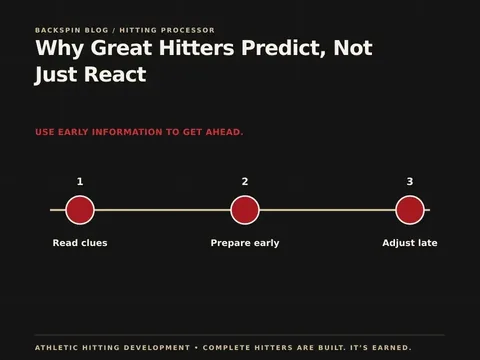
2. Hitters don’t react. They predict.
Late in the pitch, the ball moves faster than the eyes can track it smoothly. Hitters see it in quick snapshots, and the brain fills in the rest.
So the brain predicts. It uses everything it can get early: the pitcher’s arm slot, the release point, the first few feet of spin and the situation. It compares that to every pitch it has ever seen and makes a call.
Great hitters aren’t faster. They know sooner.
That’s why a hitter can look great in BP and get fooled in a game. BP builds the swing. It doesn’t build the prediction library. And it’s why we say at AHD that great hitters predict, not just react.
95 MPH · RELEASE TO PLATE
BEAT THECLOCK.
- ~0.43 s to the plate
- ~0.1 s just to see it
- ~0.15 s to swing
- What’s left: the decision
GREAT HITTERS AREN’T FASTER. THEY KNOW SOONER.
3. How hitting rewires the brain
Here’s the good news. The brain changes with training. Neurons that fire together over and over build stronger, faster connections. The pathways a hitter uses most get more efficient, and the skill moves from “thinking about it” to automatic.
You’ve seen this. A young hitter learning a new move is slow and stiff because they’re thinking through every piece. A few thousand good reps later, it just happens. That isn’t magic. That’s wiring.
It cuts both ways, though. The brain wires whatever you repeat. Thousands of reps with a bad move build a fast, automatic bad move. That’s why AHD trains Mechanically Advantaged Angles (MAA) from the start. If the swing is going to run on autopilot, the autopilot better be built right.
4. The elite skill: knowing when not to swing
Researchers at Columbia University recorded brain activity in Division I baseball players and in non-players while they made fast swing-or-take style decisions. The players’ brains showed different activity in areas tied to holding back a response and to linking what they see with what they do.
In plain words: trained hitters weren’t just quicker to go. They were better at stopping. Holding off the ball out of the zone is a brain skill, and it can be built.
The swing gets you paid. The take keeps you alive.
5. How to train the hitter’s brain
- Make the swing automaticIf the hitter is thinking about mechanics during the pitch, there’s no brain time left for the pitch. Build the swing in practice so it runs on its own in games.
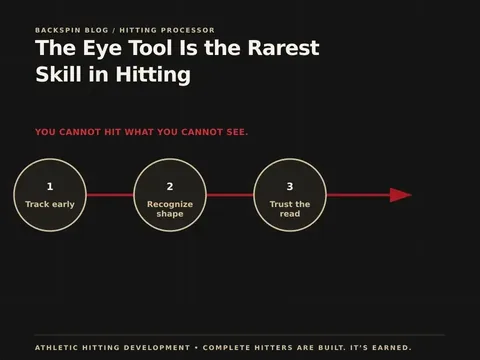
- See lots of real pitchesLive arms, machines with variety and video of real pitchers all feed the prediction library. Tee work alone doesn’t.
- Decide on every repCall pitches out loud, swing or take on purpose and track it. Every decision with feedback is a rep for the brain.
- Train early cuesTeach hitters to read release and arm slot, not just the ball near the plate. The earlier the read, the more time they buy.
- Add a little pressureStress changes how the brain works. Count games and stakes in practice teach the wiring to hold up when it counts.
PILLAR 3 · THE HITTING PROCESSOR
WIRE THEDECISION.
- Automatic swing
- Real pitches, every week
- Decide on every rep
- Read it early
THE BRAIN WIRES WHATEVER YOU REPEAT.
This is why the Hitting Processor is one of AHD’s 4 pillars, right next to the swing, athletic development and the mental approach. A great swing with a slow brain behind it gets beat by average stuff. Train both.
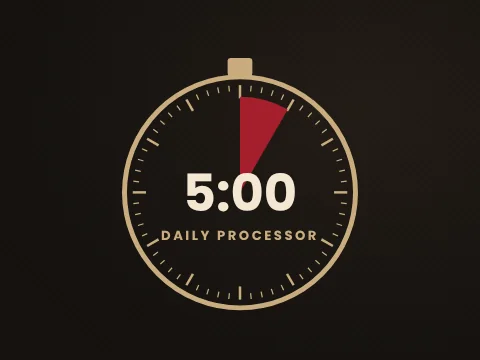
Want to go deeper? Read Why Great Hitters Predict, Not Just React and The 5-Minute Daily Hitting Processor Plan.
Quick answers
How much time does a hitter have to react to a fastball?
A 95 mph fastball takes roughly 0.42 to 0.45 seconds to reach the plate. The brain needs about 0.1 seconds just to process what the eyes see and the swing takes about 0.15 seconds, which leaves only a sliver of time to decide.
Can hitters see the ball hit the bat?
Not reliably. Late in the pitch the ball moves faster than the eyes can track, so hitters rely on prediction built from early cues like release, spin and arm slot.
Does practice actually change a hitter’s brain?
Yes. Repetition strengthens the neural pathways a skill uses and makes them faster and more automatic. Research comparing college hitters to non-players found differences in brain activity tied to pitch recognition and holding off a swing.
Can pitch recognition be trained?
Yes. Seeing many game-like pitches, making swing or take decisions and getting feedback builds the brain’s library of patterns, which lets hitters recognize pitches earlier.
Why can my kid hit off a tee but not against live pitching?
Tee work and BP build the swing, but they don’t build the prediction library. Live arms, machines with variety and video of real pitchers give the brain the patterns it needs to read pitches early.
Sources: Muraskin, Sherwin & Sajda, NeuroImage (2015) · Seattle Times · NPR · Popular Science
Don’t collect drills. Build a complete hitter.
Complete Hitters Are Built… It’s Earned!
This article is part of the AHD guide Pitch Recognition & Timing. Start there for the full picture and every related article.