
By BK, Athletic Hitting Development
Complete Hitters Aren’t Born. They’re Built… and Earned.
Key takeaways
- Most hitters who rake in practice and struggle in games change what they do once the game starts.
- They lose aggressiveness and start thinking about the wrong things: mechanics, mom in the stands, fear of the pitcher.
- Instead of fearing the pitcher, a good hitter thinks positively about the mistakes the pitcher WILL make, and is ready to punish them.
- The practice hitter is aggressive and athletic, lets nature take over and expects positive results. That’s who has to show up in the game.
- The biggest thing hitters lose between practice and the game is belief, and belief is the most powerful human force.
Hitters who hit well in practice but not in games almost always change what they do when the game starts. They lose their aggressiveness, think about the wrong things, and most of all, they lose belief.
Hitters who hit well in practice but not in games usually change what they do: they lose aggressiveness, think about mechanics or the crowd, fear the pitcher, and lose belief. Stay aggressive and athletic, trust the swing and expect positive results.
Train it: Mental Approach → Free tool: Pressure At-Bat →The swing didn’t disappear between batting practice and the first pitch. The same hands, the same legs and the same bat walk up to the plate. What changes is the hitter’s mind, and the mind changes the swing.
In practice, a hitter is aggressive and athletic and lets nature take over. In the game, he starts thinking about mechanics, mom in the stands and fearing the pitcher: the velocity, or the lack of it, or the sharp curveball. That is a different hitter. This post is about getting the practice hitter into the box on game day.
1. Why do hitters hit better in practice than in games?
One of the reasons players hit pretty good in practice and then struggle in the game is simple: they change what they do. Nobody tells them to. It happens on its own the moment the at-bat starts to feel like it counts.
The swing didn’t leave. The hitter changed.
In BP there’s no scoreboard, nobody in the stands and nothing to lose. The hitter just goes and gets the ball. In the game, that same hitter gets careful. Careful hitters don’t attack, and hitters who don’t attack don’t hit.
Parents see it from the fence all the time: line drive after line drive in the cage, then a tentative swing and a weak roller on Saturday. It looks like a swing problem. Most of the time it’s a mindset problem showing up in the swing.
2. What changes when a good practice hitter gets in a game?
First, the hitter loses aggressiveness. The swing gets guarded. He tries to make contact instead of trying to do damage. He waits to see what happens instead of making it happen.
WHAT CHANGES
PRACTICE HITTERVS GAME HITTER.
- Loses aggressiveness
- Thinks about mechanics
- Worries about who’s watching
- Fears the pitcher
- Loses confidence and belief a positive outcome will happen
SAME SWING. DIFFERENT MIND.
Second, the mind goes on the wrong things. Instead of being aggressive and athletic to the ball, the hitter is thinking about:
- Mechanics. Where his hands are, what his front side is doing, a cue from last week’s lesson.
- Mom in the stands. Who’s watching, who’s keeping score, what happens if he strikes out.
- Fear of the pitcher. Fears the velocity, or the lack of it, or the sharp curveball, instead of thinking positively about the mistakes the pitcher WILL make.
- Doubt. He loses confidence and belief that a positive outcome will happen.
None of that hits the baseball. Every one of those thoughts pulls attention away from the one job in the box: see the ball and attack it.
3. What should a hitter think about in the batter’s box?
Very little. The game is the place to trust it, not to fix it. A hitter should be aggressive and athletic, let nature take over, be really aggressive and athletic to the ball, and expect positive results.
That’s the identity of an AHD hitter: aggressive and athletic, with controlled violence. Expecting positive results isn’t arrogance. It’s the right posture for a hitter who has done the work.
As for the pitcher, stop fearing what he has and start thinking about what he’s going to give you. Every pitcher misses spots. Every pitcher hangs one. He WILL make mistakes, and the hitter’s job is to be ready for them:
“He’s gonna make mistakes that are destroyable… watch the big leaguers, they do it often.” Hard thrower, soft thrower or a guy with a sharp curveball, he will leave something over the plate. Expect it, and punish it.
Mechanics matter. They just belong in practice. Build the swing, the Mechanically Advantaged Angles (MAA) and the timing during the week so that on game day the body already knows what to do and the mind is free to compete.
4. Why is belief the biggest difference between practice and games?
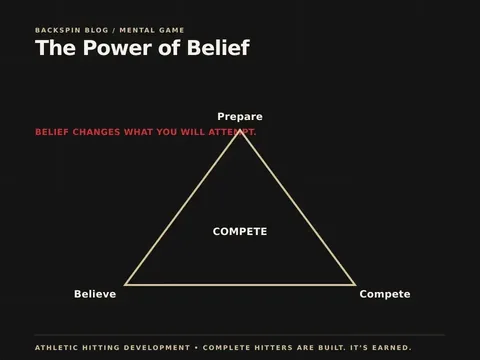
If I had to pick one thing, the biggest thing is that hitters just lose that belief. They lose confidence and belief that a positive outcome will happen. They stop trusting and believing in themselves when it counts. Everything else, the lost aggressiveness and the wrong thoughts, follows from that.
“Belief is the most powerful human force.” Belief built on real work is what lets a hitter swing free instead of swinging scared.
Trust it. Believe it. Attack it.
Belief isn’t a speech before the game. It comes from evidence: the reps you took, the swings you’ve barreled, the work you put in when nobody was watching. A hitter who knows he has done the work has every reason to believe, and every reason to be aggressive.
More on this in The Power of Belief in Hitting and The #1 Trait of Elite Hitters: Irrational Confidence.
5. How do you bring your practice swing into games?
The goal is to make the game feel like practice, and practice feel more like the game. Don’t change who you are when the lights come on.
- Fix it in practice, trust it in gamesMechanics work happens during the week. In the box, no swing thoughts, just see it and attack it.
- Same intent every swingHit in practice the way you want to hit in games: aggressive and athletic to every pitch, not just cruising through BP.
- Give the mind one jobBefore each pitch, one simple thought about the ball and being on time. Not mom, not the scoreboard, not your hands.
- Expect positive resultsWalk up expecting to hit the ball hard and expecting the pitcher to make a mistake. You’ve done the work, so believe it.
- Practice against game looksMix speeds and pitches so velocity, a soft thrower or a sharp curveball on Saturday is nothing to fear. The Hitting Processor gets trained daily.

THELESSON.
- Don’t change what you do
- Aggressive and athletic to the ball
- Let nature take over
- Expect the pitcher’s mistakes
- Trust and believe in yourself
Complete Hitters Are Built…Earned.
This is where the Mental Approach pillar and the Hitting Processor work together. One trains the hitter to trust and believe. The other gives him enough game-speed looks that there’s nothing new to worry about when the game starts.
Not sure whether your hitter’s gap is the swing or the mind? Start with the free SwingChecker™ to find his top priorities, then take the free first Mental Approach lesson. If the pressure side is what gets him, read Why Hitters Choke Under Pressure too.
Want to go deeper? Read The Power of Belief and Why Hitters Choke, and 5 Fixes That Work.
Quick answers
Why do I hit well in practice but not in games?
Most hitters change what they do in games. They lose aggressiveness, start thinking about mechanics and who’s watching, fear the pitcher instead of expecting his mistakes, and lose belief in themselves. The swing is the same; the mindset isn’t.
Should hitters think about mechanics during a game?
No. Mechanics are built in practice. In the game, a hitter should trust his swing, stay aggressive and athletic, and keep his mind on seeing the ball and attacking it.
How can my child hit with more confidence in games?
Confidence comes from evidence. Make sure practice has real intent and game-like looks, keep game-day thoughts simple, and remind your hitter that the work he put in is a reason to believe.
Is hitting well in practice but not games a mental problem?
Usually, yes, at least partly. If the swing works in practice, the swing is there. The gap is almost always lost aggressiveness, thinking about the wrong things and losing belief once the game starts.
Don’t collect drills. Build a complete hitter.
Complete Hitters Aren’t Born. They’re Built… and Earned.