By BK, Athletic Hitting Development
Complete Hitters Are Built… It’s Earned!
There are a lot of ways to win a baseball game.
Saguaro’s state title run shows hitters need to see spin every day, not just fastballs, because you can’t learn to recognize what you never see. Stack those reps from the fall on, stay ready for the heater, and hitters become dangerous when a pitcher hangs a breaking ball.
Train it: Hitting Processor Masterclass →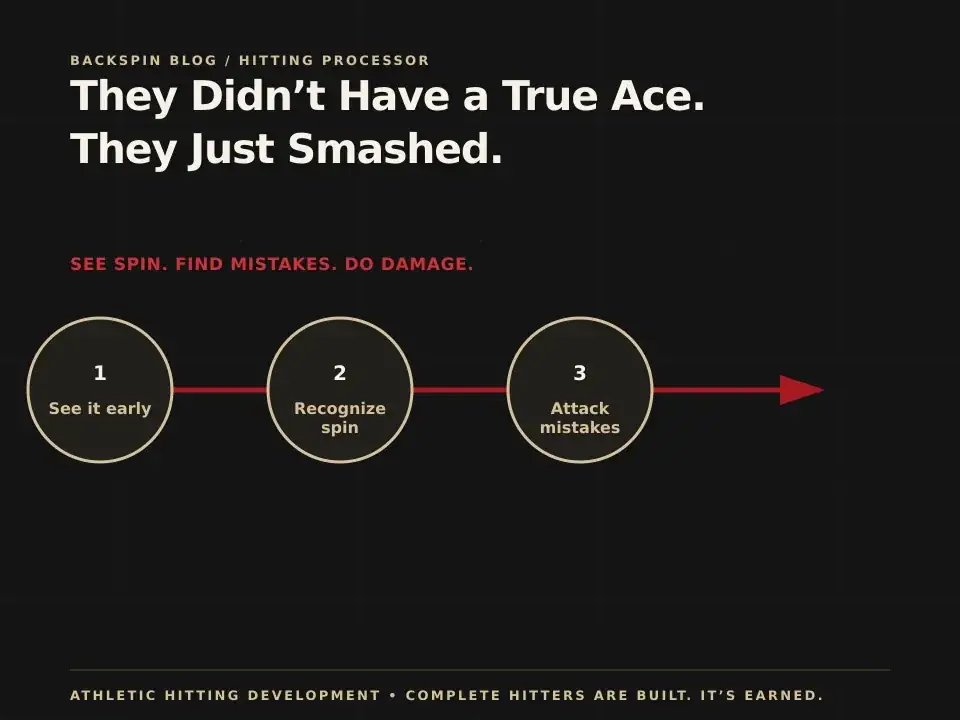
Sometimes you have that dude on the mound. A legitimate ace. The guy who takes the baseball and everybody in the dugout thinks:
WIN DAY.
Saguaro High School didn’t really have that luxury during its run to the Arizona 4A State Championship.
Don’t get that crossed.
There were several talented young pitchers toeing the slab. They competed. They executed. They gave their team opportunities to win.
But I wouldn’t describe that pitching staff as having one overwhelming, no-doubt ace whose stuff meant the opponent was basically finished before the game started.
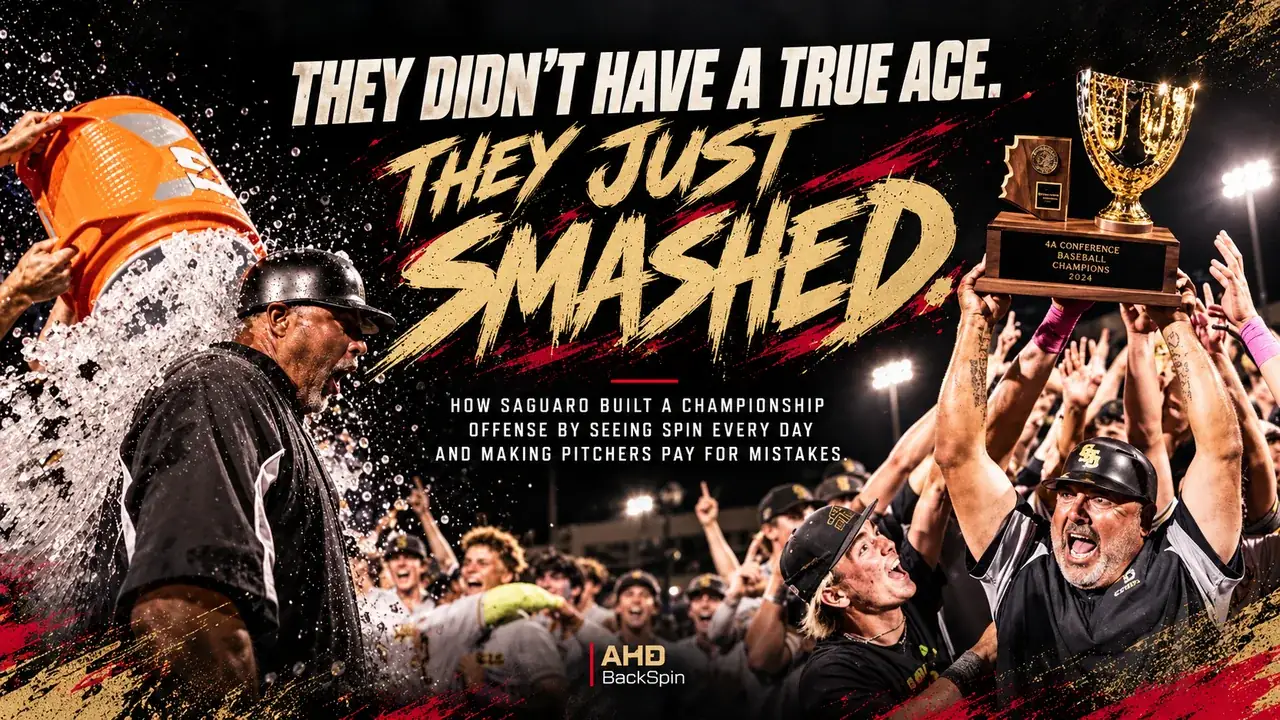
So how did Saguaro win the State Chipper?
THEY SMASHED.
1. The work started long before the championship
I was lucky enough to spend some time around the Saguaro program during the fall and early spring.
The roster had talent. Gomez was headed to South Carolina. Bratspis was headed to Kansas State. There were tremendous young players coming behind them, including Max Pena and a group of athletes who were continuing to develop.
It was a good roster.
But talent alone doesn’t explain what happened.
There was a staff preparing those kids every day. Former Major League catcher Gerald Laird leading the program. Do-it-all assistant George Adams. Todd Johnson working with the pitching staff. Bret Adams coaching first base and doing whatever else needed to get done. And make no mistake, longtime coach Thom Dunleavy was around passing along years of baseball knowledge.
There were a lot of fingerprints on that championship — and a lot of work happening when nobody outside the program was paying attention.
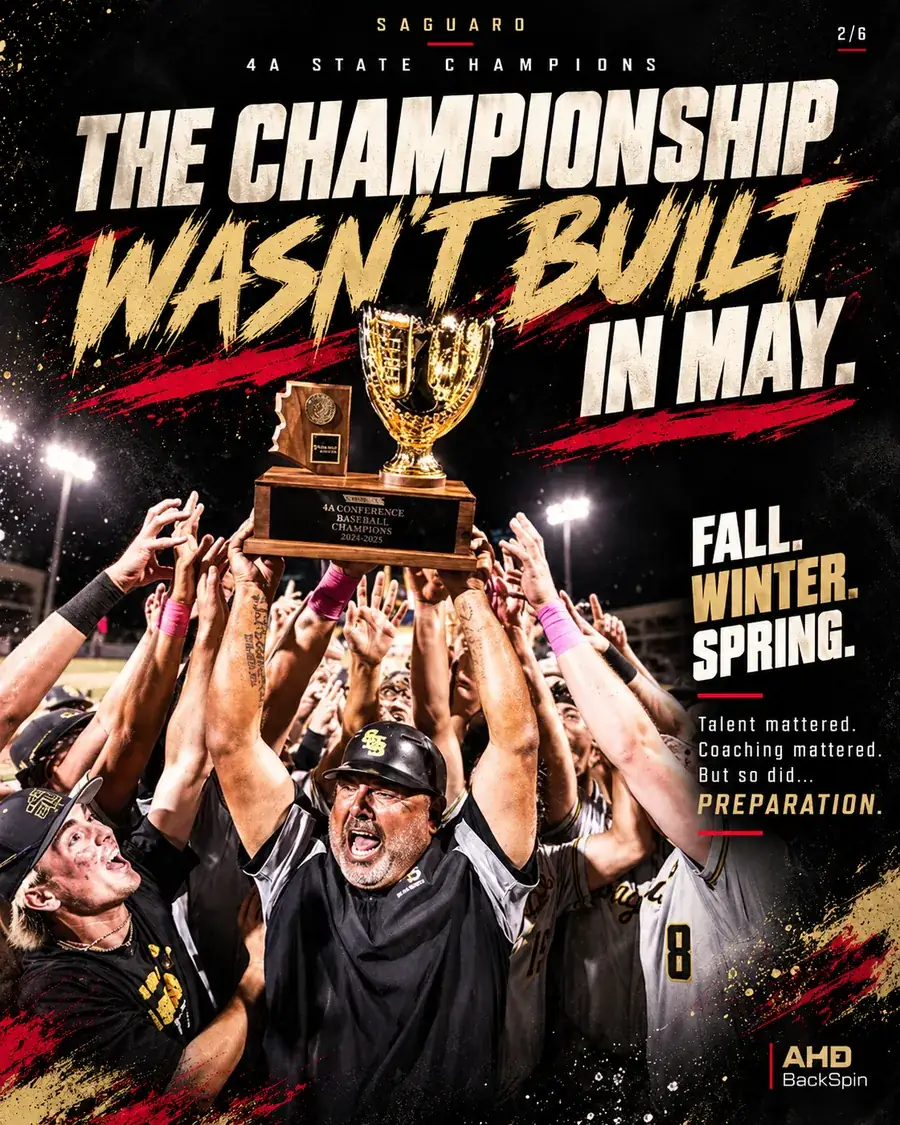
2. You need to know something about Gerald Laird
Gerald Laird spent more than a decade catching in the Major Leagues. He has been around some of the greatest players in the world.
And you know what stands out about him?
THIS GUY GRINDS.
That’s what impressed me.
The toughness. The energy. The knowledge. The attention to detail. The willingness to coach.
He’s tough but fair, knows the game at an extremely high level and brings energy to the field every day.
Here is somebody who played at the highest level imaginable and still approaches development like somebody trying to earn his next opportunity.
He doesn’t act like the work is beneath him.
He works.
That matters. Players notice it. Programs take on the personality of the people leading them.
SAGUARO’S TITLE RUN
THEY SAWSPIN DAILY.
- Spin every day
- Seeing isn’t chasing
- Built before the title game
DEVELOPMENT WINS LATE.
3. Then we started talking hitting
Gerald and I spent some time talking about hitter development.
And we’re probably on the same page on about…
99.999999%
One of the subjects that came up is something I’ve talked about repeatedly at Athletic Hitting Development:
We don’t prepare hitters well enough to hit off-speed pitches and spin.
We spend hours hitting fastballs.
Fastball flips. Fastball batting practice. Fastball machine work. Fastball tee work.
Then a kid gets into a game, sees a breaking ball and suddenly we’re screaming:
“STAY BACK!”
That’s not development.
That’s hoping.
So I asked Gerald a simple question:
Should hitters SEE SPIN every day?
His answer was basically the same as mine.
Yes.
And they didn’t just talk about it.
They did it.
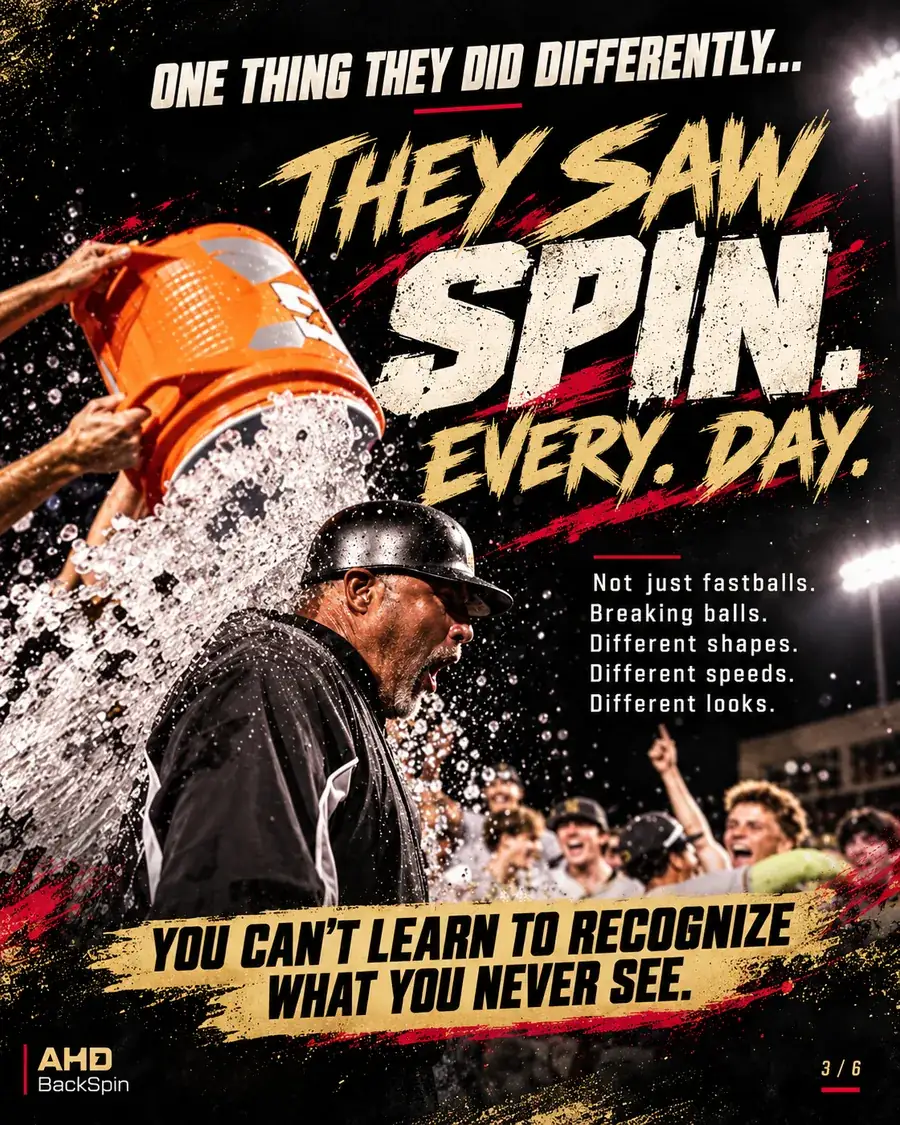
From early fall all the way through the season, there was a pitching machine available producing different types of spin.
Hitters saw breaking balls. They saw changing shapes. They saw different velocities. They were forced to recognize something other than another straight fastball coming toward home plate.
Day after day after day.
4. Why does that matter?
Because hitting a breaking ball isn’t just about having a prettier swing.
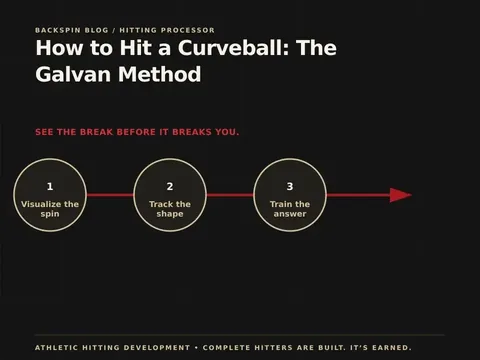
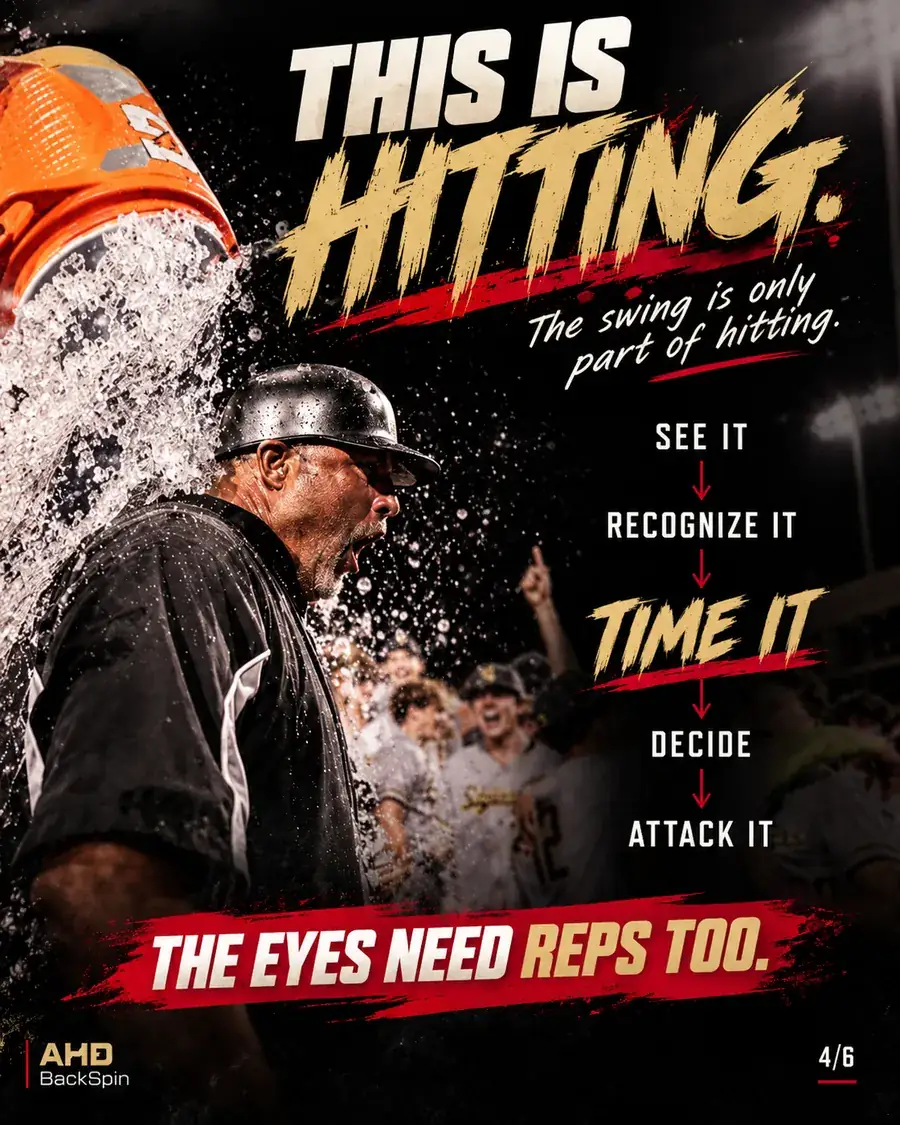
SEE IT → RECOGNIZE IT → TIME IT → DECIDE → ATTACK IT.
That’s the Hitting Processor.
And you can’t develop that processor very well if the hitter almost never sees the pitch you’re asking him to recognize.
The eyes need reps too.
Recognition needs reps.
Timing needs reps.
Decision-making needs reps.
Adjustability needs reps.
You don’t magically acquire those abilities because the calendar says playoffs.
5. Seeing spin doesn’t mean chasing spin
This is important.
I’m not saying hitters should walk into the box looking for a curveball every pitch.
I’m not saying we abandon the fastball.
The fastball still matters tremendously.
I teach hitters to be prepared to destroy the heater.
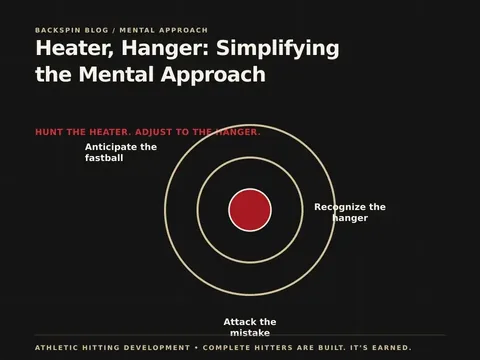
HEATER. HANGER.
Be ready for the fastball in your damage zone.
But when the pitcher makes a mistake with spin — when that breaking ball backs up, hangs or stays in the zone — the hitter has to be capable of recognizing it and attacking it.
That requires exposure.
You have to see it.
You have to recognize it.
You have to learn what the pitch looks like coming out of a hand.
You have to experience the difference between:
BALL.andHANGER.
That’s learned.
6. Fast-forward to the final third of the season
And then it happened.
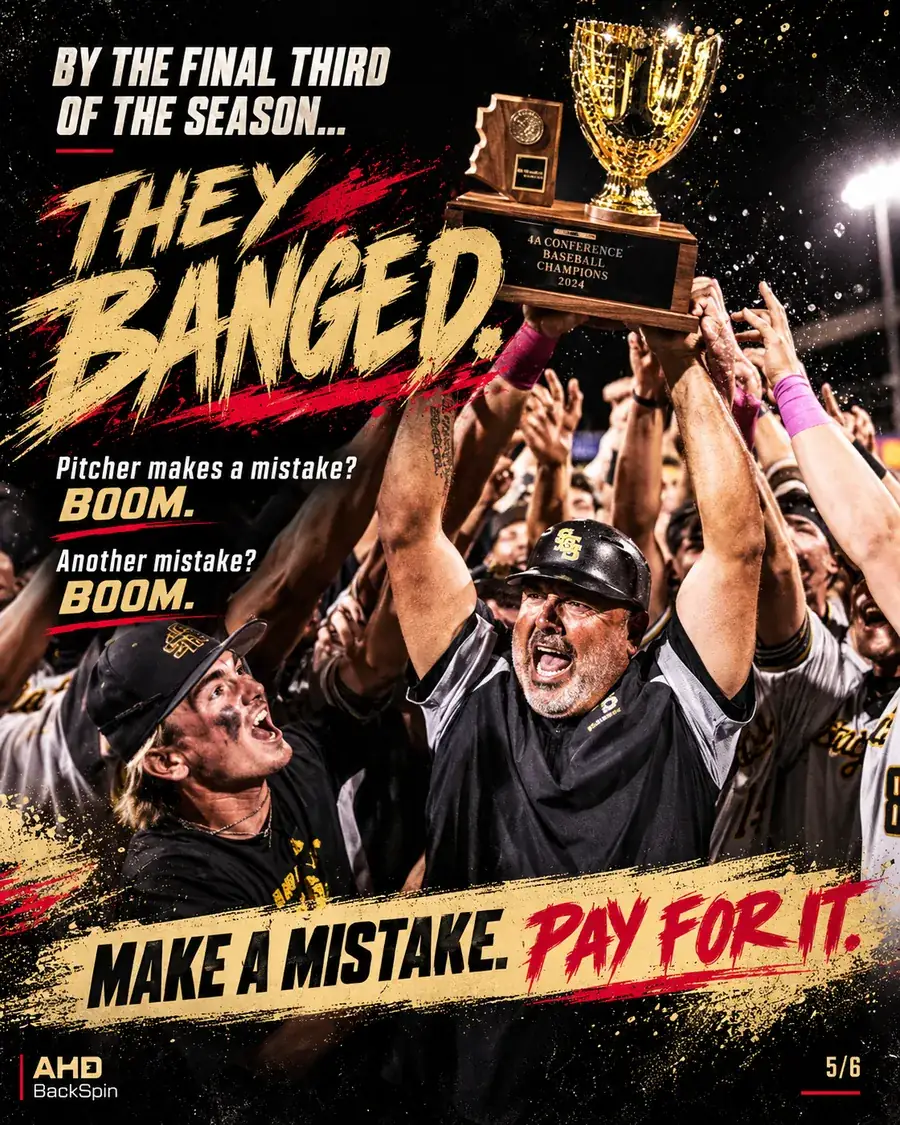
That Saguaro team started to BANG.
Pitchers couldn’t live in the middle.
They couldn’t make comfortable mistakes.
They couldn’t throw something hittable and assume they’d get away with it.
Because when a pitcher made a mistake…
BOOM.
That’s what good offenses eventually become.
They’re not necessarily hitting every pitch.
They’re not chasing everything.
They’re not trying to hit home runs every swing.
They simply become extremely dangerous when the pitcher makes a mistake.
And that changes games.
It changes innings.
It changes opposing pitchers.
It changes the entire feel of a tournament.
7. Championships aren’t built in the championship game
There were obviously hundreds of things that contributed to Saguaro winning that championship.
Coaching. Pitching. Defense. Strength. Competitiveness. Leadership. Player development. Confidence. Execution.
There were seven or eight months of conversations, corrections, drills, repetitions and decisions that I never saw.
So I’m not suggesting that seeing breaking balls was some magic secret responsible for everything.
There is no magic drill.
There is no magic machine.
There is no magic hitting coach.
But I believe seeing spin every day was a huge piece of their offensive preparation.
Because development compounds.
A hitter seeing breaking balls in October may not look important.
Another 15 pitches in November doesn’t look important.
Another session in December doesn’t look important.
But stack those repetitions over months.
Now it’s April.
Now it’s May.
Now you’re playing elimination baseball.
And now the opposing pitcher leaves a breaking ball over the plate.
The hitter doesn’t panic.
He’s seen it.
He recognizes it.
He’s on time.
He makes the decision.
And… BOOM.
8. That’s development
Championship teams are usually celebrated for what everybody sees at the end.
The dogpile.
The trophy.
The pictures.
The rings.
But development happens when almost nobody is watching.
It happens months earlier.
It happens during another machine session.
Another round.
Another correction.
Another rep.
Another coach refusing to let the standard slip.
That was one of my biggest takeaways from spending time around Saguaro.
There was talent.
But there was also preparation.
There were accomplished coaches.
But they still grinded.
And by the end of the year, there was an offense capable of making pitchers pay for mistakes.
They didn’t need one pitcher to carry them every night.
Because those dudes could hit.
THEY SMASHED.
And eventually…
They were State Champions.
9. The AHD takeaway
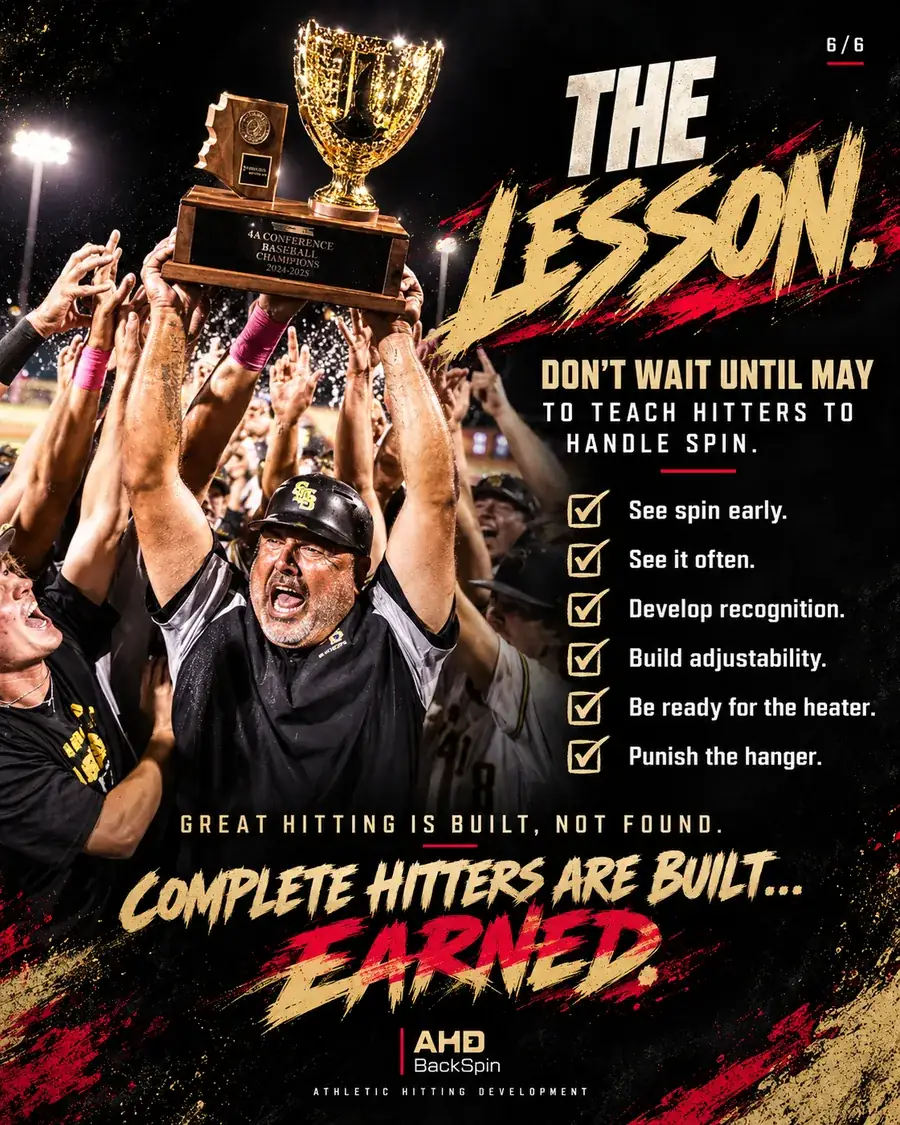
If you’re developing hitters, don’t wait until they struggle against breaking balls to start teaching them how to handle breaking balls.
Let them see spin.
Let them recognize spin.
Teach them what they’re looking at.
Train their timing.
Train their decisions.
Teach them to destroy the heater…
…and punish the hanger.
Because the swing is only one part of becoming a hitter.
SEE IT → RECOGNIZE IT → TIME IT → DECIDE → ATTACK IT.
10. Train the processor, not just the swing
Don’t collect drills. Build a complete hitter.
Seeing spin is a Hitting Processor skill, and it is one of the four pillars AHD trains. Run the free SwingChecker™ to find your hitter’s first priority. The Hitting Processor course trains see it, recognize it, time it, decide and attack it, and the Off-Speed course builds the breaking-ball and changeup work this story is about. the first 3 lessons of every course are free. Want Coach in the process? See online remote baseball and softball training, or live lessons in Scottsdale.
THELESSON.
- Train it daily.
- See spin, don’t chase it.
- Trust the work.
- Smash the mistake.
Complete Hitters Are Built…Earned.
Quick answers
Should hitters see spin every day?
Yes. Hitters can only learn to recognize breaking balls and off-speed pitches they actually see. Short, regular exposure to spin from a machine, front toss or live arms builds recognition, timing and decision-making over months instead of hoping it shows up in the playoffs.
Does seeing spin mean hitters should look for breaking balls?
No. Hitters should still be ready to attack the fastball in their damage zone. Seeing spin in practice teaches them to recognize a hanging breaking ball and punish the mistake, not to sit on curveballs.
What is the Hitting Processor?
The Hitting Processor is how a hitter turns what the eyes see into a swing decision: see it, recognize it, time it, decide, attack it. It is one of the four pillars AHD trains, alongside the swing, athletic development and the mental approach.
How do you train hitters to hit breaking balls?
Mix spin into practice all year: machine breaking balls, mixed front toss and live at-bats. Train recognition first, then timing, then the decision to swing or take, and score whether the hitter punished the hanger and laid off the ball.
Why do hitters struggle against breaking balls in games?
Because most practice is fastball flips, fastball BP and fastball machine work. Then a hitter sees a breaking ball in a game and hears “Stay back!” That’s hoping, not development.