By BK, Athletic Hitting Development
Complete Hitters Are Built… Not Given. Earned!
Why are we so bad at hitting curveballs and off-speed pitches? And what can a hitter actually do about it? It starts with a method I watched one elite hitter use every single game.
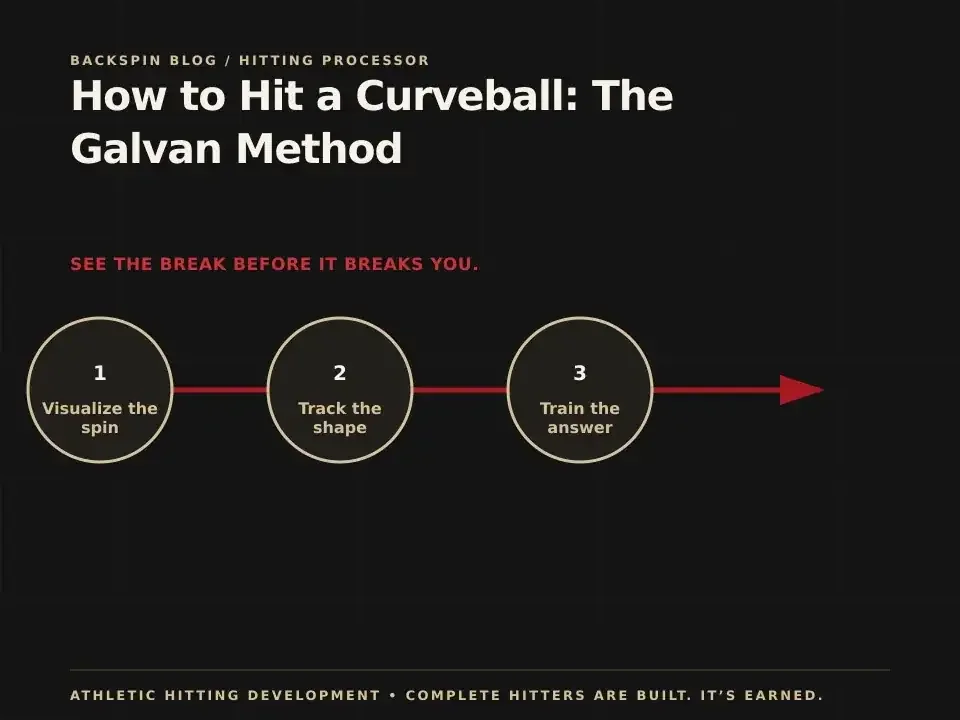
To hit a curveball, you have to see spin early and often enough that your brain recognizes it before it breaks. The Galvan Method builds that recognition daily, so the hitter can stay on the fastball and still adjust to the curve.
Train it: Off-Speed / Spin Masterclass →
1. Why we’re terrible at hitting curveballs
Let’s get the obvious out of the way first. Some of these pitches are NASTY.
A good curveball curves, dips and dives. Hitting any ball with a round bat is hard enough. Hitting one that changes direction on the way in is harder. Even great hitters mostly hit the mistakes, the hanger or the one that didn’t bite. Nobody is out there squaring up Dr. Nasty’s best one.
We hit the mistakes, not Dr. Nasty.
2. The 99% problem
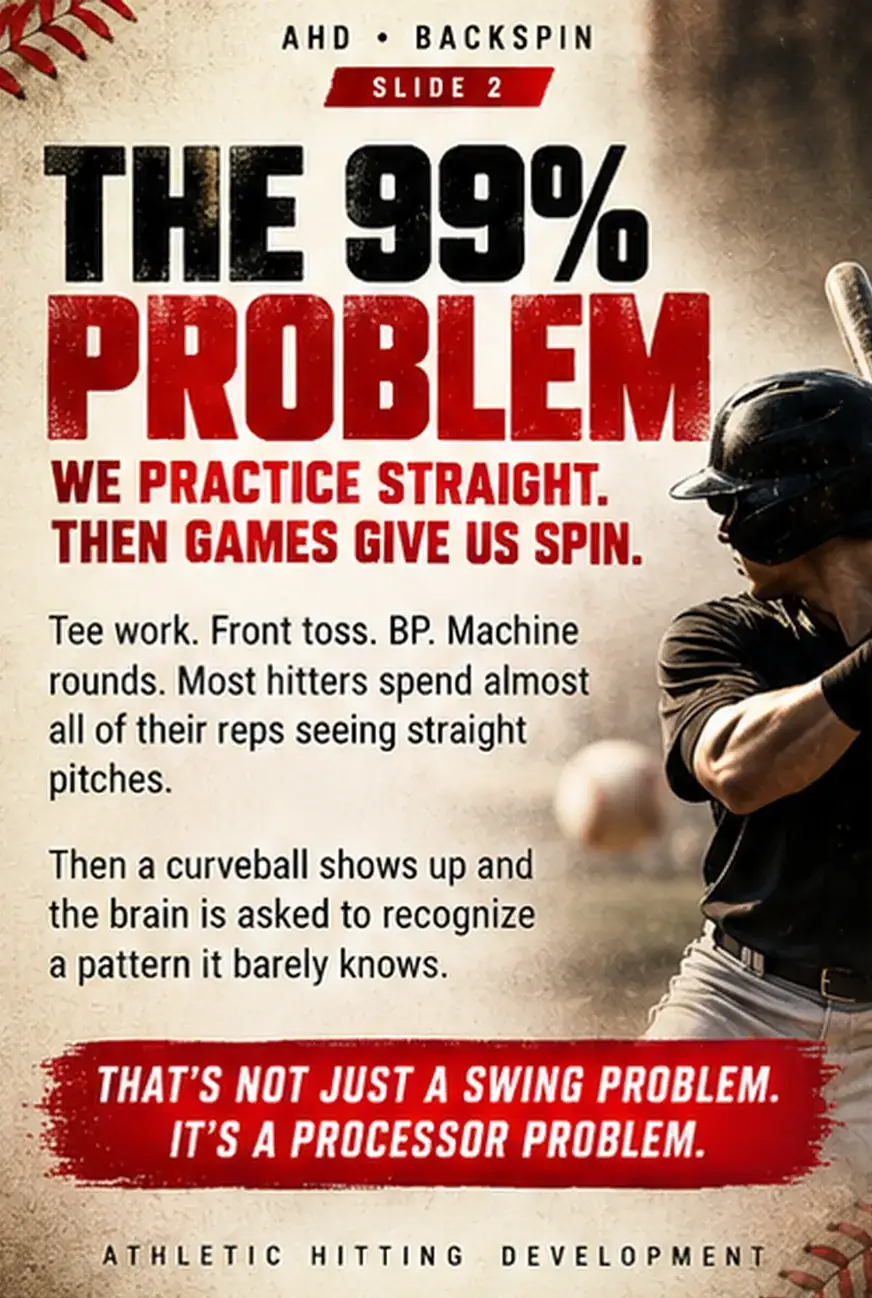
There’s a reason that’s even more logical, and it passes the sniff test: we just don’t practice hitting spin and off-speed pitches enough.
Think about every swing you’ve ever taken. Tee work. Front toss. BP. Machine rounds. How many of those were straight pitches?
For every hitter I know, the answer is about 99.9%. Then we step into a game and expect to recognize a pitch our brain has barely seen. That’s not a swing problem. That’s a hitting processor problem. (For the basics of reading spin, see Pitch Recognition & Hitting Off-Speed.)
3. The obvious fix: see more spin
Going with Dr. Obvious again: practice it more. There are several ways to do it. They’re just not convenient in today’s baseball machine.
Ways to see more spin
1. Spin on the machine. Use a pitching machine that throws breaking balls. Mix it in every week, not once a season.
2. Live at-bats. Get as many live ABs as you can. Nothing replaces a real arm and real spin.
3. Stand in on bullpens. Track pitches without swinging. Call the pitch out loud as early as you can.
4. Off-speed rounds. Give spin its own round in practice. Don’t let it be an afterthought.
All of that helps. But one hitter I coached found a way to make up for a lifetime of straight pitches, and it didn’t need a machine at all.
4. The hitter who could just rake
I coached an elite hitter who was an average defender, and he worked hard to be average. Average body. Well below average speed. But the guy could JUST RAKE.
He hit in the 3-hole on one of the best teams in the country the year I coached him. He was obsessive. He worked hard. He was a talented hitting athlete. But his superpower was his processor.
The way he saw the ball and processed everything was elite: spin, velocity, location and movement. His processor found the exact coordinates and knew exactly when the barrel had to be there. It was one of those supercharged processors they only hand out at the front of the line.
But he didn’t just see it well and have the body and central nervous system to smash baseballs. He had a method for making up for all those years of seeing straight pitches growing up.
5. The Galvan Method, step by step
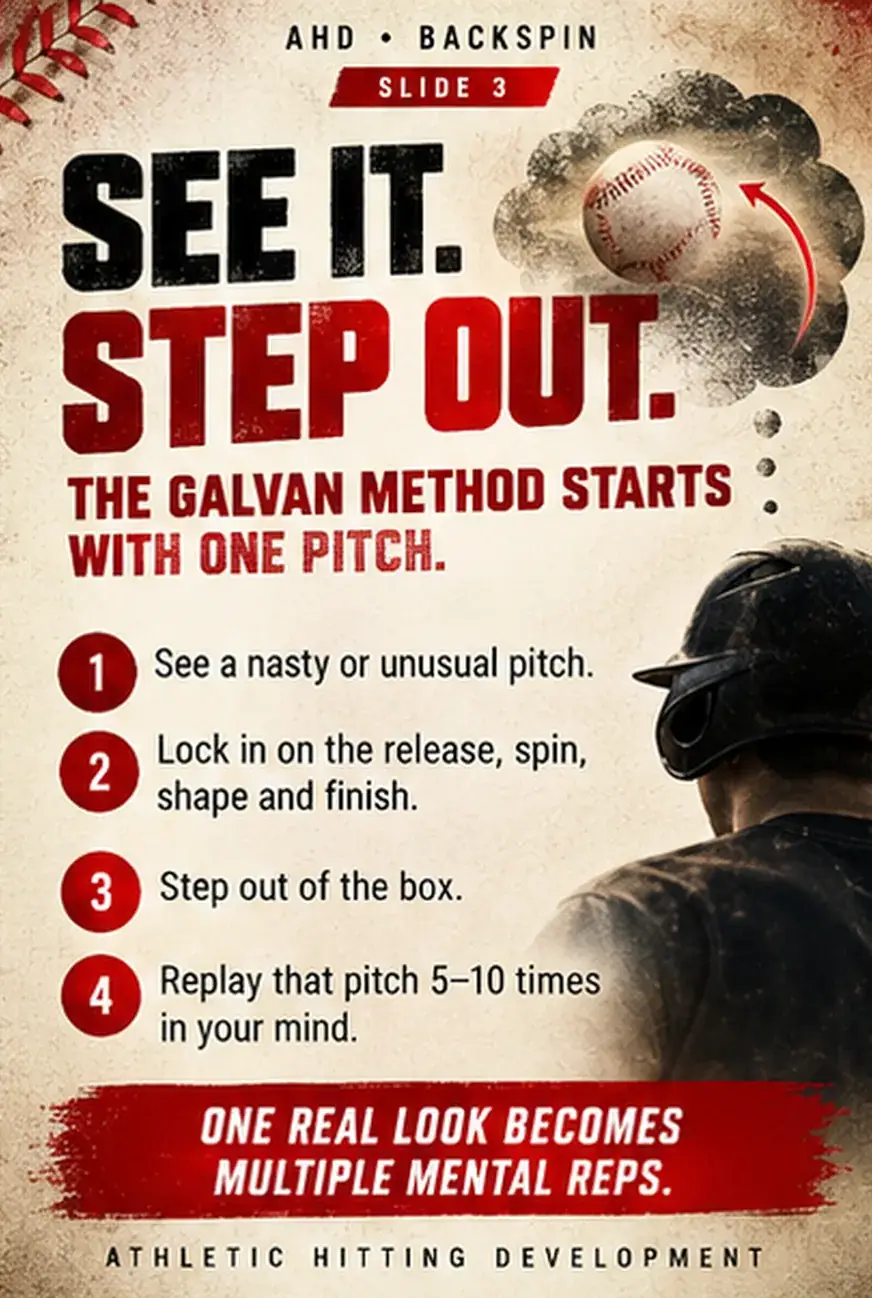
When he saw a pitch, especially one with rare movement, he stepped out of the box and visualized that pitch 5 to 10 times. By the end of the game, he had “seen” the curveball you threw him in the 1st inning at least 50 times.
How to use the Galvan Method
1. See it. A pitch with nasty or unusual movement shows up. Lock in on it, whether you swung, took it or missed it.
2. Step out. Take a breath and get out of the box.
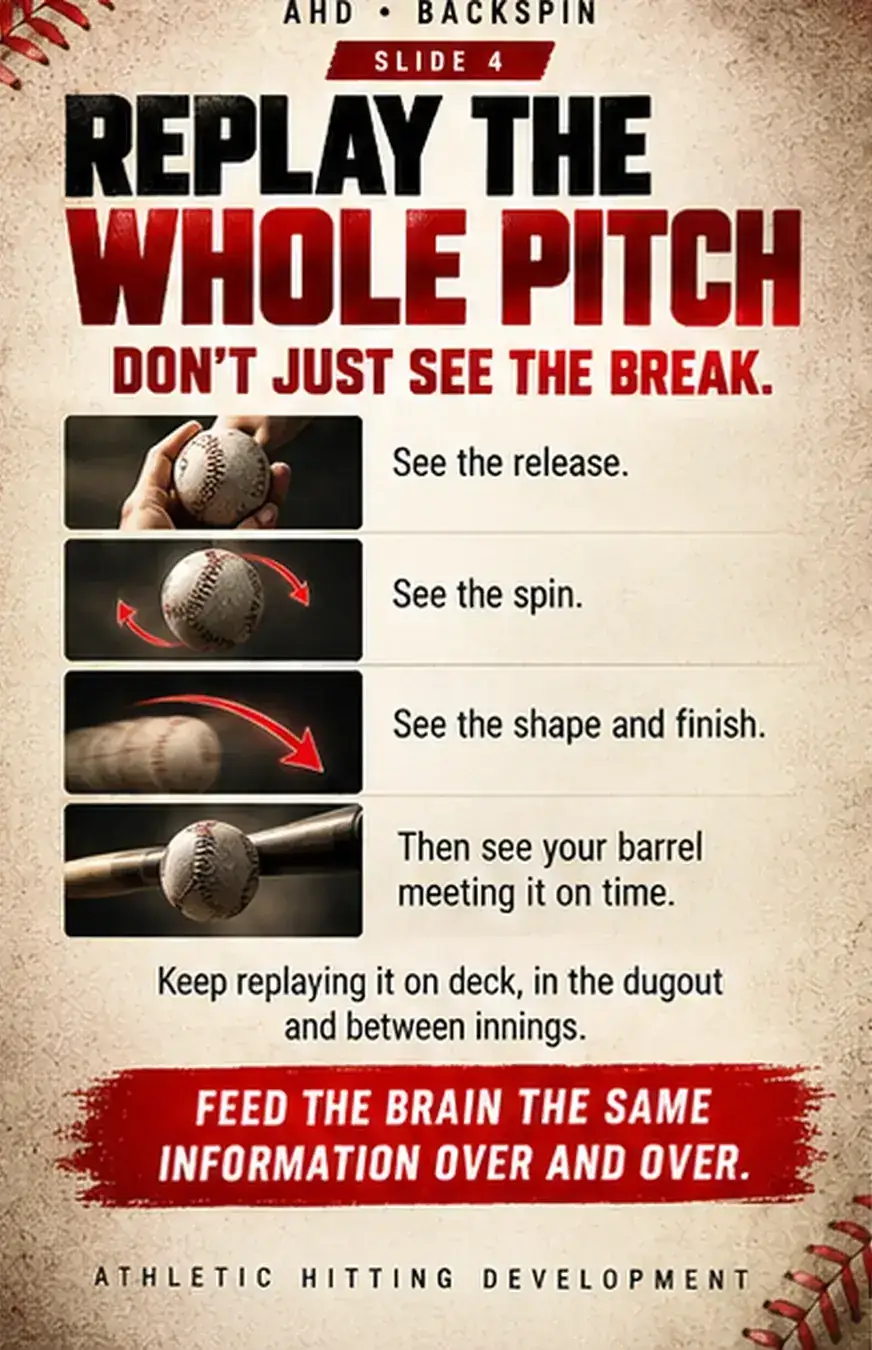
3. Replay it 5–10 times. See the release, the spin, the shape and where it finished. Then see your barrel meeting it on time.
4. Keep replaying it. On deck, in the dugout and between innings. Every rep counts.
5. Step in ready. The next time you see that pitch, your brain has seen it dozens of times, not once.
Feed the information to your brain over and over. When you get up next, you’re more prepared.
6. Why it works: the art and science of hitting
Again, it makes sense. Great hitters predict, not just react, and your brain can only predict what it has stored. If 99% of what it has stored is straight pitches, a curveball is a stranger. The Galvan Method turns one look into dozens, so the stranger becomes familiar.
Watching him do it was watching the art and science of hitting come together. The science is the processor: recognize the spin, read the shape, time it. The art is the hitter who found his own way to train it, in the middle of a game, with nothing but his mind.
He hit over .400 in four seasons of high-level college baseball. Who does that?

7. For players, parents and coaches
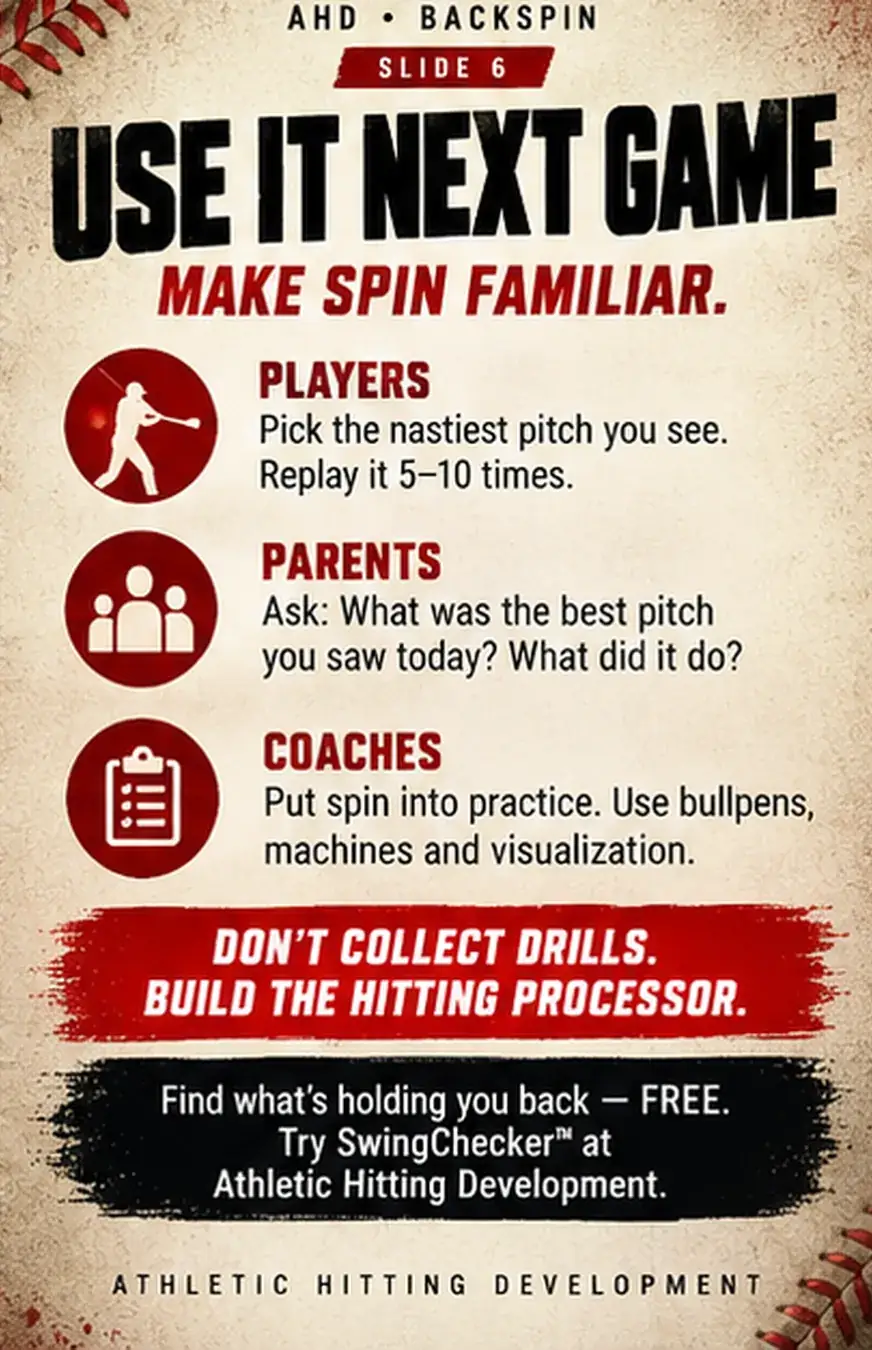
- Players: next game, pick the nastiest pitch you see and replay it 5–10 times before your next at-bat.
- Parents: after the game, ask, “What was the best pitch you saw today? Show me what it did.”
- Coaches: put spin into every practice, and teach visualization in the dugout, not just in the cage.
8. Build the complete hitter
Don’t collect drills. Build a complete hitter.
The AHD Off-Speed Pitch Masterclass trains hitters to recognize, time and attack breaking balls and changeups. The Hitting Processor Masterclass builds vision, pitch recognition and decision making. Not sure where to start? Run the free SwingChecker™, or see online remote baseball and softball training with BK.
Quick answers
How do you hit a curveball?
Pick up the spin early out of the pitcher’s hand, stay on time for the fastball, and let your hands adjust to the curveball. Most of all, see a lot more spin in practice. Most hitters have taken almost all of their swings against straight pitches.
Why is it so hard to hit off-speed pitches?
Two reasons. Good breaking balls are nasty, and even great hitters mostly hit the mistakes. But the bigger reason is practice: most hitters see straight pitches in 99% of their swings, so their brain has very little spin stored up to recognize.
What is the Galvan Method?
After seeing a pitch with rare movement, the hitter steps out of the box and visualizes that pitch 5 to 10 times: the release, the spin, the shape and the barrel meeting it. By the end of the game, he has “seen” that curveball dozens of times.
How can you practice hitting breaking balls without a live pitcher?
Use a pitching machine that throws spin, stand in on bullpens and track pitches without swinging, and use visualization between reps. Mental reps still train the hitting processor when real spin isn’t available.
Should I look for the fastball or the curveball?
Most hitters do best sitting on the fastball and adjusting to the curveball. Training spin recognition daily is what makes that adjustment possible without getting frozen.
This article is part of the AHD guide Pitch Recognition & Timing. Start there for the full picture and every related article.