By BK, Athletic Hitting Development
Complete Hitters Are Built… It’s Earned!
Key takeaways
- Bases loaded, two outs, down to his final strike in NLDS Game 2, Jackson Chourio fouled off a 103.5 mph fastball from Mason Miller.
- He took a slider that darted into the dirt, then lined a 101.3 mph fastball for a two-run walk-off single.
- A good take isn’t passive. It’s an aggressive decision to wait for a pitch you can damage.
- Train takes like a skill with a scored decision round.
A good take isn’t passive. It’s an aggressive decision to wait for a pitch you can damage.
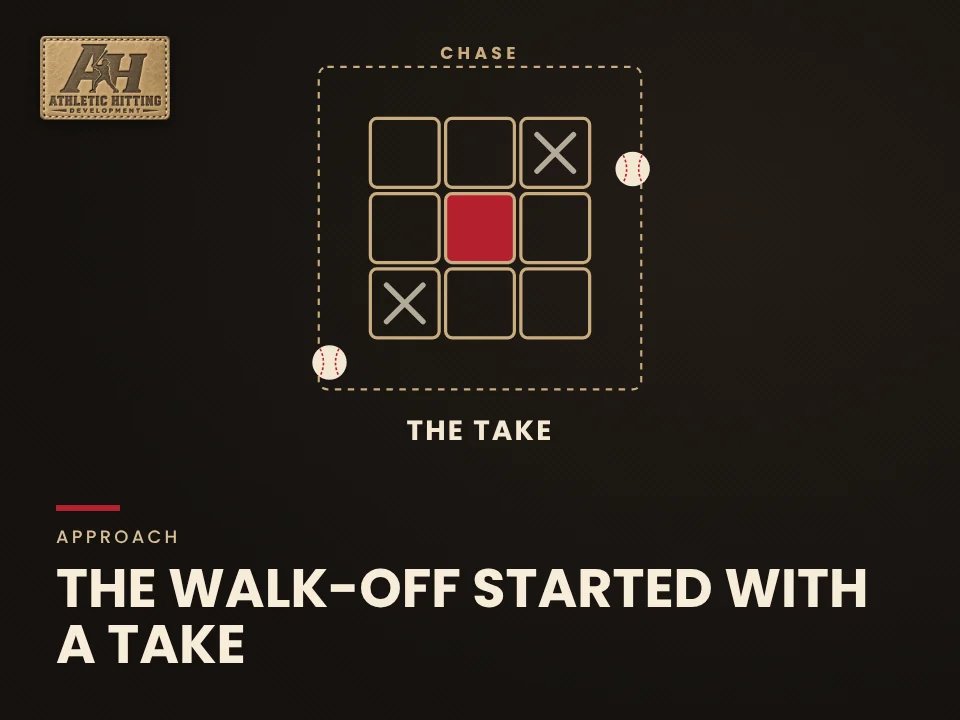
Jackson Chourio’s NLDS walk-off single came right after he took a slider in the dirt with two strikes. The lesson for hitters: a good take isn’t passive, it’s an aggressive decision to wait for a pitch you can damage.
Train it: Hitting Processor Masterclass →1. The at-bat, pitch by pitch
NLDS Game 2, October 4, bottom of the ninth. Bases loaded, two outs. Padres right-hander Mason Miller opened with three triple-digit fastballs, and Jackson Chourio was down to his final strike.
- 103.5 mph fastball, low and away. Fouled off. Stay alive.
- Slider that started in the zone and darted for the dirt. Taken. No free out.
- 101.3 mph fastball in a hittable spot. Lined past second for a two-run walk-off single. Brewers win 4–3.
The last swing was excellent. But the at-bat didn’t start there. It turned on the slider he refused to swing at.
The swing is only the last decision.
2. The Processor isn’t “take until you get a strike”
Some hitters hear “be selective” and get tentative. That isn’t the goal. The goal is to be on time for your heater, then stop your move when the ball tells you it isn’t yours.
Chourio’s at-bat is the picture. Enough urgency to stay alive against 103. Enough vision and body control to hold up on a slider that looked like a strike out of the hand. Enough readiness to attack the next fastball. That’s a hitter who can compete in a fast game.
THE HITTING PROCESSOR
SEE IT.SAY NO.
- See It
- Recognize It
- Time It
- Decide → Attack It
THE TAKE IS PART OF THE HIT.
3. Three decisions in every at-bat
- What am I hunting?A fastball zone, an off-speed count, or a simple “just react” mode. Pick it before the pitch.
- Is this pitch mine?The answer has to come from early information, not panic at the plate.
- Can I still deliver the barrel?When the pitch isn’t yours, the win is stopping. When it is, the win is attacking it hard.
4. Train takes like a skill
Most young hitters take batting practice where every ball is a swing. Then they play games where the biggest separator is whether they can say no. That’s a bad transfer problem.
Use a 20-pitch decision round. The coach mixes balls, strikes, fastballs and off-speed. The hitter calls “yes” or “no” early and only swings when the pitch matches the plan. Score it:
- +1 correct take. Saying no is a skill.
- +1 correct swing decision. Yes to your pitch.
- +1 on-time, balanced swing at a good pitch. Decision plus delivery.
- 0 for a hit on a bad decision. Don’t let luck hide the truth.
Decisions aren’t made with the eyes alone. A hitter who loses balance early, leaks forward or dumps the barrel feels forced to commit. Staying athletic longer, with Mechanically Advantaged Angles that keep the barrel playable, is what lets a hitter hold up. That’s why The Swing and The Hitting Processor get built together.
5. For the next game
Give the hitter one sentence: “I’m on time for my heater. I’m calm enough to say no.” That’s the Heater/Hanger hitter in real life. Ready to do damage in your zone, adjust to the hanger, and don’t chase the pitcher’s garbage.
Quick answers
How do you teach a hitter to stop chasing?
Train decisions, not just swings. A 20-pitch round where hitters call yes or no early and score good takes teaches them that saying no is part of hitting.
Is taking pitches being passive?
No. A good take is an aggressive decision to wait for a pitch you can damage. Be on time for your heater, then stop when the ball isn’t yours.
What should a hitter think with two strikes?
Stay on time for the fastball, protect the zone, and trust your read on spin. Chourio fouled off 103.5, took a slider in the dirt, then hit the next fastball.
What happened on Jackson Chourio’s walk-off?
With the bases loaded and two outs in NLDS Game 2, he fouled off a 103.5 mph fastball, took a slider, then lined a 101.3 mph fastball for a two-run walk-off single.
How do you practice taking pitches?
Use a 20-pitch decision round with mixed balls, strikes, fastballs and off-speed. The hitter calls yes or no early and only swings when the pitch matches his plan. Score correct takes and swing decisions, and give zero for a hit on a bad decision.
Source: MLB.com, Brewers win NLDS Game 2 (October 4, 2026). The coaching read is AHD’s. More breakdowns in MLB Breakdowns and Hitting Processor.
Don’t collect drills. Build a complete hitter.
Complete Hitters Are Built… It’s Earned!