By BK, Athletic Hitting Development
Complete Hitters Are Built… Not Given. Earned!
Key takeaways
- There are many types of good coaches. Each one brings something real.
- Only a few are elite.
- Elite coaches don’t need every trait, but they better be strong in several.
- One strength alone has a blind spot. Several strengths cover each other.
- The proof of an elite coach is in the players: better in games, and they know why.
What is an elite coach? Everybody has had a good one. Very few people have had an elite one.
Elite coaches don’t need every trait, but they are strong in several, and those strengths cover each other’s blind spots: the head, the plan, the fire and the heart. The proof is in the players, who get better in games and can explain why.
Train it: Hitting Coach Certification →In 52 years of playing, coaching and scouting, I’ve been around every kind of coach there is. Most of them were good at something. Some were great at one thing. Only a handful were elite. The difference wasn’t one magic trait. It was how many strengths they had, and how well those strengths worked together.
1. There are many kinds of good coaches
Good coaches come in a lot of shapes. You’ve probably played for a few of these:
- Disciplinarians who set the standard and hold everyone to it.
- Strategists who see the game three moves ahead.
- Organized coaches whose practices run like a clock.
- Knowledgeable coaches who understand the swing and the game inside and out.
- Motivated coaches who bring energy every single day.
- Competitive coaches who hate to lose and make you hate it too.
- Leaders who players follow without being told to.
- Coaches who love the game and respect how it’s played.
- Coaches who love the players and make every kid feel like they matter.
Every one of those is a real strength. A team is lucky to have a coach with any of them. But only a few coaches are elite.
2. Why one strength isn’t enough
Every strength has a blind spot when it’s the only thing a coach brings. Here’s what each type gives players, and what goes missing when it stands alone:
| Type | What it gives players | When it’s the only strength |
|---|---|---|
| Disciplinarian | Standards, structure, accountability. | Rules without reasons. Players comply but don’t grow. |
| Strategist | Game plans, matchups, situational edge. | Great plan on paper, players who can’t execute it. |
| Organized | Practices with a purpose. Nothing wasted. | Perfect schedule, no adjustment when a player needs something different. |
| Knowledgeable | Deep understanding of the swing and the game. | Knows it all but can’t teach it in words a player can use. |
| Motivated | Energy, effort and urgency every day. | Lots of fire, not much direction. |
| Competitive | Hates to lose. Raises the edge of everyone around them. | Winning today at the cost of developing players for tomorrow. |
| Leader | Players follow. Sets the culture and the tone. | Players follow, but the skill work isn’t there. |
| Loves the game | Respect for how it’s played. Passion that rubs off. | Loves the game more than the people playing it. |
| Loves the players | Players feel cared for and trust the coach. | Players feel good, but nobody gets pushed. |
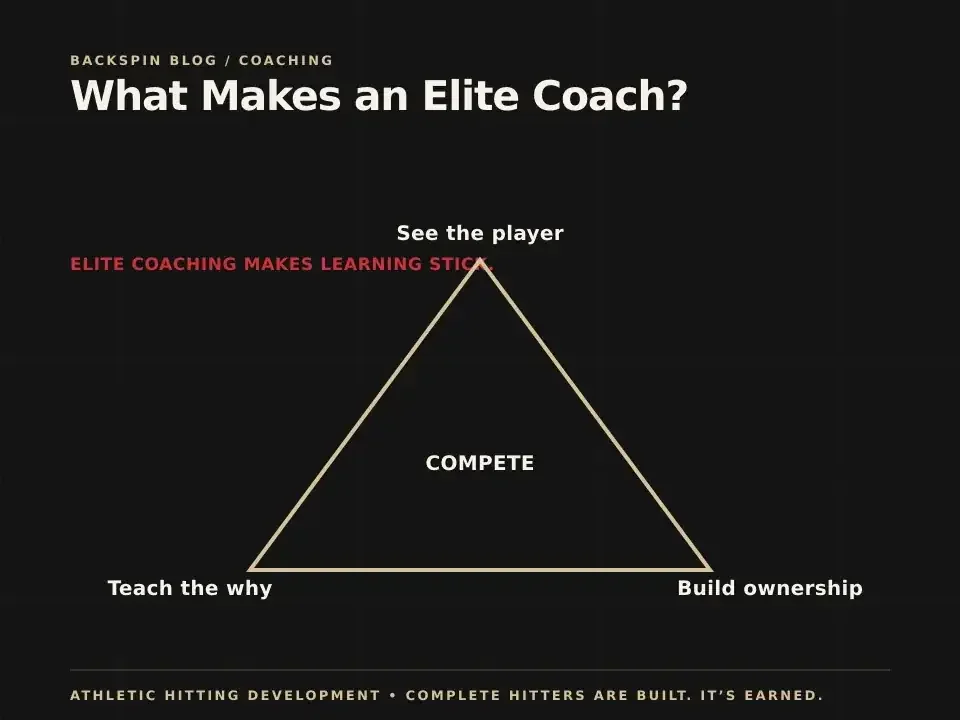
That’s why elite coaches don’t lean on one thing. Their strengths cover each other’s blind spots. The disciplinarian who also loves the players holds a standard players want to meet. The knowledgeable coach who is also organized turns what they know into a plan.
They don’t need every trait. They better be strong in several.

ONE STRENGTH HAS A BLIND SPOT
STRONG INSEVERAL.
- They don't need every trait.
- Strengths cover blind spots.
THEIR STRENGTHS COVER EACH OTHER.
3. What elite looks like
When you line up the elite coaches I’ve known, their strengths fall into four groups. They weren’t perfect in all four, but they were strong in more than one, and none of the four was missing completely:
Knowledgeable · Strategist
They know the swing, the game and the why behind both. They can see what a hitter needs.
Organized · Disciplinarian
They turn knowledge into daily work, set a standard and hold it.
Motivated · Competitive · Leader
They raise the energy and the edge. Players follow them into hard work.
Loves the game · Loves the players
Players trust them, so players take coaching from them.
Put several of those together and something changes. The coach stops being “good at practice” and starts building players who perform when it counts. That’s the line between good and elite.
A good coach runs a good practice. An elite coach builds a better player.
4. How to spot an elite coach
Parents and players ask me this all the time. Don’t judge a coach by the résumé, the facility or the sales pitch. Watch the players. An elite coach checks most of these boxes:
- Players get better in games, not just in the cage.
- They can explain why in plain words a 12-year-old understands.
- There’s a plan. Every player knows what they’re working on and how it’s measured.
- They hold a standard, and the players respect it instead of fearing it.
- They adjust to the player. Same principles, different path for each hitter.
- They keep learning. The best ones are still students of the game.
- Players want to come back. Hard work and a good experience aren’t opposites.
If a coach checks one or two, they’re probably a good coach. If they check most of them, you may have found an elite one. Hold on to them.
HOW TO SPOT AN ELITE COACH
WATCH THEPLAYERS.
- Better in games, not the cage.
- They can explain why.
- There's a plan.
- Players want to come back.
AN ELITE COACH BUILDS A BETTER PLAYER.
5. The standard we hold at AHD
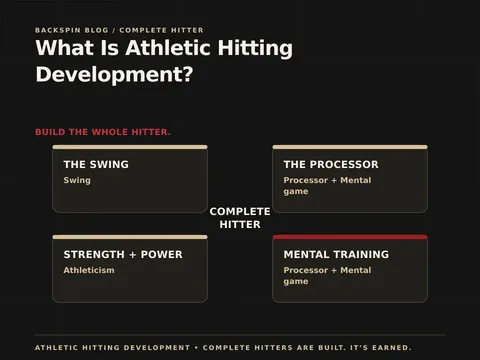
This is the bar we hold ourselves to at Athletic Hitting Development. We teach the why, not just the what. Every hitter gets a plan across all 4 pillars: the swing, strength and explosiveness, the hitting processor and the mental approach. We hold a standard. And we care about the person in the box, not just the swing.
Elite isn’t a title you give yourself. It’s earned, one hitter at a time, by what those hitters do in games. That’s how we want to be judged.
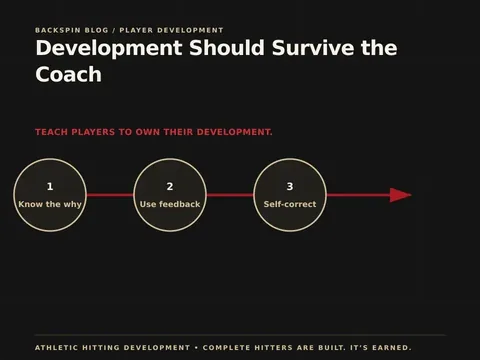
See how we coach: run a free SwingChecker™, read why development should survive the coach, or look at online remote baseball and softball training with BK.

THELESSON.
- Know the why.
- Have a plan.
- Hold a standard.
- Bring the fire.
- Care about the player.
Complete Hitters Are Built…Earned.
Quick answers
What makes a baseball or softball coach elite?
An elite coach doesn’t need every great coaching trait, but they are strong in several of them, and those strengths work together. The proof is in the players: they get better in games, they understand why, and they want to keep playing for that coach.
What are the different types of good coaches?
Disciplinarians, strategists, organized coaches, knowledgeable coaches, motivators, competitors, leaders, coaches who love the game and coaches who love the players. Each one brings something real. Elite coaches are strong in several of these, not just one.
How can a parent tell if a hitting coach is elite?
Watch the players, not the coach. Do the hitters get better in games, not just in the cage? Can the coach explain why, in plain words? Is there a plan? Do they hold a standard? Do the kids want to come back? An elite coach checks most of those boxes.
Does an elite coach have to be a former pro?
No. Playing experience helps, but it doesn’t make someone elite. Elite coaching is about teaching, planning, standards, leadership and care for the player. Many great players are average coaches, and many elite coaches never played at the top level.
What is the difference between a good coach and an elite coach?
A good coach runs a good practice. An elite coach builds a better player. Most good coaches are great at one thing, but one strength alone has a blind spot; elite coaches combine several so players perform when it counts.
Don’t collect drills. Build a complete hitter.
Complete Hitters Are Built… Not Given. Earned!
From the 2015 archive: 3 Skills of an Effective Hitting Coach.