By Athletic Hitting Development · BackSpin Blog
Every youth baseball and softball league has a schedule. Most have fields, uniforms, volunteers and tournaments. But here's a question I wish every league president would ask at the next board meeting: Does our league have a system for actually developing better players?
A real league player development program connects age-appropriate instruction, consistent coaching principles, purposeful practice, parents and measurable progress. Games provide competition. Development needs its own plan.
Explore AHD Team & Staff Training →What league leaders should know
- More games and swings don't automatically make better hitters.
- Common teaching principles don't mean identical swings.
- All four pillars of the complete hitter matter—not just mechanics.
- Ages 7–12 are the ideal time to create good learning habits.
- Your coaches and parents can become development partners.
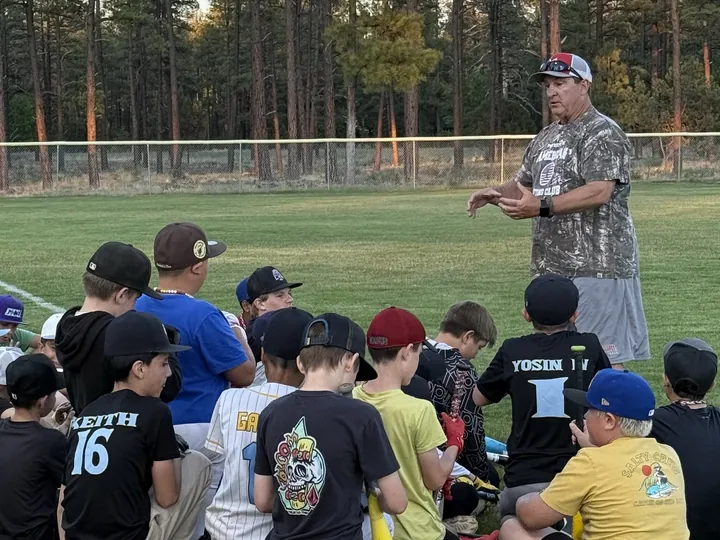
1. Your league is organized. But is it developing hitters?
I have tremendous respect for the people who keep our youth leagues operating. Getting fields ready, running registration, finding coaches, assembling teams and handling all the little problems that nobody sees—that's work. Most people do it because they love the game and love the kids.
But organizing games and developing skills are different jobs. A player can participate in dozens of games and continue making the same mistakes all season. That doesn't mean the coach doesn't care or the kid isn't working. It means skill development needs the same level of intention as the schedule.
Think about a young hitter who consistently rolls over outside pitches. One coach says swing harder. A parent says keep the head down. Somebody else says stop stepping. And the kid goes to the batting cage to take another hundred swings, confused about what to practice.
Does anybody actually know what's causing that hitter's problem? Maybe they're casting. Maybe the outside contact point is too far forward. Maybe the forward move ruins their balance, or maybe they're constantly late recognizing a pitch. Those are very different problems, and they require different solutions.
At Athletic Hitting Development, we begin with understanding: what the hitter is doing, why it matters, how to correct the most important issue and how to tell whether the work is helping. We want quality repetitions, not just a bigger number on the practice counter.
GREAT HITTING IS BUILT, NOT FOUND.
2. Give volunteer coaches a common language—not a script
Your volunteer coaches come from all kinds of backgrounds. Some played professional ball. Some played in college. Some are parents coaching for the first time. There are great people in every category. But nobody should have to invent an entire teaching system on their own.
Here's an example. One coach tells hitters to swing down. Another insists they must swing up. Both might be using an appropriate cue in a specific situation. But without understanding the pitch plane, barrel route and the individual hitter, those phrases can create confusion instead of improvement.
AHD's teaching sequence gives coaches a foundation: one clear swing order, from setup to finish. Coaches can learn to observe movement, identify what's most important and communicate a clear correction.
That does not mean every child uses the same stance, leg kick or tempo. We aren't building robots. We are helping young athletes make their own movements more effective.
Give coaches a resource they can use between practices. Give a first-year volunteer understandable concepts. Give experienced coaches a framework they can question, refine and apply. Our coaches resources and Coach Toolkit are places to start exploring the education.
3. A complete hitter needs four pillars
Here's where hitting instruction can go wrong. People spend almost all their time talking about the swing and then wonder why hitters struggle in games. The swing is essential. But it's only one part of the hitter.
The Swing
Movement · Sequence · Bat Path · Adjustability. Learn how to create strong athletic movement and an effective bat-to-ball relationship while preserving the ability to adjust. Our objective is the largest practical margin for solid contact while generating maximum force.
Strength & Explosiveness
Force · Speed · Power · Athleticism. Hitters need age-appropriate strength, coordination, balance and body control. Young children do not need to train like professionals; they need to learn how to move.
The Hitting Processor
See It → Recognize It → Time It → Decide → Attack It. A beautiful swing cannot make a great pitch decision. Hitters must see the ball, recognize what is coming, time their movement, decide and attack appropriate pitches.
Mental Training
Confidence · Approach · Focus · Resilience. Baseball and softball are difficult games. Young athletes need the ability to prepare, compete, handle failure and take the next at-bat with a useful plan.
All four pillars work together. Improving an athlete's balance can improve the swing. Better pitch recognition can make an existing swing work better. A stronger mental approach can help the hitter use that ability in competition. That's why AHD emphasizes the complete hitter.
4. Ages 7–12: learn the right things while the habits are forming
Those early years should not be an endless series of games followed by a scramble to fix bad habits at age thirteen. They're an opportunity to develop basic athletic movement, bat control, timing, confidence and a love of the game.
That's why we created 46/60 Academy for younger baseball and softball players. The philosophy is easy to remember:
LEARN THE RIGHT THINGS.
PRACTICE THE RIGHT WAY.
PLAY THE RIGHT WAY.
An eight-year-old doesn't need a complicated lecture about advanced biomechanics. But they can understand what balance looks like. They can understand making a good athletic move toward the ball. They can start learning where an inside pitch should be contacted versus an outside pitch.
They can learn that being on time matters. They can learn not to fear mistakes. They can learn how to practice with a purpose instead of just swinging until everybody gets tired.
Then, as those players grow into middle school, high school and beyond, AHD can build on the same foundations with more advanced mechanics, pitch recognition, strength, adjustability and mental training.
5. A practical five-step league development blueprint
You don't need to overhaul your entire league in one summer. Start with something coaches can actually use, prove what's valuable, and grow from there.
- Set clear goals by age. For example, ages 7–8, 9–10 and 11–12 can have progressively more detailed expectations. Keep the goals appropriate for the athlete, not one identical checklist for everybody.
- Agree on core teaching principles. Explain athletic setup, load, forward movement, contact zones and basic timing. Teach coaches the what, why and how of each subject.
- Give every drill a purpose. Don't do a tee drill because somebody on the internet says it's great. Know exactly what it should help the hitter learn.
- Train decisions as well as mechanics. Mix locations, change pitch speeds and introduce simple recognition and decision exercises. A hitter should get better at competing, not just hitting a ball off a stationary tee.
- Check progress and adjust. Ask what the athlete understands, observe the same movement over time and review how the practice transfers into games. When using video, obtain appropriate family permission and protect the athlete's privacy.
A sample 25-minute team hitting block
5 minutes: athletic movement and balance
8 minutes: focused contact or bat-path work
7 minutes: timing and pitch decisions
5 minutes: compete, explain the lesson and assign a home-practice focus
An illustrative coaching example, not a promised AHD course schedule.Run a small pilot with one division. Ask the coaches whether instruction became easier. Ask families whether practice at home made more sense. Look for real progress rather than assuming a drill worked because it looked impressive.
6. Make parents partners in the development plan
Parents want to help. Some buy expensive equipment and schedule private lessons. Some simply can't afford those extras. Both groups deserve a clear answer when they ask: “What should my child be working on?”
A parent does not need to become a professional coach. They need enough understanding to reinforce the current focus without adding six contradictory corrections. Imagine being able to tell a family: this week we're working on balance during the forward move, here is why, and here's a short way to practice it.
That also helps widen access. A young hitter's opportunity to learn shouldn't depend entirely on whether their family can afford weekly private instruction. Shared educational resources can make good starting information easier to access.
For younger players, any family accounts, videos or personal information should be handled through parents or guardians with appropriate consent and privacy safeguards.
7. What AHD can do for leagues
At AHD, we're not trying to replace the volunteer coach or tell every athlete to copy one famous hitter. We're trying to build a better educational foundation—understanding how players move, recognize pitches, decide, practice and compete.
Team and staff training, our coach education resources, and the youth-focused 46/60 Academy are useful starting points. Leagues interested in a broader arrangement can contact us to discuss what they need. We will not pretend there is a one-size-fits-all league package or promise pricing and features that have not been agreed upon.
YOUR LEAGUE HAS A SCHEDULE. LET'S TALK ABOUT ITS DEVELOPMENT PLAN.
League presidents, board members, player-development directors and volunteer coaches: tell us the ages you serve, where your hitters struggle, and what your coaches need most.
TALK TO AHD ABOUT YOUR LEAGUE →Program scope, licensing availability and pricing are subject to direct confirmation.Common questions from league directors
What is a youth baseball player development program?
A repeatable system that connects age-appropriate teaching, coach education, purposeful practice and progress checks across seasons.
Can one system work for both baseball and softball?
Many basic athletic movement and educational principles overlap, but pitch flight, timing, rules and individual adjustments need sport-specific attention.
Does every hitter need the same swing?
No. AHD teaches shared principles without requiring every player to use the same stance, trigger or swing style.
Can a league buy an AHD license today?
Contact AHD to discuss possibilities. This article does not announce an already-available standardized licensing package, price or set of terms.
Bottom line: If the goal is more games, add dates to the calendar. If the goal is better hitters, build a system that teaches the right things and helps coaches, parents and players practice with purpose. GREAT HITTING IS BUILT, NOT FOUND.