
Baseball Hitting Drills by Age: 13U to High School
The right hitting drills change with age. At 13 and 14 the field gets bigger and the pitching gets real: velocity, changeups and BBCOR bats. In high school, build strength, timing and a plan you can trust. Hitter 7 to 12? Start at 46/60 Academy, AHD’s youth academy.
By BK · 52 years playing, coaching and scouting · Updated October 16, 2026
Find your path
- I need help getting betterOnline baseball & softball hitting lessonsAHD Academy courses →
- What’s wrong with my swing?Casting, rolling over, dumping the barrel, balance, bat pathFree SwingChecker™ →
- What should my kid do?Plans for 8U, 10U, 12U, 14U and high schoolDrills by age →
- How do I hit this pitch?Fastball, curveball, changeup, high heat, rise and drop ballHitting Processor hub →
- How do I train at home?Practice plans, tee work, strength, drills by ageTraining plans →
- I need a real coachScottsdale lessons, remote coaching, team campsCoaching options →
Ages 7 to 12? Start at 46/60 Academy
AHD’s courses are built for hitters 13 and up. For ages 7 to 12, our youth academy, 46/60 Academy, has plans built for younger kids and the parents who toss to them: short sessions, one skill at a time, and a lot of fun reps.
What should my hitter work on at each age?
| Age | Focus | Session | Full plan |
|---|---|---|---|
| 7–12 | Ages 7 to 12 train at AHD’s youth academy, 46/60 Academy: balance, timing, the strike zone and confidence, in short sessions a parent can run. | 10–25 min, 3–5 days/wk | 7U–12U drills by age · 8U · 10U · 12U plan |
| 13U | Bigger field transition: faster fastballs, more changeups, a two-strike plan, bodyweight and med-ball strength. | 30–40 min, 3–4 days/wk | Timing & first off-speed |
| 14U | 60/90 readiness: velocity, fastball-changeup mixes, count at-bats, BBCOR. | 40–50 min, 4 days/wk + strength | 14-year-olds |
| 15–18 | Swing, strength, Hitting Processor and mental training together. | 3 hitting days + 2–3 strength days | High school |
Age is a starting point, not a rule. A strong 12-year-old and a small 13-year-old may need the same plan. The free SwingChecker™ tells you where your hitter actually is.
How do I train at home?
You don’t need to live in a cage. You need a plan, a tee, some balls, a phone and 15 minutes. Give every session one purpose, film it and keep a score.
- 15-minute daily at-home plan
- Tee work vs front toss — what each one trains
- Caveman vs tech drills — gadgets vs skill
- 12-week offseason plan — fall to tryouts
- 5-minute daily pitch recognition
- Training in the heat — a summer plan
More drill lanes in Best Batting Drills.
Strength and speed by age
Bat speed is built underneath the swing. Start with bodyweight, movement and light med-ball work; add load only when the athlete owns the movement. Stop if something hurts.
Strength training by age · Movement training · The med-ball test · Gym numbers that track bat speed.
Bat speed, exit velocity and bat size by age
Numbers help you track progress against your own hitter, not someone else’s kid. Use the charts as a guide, then use the free tools to measure.
Bat speed by age · Exit velocity by age · Bat size chart · Free hitting tools.
How parents can help (without guessing)
Your job is not to fix the swing. It’s to keep practice short, honest and consistent — and to protect the kid’s love of the game.
Help without guessing · What to check first · Slumps · Afraid of the ball · When to start lessons · Teach a kid to bunt.
The complete baseball hitting drills by age: 13u to high school library
Every AHD guide on this topic, in the order I’d read them.
13U to high school
 Hitting Drills for 14 Year Olds: Getting Ready for 60/90Hitting drills for 14 year olds: get ready for the 60/90 field, faster pitching and BBCOR bats with drills for bat speed, timing and a real approach.
 High School Baseball Hitting Drills: A 15–18-Year-Old Offseason PlanHigh school baseball hitting drills for 15–18 year olds: a simple offseason plan to build the body, train the swing and sharpen decisions before tryouts.
 High School Baseball Tryout Hitting Tips: How to Stand Out in a Few SwingsHigh school baseball tryout hitting tips for parents and players: what coaches watch in BP, a 4-week prep plan, and how to stand out in a few swings.
Practice plans
 Baseball Hitting Drills at Home: A 15-Minute Daily PlanA simple 15-minute at-home baseball or softball hitting plan that builds athletic position, barrel control, pitch tracking and confidence—not random swings.
 Offseason Hitting Plan: 12 Weeks From Fall to TryoutsA 12-week offseason hitting program across all 4 pillars: assess, build strength and the swing, add speed and decisions, then peak for tryouts.
 Your Tee Is Lying to YouTee work vs front toss: a study of 20 youth hitters found the swing changes off a tee. Here’s how to use the tee and build practice around a moving ball.
 Caveman vs. Tech: Hitting Drills That Build Real SkillHitting drills with simple tools like an axe, sledgehammer, tire and hammer that build strength, athletic movement, hand control and a better swing.
 Training Hitters in the Arizona Heat: A Summer PlanBaseball training in the Arizona heat: when to hit, what to do indoors on the hottest days, breaks, and heat warning signs. A Scottsdale summer plan.
 Team Hitting Practice Plan for Coaches (60 Minutes)A 60-minute baseball team hitting practice plan: four stations, a rotation for 12–15 players, no standing in line, a competitive finish and softball notes.
 Team Bunting Practice: Drills and a Scored Game for CoachesA team bunting practice for baseball and softball coaches: a 20-minute station rotation, a scored target game and how to make small ball automatic.
Strength and numbers
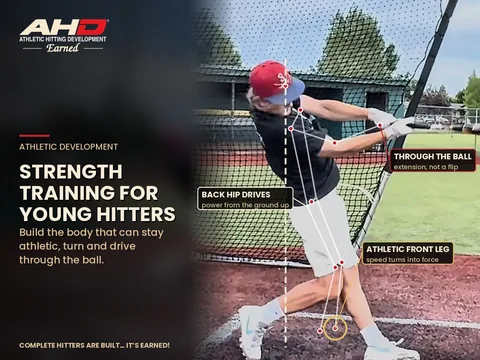 Strength Training for Young Hitters: What’s Right at Every AgeWhen young baseball and softball players can start strength training, what it should look like at each age and a 6-test profile with age benchmarks.
 Move Better, Swing FasterCan movement training improve a young hitter’s swing? An 8-week study of 13-year-olds with poor movement screens says yes. What parents should do.
 The Med Ball Test That Tracks Bat SpeedWhich power test tracks bat speed? In college hitters, the rotational med ball throw did and the broad jump didn’t. How to run the test at home.
 Which Gym Numbers Actually Track Bat SpeedWhich strength numbers track bat speed? In 78 college players, grip, back strength and an overhead med ball throw did; sprint and long jump didn’t.
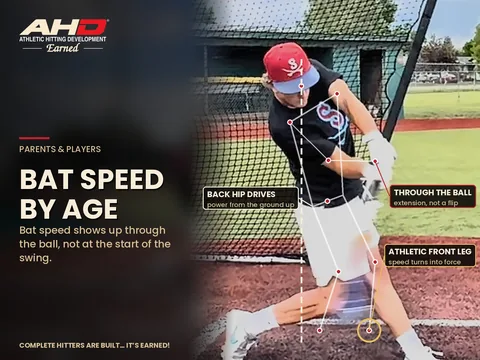 Bat Speed by Age: Baseball and Softball Benchmarks (2026 Chart)Bat speed by age for baseball and softball, from published Blast Motion and Diamond Kinetics sensor data, plus how to compare your hitter fairly.
 Exit Velocity by Age: Baseball and Softball Benchmarks (2026 Chart)Exit velocity by age for baseball and softball, from published Rapsodo, Perfect Game and HitTrax data, and why tee, toss and live numbers differ.
 Baseball Bat Size Chart: By Age, Height and Weight (2026)Baseball bat size chart by age, height and weight, plus drop, the fit test and which stamp you need: USA Baseball, USSSA or BBCOR. Free calculator.
For parents
 How Parents Can Help a Hitter Get Better Without GuessingHow parents can help a hitter improve without guessing: find the priority, use one cue, film instead of fix and keep practice from becoming an argument.
 When Your Hitter Is in a Slump: A Parent’s GuideHow parents can help a hitter through a slump: judge the at-bat not the result, teach a 10-second reset and keep the car ride from making it worse.
 How to Help a Kid Who’s Afraid of the Ball (Baseball & Softball)Is your kid afraid of the ball in baseball or softball? Why the fear is normal, what makes it worse, and a step-by-step plan to rebuild trust in the box.
 Scared After Getting Hit by a Pitch? How Hitters Get Their Confidence BackScared after getting hit by a pitch? Why it happens, what to check first, and a 4-stage plan hitters 12–21 use to get their confidence back in the box.
 How to Teach a Kid to Bunt: A Step-by-Step GuideHow to teach a kid to bunt: the safe grip, pivot vs. square-around footwork, the barrel angle that stops pop-ups and a scored target test.
 $500 Bats Don’t Build HittersYouth baseball is getting expensive: $500 bats, travel teams, advanced stats for 6-year-olds. What young hitters actually need, and what parents can skip.
Your next step
About 3 minutes. Ranks your hitter’s #1 priority across the 4 pillars with cues, drills and free lessons.
Run it free →24 lessons across all 4 pillars. Lessons 1–3 free.
See the course →Remote coaching with BK: starting evaluation across all 4 pillars, a personal 90-day plan, all 7 courses, video analysis of swings and game at-bats, and direct text access. $1,995 for 90 days, limited to 12 athletes.
See remote coaching →Private and semi-private lessons for baseball and fastpitch hitters in Scottsdale and the Phoenix area. Text Coach for current rates.
Scottsdale lessons →12 to 60 players, ages 8 through high school, baseball, fastpitch or combined. Coach travels.
Camps & clinics →AHD’s youth path: 30-day courses built for younger hitters and their parents.
Visit 46/60 Academy →Questions
What should a 13U or 14U hitter work on?
Timing against faster fastballs, recognizing changeups, a two-strike plan and age-appropriate strength, so the swing holds up on the bigger field.
Where should hitters ages 7 to 12 start?
At 46/60 Academy, AHD’s youth academy. Its drills-by-age guide covers 7U, 8U, 10U and 12U with short plans a parent can run at home.
What changes for a 14 year old hitter?
Many move to the 60/90 field and BBCOR bats. Train short-distance velocity, fastball-changeup mixes and count-based at-bats, plus strength work.
How can a hitter practice at home?
Use a tee, balls, a net and a phone. A focused 15-minute plan — position check, tee work with a target, pitch-recognition calls and one filmed swing — beats random swings.
More AHD guides
Don’t collect drills. Build a complete hitter.
Complete Hitters Are Built… It’s Earned!