
Bat Speed & Power Training
Bat speed and exit velocity come from two places: a swing that delivers the barrel efficiently, and a body strong and fast enough to power it. Most hitters who want more pop need the second one. This is the AHD guide to the Athlete pillar.
By BK · 52 years playing, coaching and scouting · Updated October 13, 2026
What the numbers mean
Bat speed is how fast the barrel moves at contact. Exit velocity is how fast the ball leaves the bat. Exit velocity depends on bat speed, pitch speed and how squarely the ball is hit, which is why two hitters with the same bat speed can hit the ball very differently.
Use the Exit Velocity & Bat Speed Calculator to compare a sensor or radar reading against published averages, and see the full charts in Bat Speed by Age and Exit Velocity by Age. Test the same way every time: same bat, same tee height, best of five swings.
Where bat speed comes from
- Ground force. The legs push into the ground and start the turn.
- Rotational power. The hips and torso turn fast and in order. Bat speed and rotational power.
- Strength that holds the swing. A stronger hitter can swing harder without losing position. Strength numbers that track bat speed.
- Efficient delivery. The sequence and bat path that put that speed on the ball. Swing mechanics guide.
How to train for more bat speed
- Train rotational power. Med ball throws are one of the simplest tests and training tools. The med ball test.
- Get stronger, by age. Young hitters build movement and body control first, then load. Strength training by age.
- Move better. Mobility and athletic movement let the body use the strength it has. Move better, swing faster.
- Swing with intent. Bat speed is trained by swinging fast, then keeping that speed under control. More bat speed, better decisions.
- Skip the myths. A heavy donut on deck doesn’t add speed. The on-deck donut myth and a better on-deck routine.
Turning bat speed into power in games
Speed only matters if it reaches the ball. Squaring the ball up at a good launch angle is what turns bat speed into distance. Try the Home Run Distance Calculator to see how exit velocity and launch angle work together, then read How to Hit for Power, How to Hit a Softball Farther and the physics of hitting.
Free tools for this
The complete bat speed & power library
Every AHD guide on this topic, grouped so you can start where you need it.
Numbers & testing
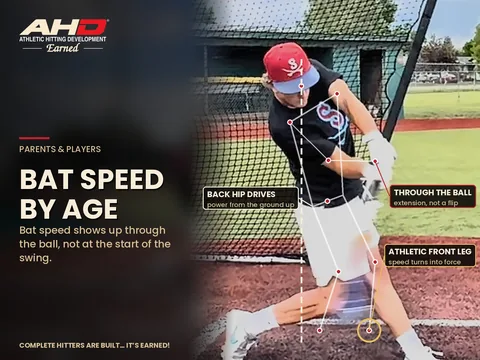 Bat Speed by Age: Baseball and Softball Benchmarks (2026 Chart)Bat speed by age for baseball and softball, from published Blast Motion and Diamond Kinetics sensor data, plus how to compare your hitter fairly.
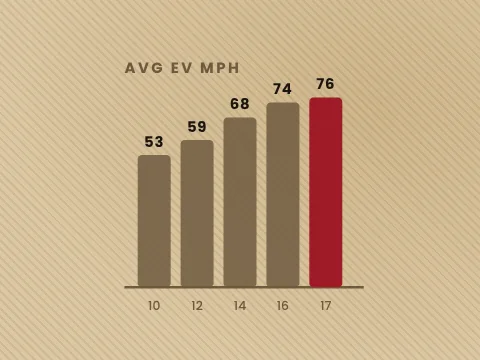 Exit Velocity by Age: Baseball and Softball Benchmarks (2026 Chart)Exit velocity by age for baseball and softball, from published Rapsodo, Perfect Game and HitTrax data, and why tee, toss and live numbers differ.
 The Softball Bat Speed ProfileSoftball bat speed test: profile speed across 2–3 bat weights with a swing sensor. A Division I study found it reliable and linked to game stats.
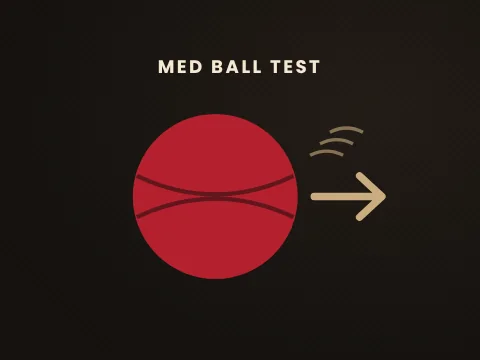 The Med Ball Test That Tracks Bat SpeedWhich power test tracks bat speed? In college hitters, the rotational med ball throw did and the broad jump didn’t. How to run the test at home.
 Which Gym Numbers Actually Track Bat SpeedWhich strength numbers track bat speed? In 78 college players, grip, back strength and an overhead med ball throw did; sprint and long jump didn’t.
Strength & movement
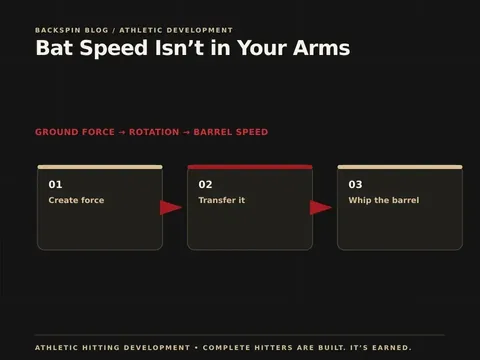 Bat Speed Isn’t in Your ArmsBat speed isn’t in your arms. It comes from the ground, hips and core. How rotational power works and how young hitters can build it safely.
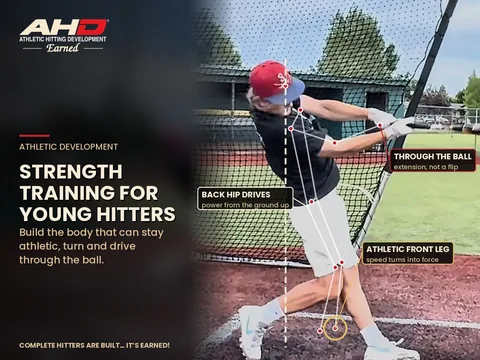 Strength Training for Young Hitters: What’s Right at Every AgeWhen young baseball and softball players can start strength training, what it should look like at each age and a 6-test profile with age benchmarks.
 Softball Strength Training for Hitters: What to Train, by Age and SeasonSoftball strength training for hitters: what to train for bat speed, how it changes by age, in-season vs off-season weeks, and how to keep it safe.
 Move Better, Swing FasterCan movement training improve a young hitter’s swing? An 8-week study of 13-year-olds with poor movement screens says yes. What parents should do.
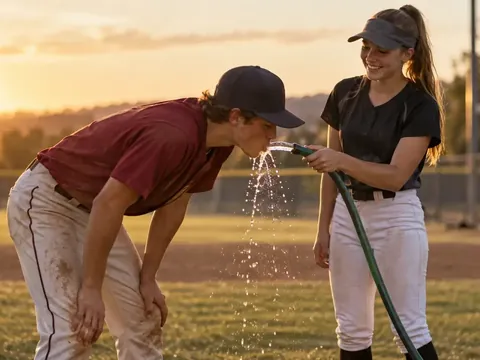 Training Hitters in the Arizona Heat: A Summer PlanBaseball training in the Arizona heat: when to hit, what to do indoors on the hottest days, breaks, and heat warning signs. A Scottsdale summer plan.
 Offseason Hitting Plan: 12 Weeks From Fall to TryoutsA 12-week offseason hitting program across all 4 pillars: assess, build strength and the swing, add speed and decisions, then peak for tryouts.
Power at the plate
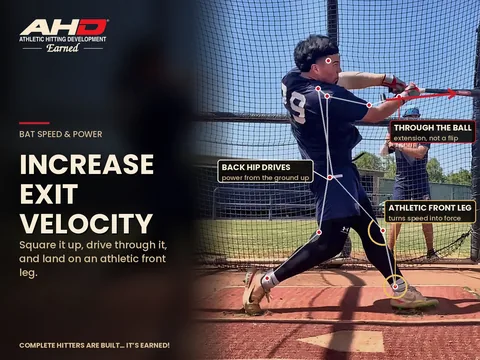 How to Increase Exit Velocity: The 4-Pillar PlanHow to increase exit velocity: bat speed, squared-up contact, strength, timing and intent — plus a 6–8 week plan and how to measure it fairly.
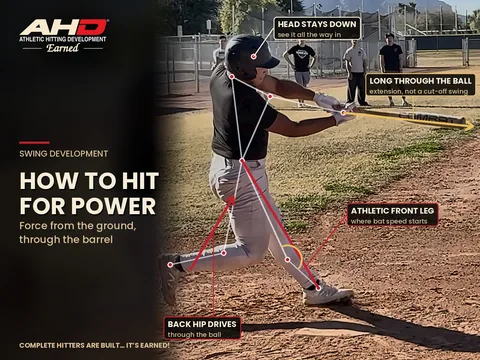 How to Hit for Power in Baseball (and Hit the Ball Farther)How to hit for power in baseball: bat speed, square contact and launch. Where power comes from, why drills alone don’t add it and what to train first.
 How to Hit a Softball Farther (and Harder): A Fastpitch Power GuideHow to hit a softball farther: power comes from bat speed, contact quality and launch. What to train, what to fix first, and why drills alone won’t add it.
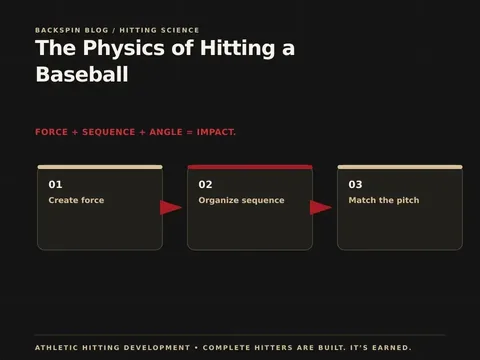 The Physics of Hitting a BaseballThe physics of hitting a baseball made simple: ground force, torque, sequence, bat speed, collision quality and bat path, and how each shapes your swing.
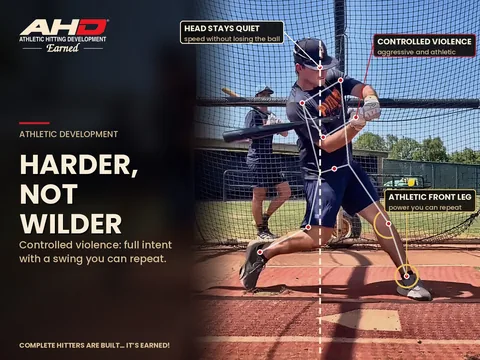 Harder Without WilderZack Gelof posted career-best bat speed and career-best contact while swinging less. How hitters build power and plate discipline together.
 The On-Deck Donut MythDo weighted bat warm-ups increase bat speed? A study of 69 players found heavy and light on-deck bats added none. Here’s what to do instead.
 Build an On-Deck Routine That Keeps the Swing FastWant an on-deck routine that keeps bat speed up? A 39-player study found a speed-focused warm-up beat a weighted-bat warm-up. Here’s the AHD routine.
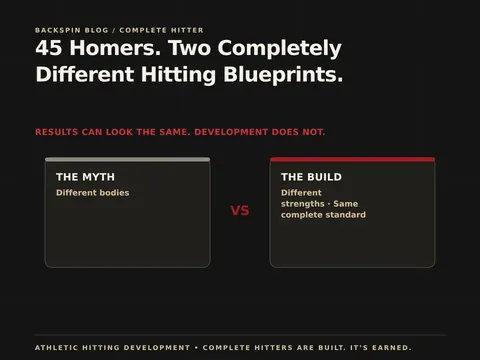 45 Homers. Two Completely Different Hitting Blueprints.Pete Crow-Armstrong and Kyle Schwarber each hit 45 home runs with very different profiles. Learn why young hitters should build power, not copy it.
Train it start to finish
Athletic Development. 24 lessons of strength, speed, rotational power and arm care built for hitters. $139, Lessons 1–3 free.
Want a coach? See remote coaching, Scottsdale lessons or camps & clinics.
Questions
How can I increase my bat speed?
Train rotational power and full-body strength, move well, and swing with intent, then make sure the swing delivers that speed efficiently. Retest every 4 to 6 weeks with the same bat and setup.
What is a good bat speed for my age?
It depends on age, size and sport. Compare your number with the averages in the AHD Bat Speed by Age chart or the free Exit Velocity and Bat Speed Calculator.
Does a weighted bat on deck increase bat speed?
No. Research shows heavy on-deck warm-ups do not make the next swings faster and can make the bat feel slower. Use a few full-speed swings with your game bat instead.
Is exit velocity the same as bat speed?
No. Exit velocity is the speed of the ball off the bat. It depends on bat speed, pitch speed and how squarely the ball is hit.
More AHD guides
Don’t collect drills. Build a complete hitter.
Complete Hitters Are Built… It’s Earned!