By BK, Athletic Hitting Development
Complete Hitters Aren’t Born. They’re Built… and Earned.
Key takeaways
- Hitting and throwing go one direction, thousands of times a year, so hitters build one-sided bodies.
- Cross symmetry means training the other side on purpose: rotation, single-leg work, med ball throws and cross-body patterns.
- The goal is to own both directions, not to make both sides identical. Some imbalance is normal.
- Five to ten minutes, every week, beats one big workout a month.
Cross symmetry training means training the other side of your body on purpose. Hitting and throwing only go one direction, so a hitter who never trains the other way ends up stiff, weak and leaking power on one side.
Cross symmetry training means training the other side of the body on purpose: other-side swings, med ball throws from both sides, single-leg strength and anti-rotation core. The goal is to own both directions, not to make both sides identical.
Train it: Athletic Development → Free tool: Free Hitter Combine →Hitting is a one-way street. A right-handed hitter rotates the same direction every single swing. Tee, front toss, BP, games... thousands of swings a year, all one way. Throwing is the same.
Then we act surprised when a 15-year-old shows up with a tight lead hip, a cranky low back and a back shoulder that won’t cooperate. That’s where cross symmetry comes in.
1. What Is Cross Symmetry Training?
It’s training the other side on purpose. Rotate the other way. Stand on the other leg. Throw the med ball from the other side. Work cross-body patterns, opposite arm with opposite leg, the way the body is built to move.
Here’s what it is NOT: trying to make both sides identical. Some imbalance is normal. A thrower’s arm adapts to throwing, and that’s the arm doing its job. Leave that one to your athletic trainer.
The goal isn’t a mirror. The goal is to own BOTH directions.
Be able to rotate, brace and balance either way, so the side you swing with has a strong, mobile partner.
2. Why Does a One-Sided Body Hurt the Swing?
The body gets good at what you do most. Hitters get very good at rotating one way and stiff going the other. That shows up two places.
- In the swing. If the lead hip can’t rotate, something else has to. Usually the shoulders fly open early, the back knee caves or the hitter spins off the ball.
- In the training room. Obliques, low backs, hip flexors and hamstrings take the beating when one side does all the work.
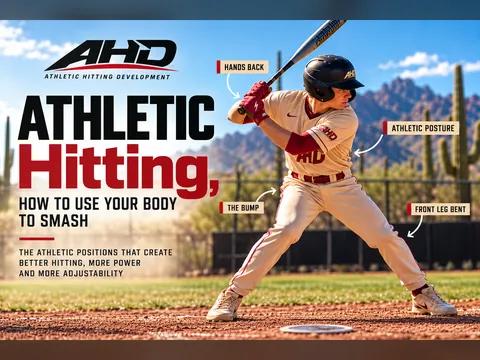
- In the power. The swing is a chain, and the bump (the energy transfer in the middle of the weight shift) needs both hips working together. A weak link leaks energy.
You can drill the swing all day, but if the hip won’t move, the swing won’t change. That’s an athlete problem, not a swing problem.
ONE-WAY SPORT
TRAIN THEOTHER SIDE.
- Other-side tee swings
- Med ball throws both ways
- Single-leg strength
- Anti-rotation core
OWN BOTH DIRECTIONS
3. How Do You Know If Your Hitter Is Out of Balance?
Three quick checks you can do at home:
- Seated hip rotationRotate the hips both directions. Is one side clearly tighter?
- Single-leg balanceEyes open, each leg. Does one side wobble or need the arms to save it?
- Med ball side throwThrow from each side into a wall or for distance. Is one throw much weaker?
Write it down. Exactness. “I feel tight” isn’t a measurement. Retest every few weeks and see if the gap closes.
4. What Exercises Train the Other Side?
- Other-side swings. In the off-season, take tee swings from the opposite side of the plate. Smooth and controlled, not max effort. You’ll look silly. That’s fine.
- Med ball rotational throws from both sides, with a few extra reps on the weak side. Rotational med ball work is one of the best tools a hitter has.
- Single-leg strength. Split squats and single-leg RDLs, both legs.
- Anti-rotation core. Band or cable presses where you resist the twist instead of making it.
- Cross-body work. Crawling patterns and cross-body chops, opposite arm with opposite leg.
Keep it in the routine: five to ten minutes in your warm-up or after hitting. Less is more. Done every week, it beats a big workout once a month.
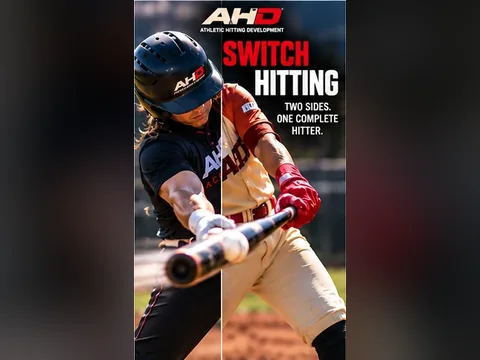
I’ll give you my own story. When I started switch hitting, the strength and coordination gap between my two sides started to go away. And I hit way better right-handed than I ever had before. I’m convinced it was all the work I did left-handed.
If you’re thinking about switch hitting for real, read Switch Hitting: Should Your Kid Learn It? first.
5. Does Cross Symmetry Matter for Fastpitch Hitters?
Same deal. Softball hitters rotate one way just like baseball hitters, and position players throw one way. Even if you slap from the left side and hit away from the right, you still have a dominant pattern. Train the other side.
And if something hurts, that’s not a training problem. Tell your coach and your parents and see a doctor or athletic trainer.
6. The Lesson
“Aggressive and athletic.” That’s the identity of an AHD hitter, and it’s hard to be either one when half your body is along for the ride.
Athletic Development is one of the 4 Pillars of a Complete Hitter. Train both directions, and the swing you already own gets a body that can deliver it.
THELESSON.
- Hitting builds a one-sided body
- Test both sides, write it down
- Train the other side weekly
- Pain means see a pro
Complete Hitters Are Built…Earned.
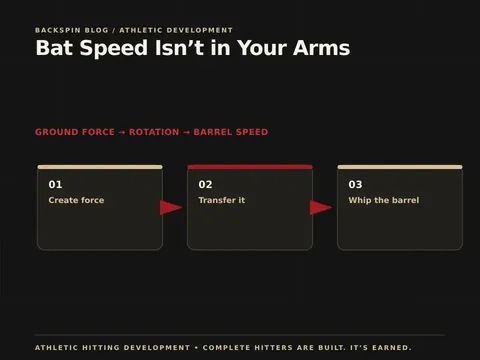
Want to go deeper? Read Switch Hitting: Two Sides, One Complete Hitter and Bat Speed Isn’t in Your Arms.
Quick answers
What is cross symmetry training in baseball?
It’s training the opposite pattern on purpose: rotating the other way, single-leg work on both legs, med ball throws from both sides and cross-body exercises. It balances a sport that only goes one direction.
Should my hitter try to make both sides equal?
No. Some imbalance is normal, and a thrower’s arm adapts on purpose. The goal is for the hitter to rotate, brace and balance well in both directions.
Does switch hitting help a hitter’s main side?
It can. Swinging from the other side trains the opposite rotation and coordination. Use other-side swings as training even if your hitter never switch hits in games.
How often should hitters do cross symmetry work?
Five to ten minutes, a few times a week, in the warm-up or after hitting. Consistency matters more than a long session.
Don’t collect drills. Build a complete hitter.
Complete Hitters Aren’t Born. They’re Built… and Earned.