By BK, Athletic Hitting Development
Complete Hitters Are Built… It’s Earned!
Key takeaways
- Switch hitting is worth it when a hitter is willing to put in double the work and starts young enough to stay patient.
- Both sides are built on the same principles, not two different swings.
- Split reps on purpose: extra work goes to the weaker side until it's playable in games.
- Judge it by quality at-bats over a full season, not one bad weekend from the new side.
Switch hitting is worth it for a hitter who starts young, loves the extra work and will stay patient while the new side catches up. Built on the same principles from both sides, it gives a hitter the better look against almost every pitcher.
Switch hitting is worth it for a hitter who starts young, has coordination from the new side and loves the extra work. Build both sides on the same principles, give the weaker side more reps and judge it by quality at-bats over a full season.
Train it: Complete Hitter Masterclass →Parents ask me about switch hitting all the time. Usually it's because a coach suggested it, or their kid tried it in the backyard and looked natural.
I'll give you the honest answer. It can be a great weapon. It also means two swings to build, two sets of timing to learn and twice the reps. Here's how to decide, and how to do it right.
1. Why switch hit at all?
The advantage is the angle. A hitter facing a pitcher from the opposite side generally sees the ball longer, and breaking balls tend to come toward him instead of away. A switch hitter gets that look against most pitchers.
In fastpitch there's a second reason. Hitting from the left side puts a hitter a step or two closer to first base, which opens up slapping and putting pressure on the defense. If that's your hitter's path, read slap or hit away too.
Same principles. Two sides.
2. Should my kid switch hit?
Here's what I look for before I'd recommend it:
- Age. Younger hitters have fewer habits to fight. Starting in the youth years is usually easier than starting in high school.
- Coordination from the new side. If he throws, kicks or swings a golf club or hockey stick from that side, it's a good sign.
- Work ethic. The new side needs more reps than the old one. Kids who love to hit handle that. Kids who don't, won't.
- Patience at home. The new side will struggle in games before it helps. Parents and coaches have to let that happen.
If a high school hitter is already solid from one side and the season is coming, I usually wouldn't start a full switch. Get great from one side first.
3. Is it two different swings?
No. It's one set of principles performed from both sides. The same move into launch, the same turn, the same connection, the same direct path to the ball. AHD hitters build Mechanically Advantaged Angles (MAA) from each side so both swings deliver force the same way.
What's different is the body. One side will usually be stronger, more coordinated and more natural. That's normal. The job is to make the weaker side close enough to be dangerous in games.
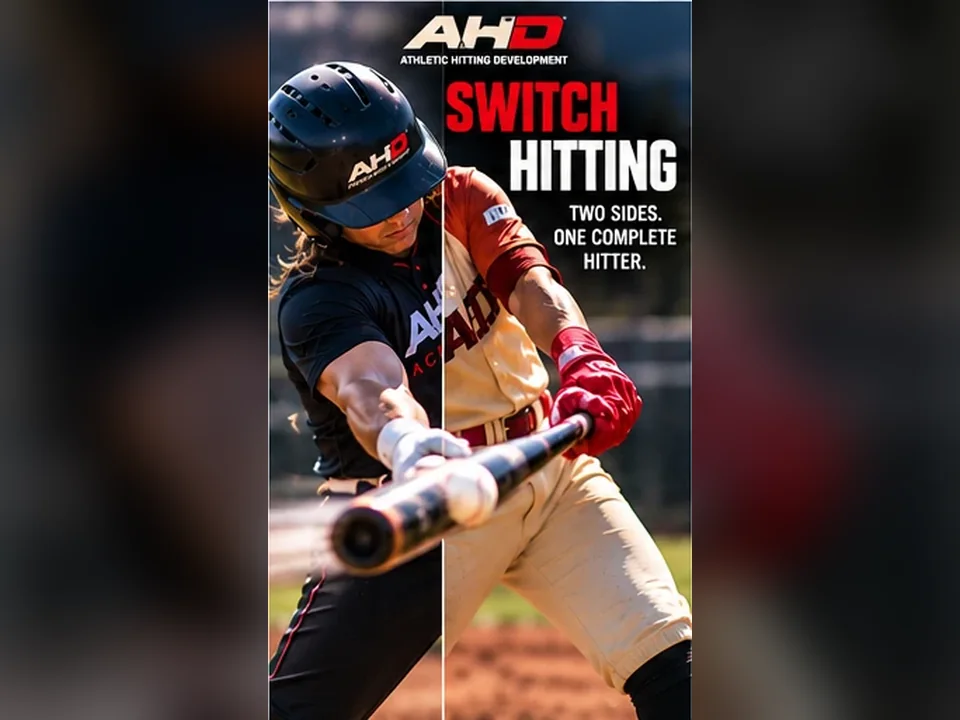
SWITCH HITTING
TWO SIDES.ONE HITTER.
- Same principles both sides
- More reps to the weak side
- Train the eyes from both
- Judge by quality at-bats
DOUBLE THE WORK. DOUBLE THE LOOK.
4. How to train switch hitting
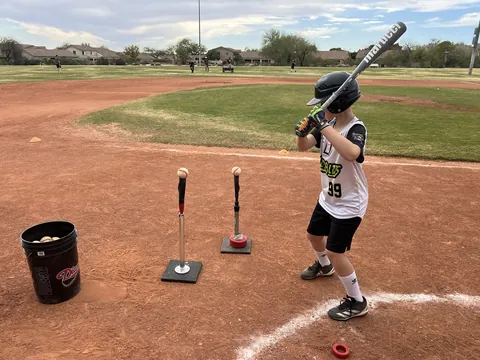
- Start with dry swings and the teeBuild the new side's movement slowly. Film it next to the natural side and compare.
- Give the weaker side more repsA common starting point is about two swings from the new side for every one from the natural side, adjusted as it improves.
- Move to front toss, then liveDon't rush to live pitching. The new side earns each step.
- Train the eyes from both sidesTracking, timing and decisions feel different from each box. Train your Hitting Processor DAILY from the new side too.
- Take it into games on a planPick a starting point, like using the new side against one type of pitcher, and stay with it long enough to learn.
Keep the sessions short and sharp. Our 15-minute home plan works great split across both sides.
5. How do you know if it's working?
Don't judge the new side by batting average over a few games. Look at quality at-bats over a full season: hard contact, on-time swings, good takes and fewer strikeouts as the year goes on.
If after a full season or more of real work the new side still isn't competitive, it's okay to go back to one side. That's not quitting. That's making a smart decision for the hitter. Either way, the goal is the same: a complete hitter who is aggressive and athletic in the box.

THELESSON.
- Start young if you can
- The new side earns each step
- Be patient in games
- One side is okay, too
Complete Hitters Are Built…Earned.
Want to go deeper? Read What Age Should a Kid Start Hitting Lessons? and Baseball Hitting Drills at Home: A 15-Minute Daily Plan.
Quick answers
What age should a kid start switch hitting?
Earlier is usually easier, while there are fewer habits to fight. Many hitters start in the youth years. Starting a full switch in high school is harder and usually not something I'd do right before a season.
How should a switch hitter split practice reps?
Give the weaker side more reps until it's playable in games. A common starting point is about two new-side swings for every natural-side swing, adjusted as the gap closes.
Is switch hitting worth it?
For a hitter with the coordination, the work ethic and the patience, yes. It gives a better look against most pitchers. For a hitter who doesn't love the extra work, getting great from one side is the better plan.
Should a switch hitter have the same swing from both sides?
The same principles, yes. The movements won't look identical because one side is usually stronger and more natural, but the sequence and the path to the ball should match.
Don’t collect drills. Build a complete hitter.
Complete Hitters Are Built… It’s Earned!