
By BK, Athletic Hitting Development
Complete Hitters Aren’t Born. They’re Built… and Earned.
Key takeaways
- Random tee work is boring. A tee drill with a job is one of the fastest ways to build a hitter.
- The five: Sheffield Series, Beltre Drill, In-Out Tee Call, Bump Drill and Oppo Domination.
- Each drill fixes a different problem. Pick the one that matches your hitter's swing instead of doing all five every day.
- Every drill here works for baseball and fastpitch softball hitters.
The five batting tee drills I'd keep forever are the Sheffield Series, the Beltre Drill, the In-Out Tee Call, the Bump Drill and Oppo Domination. Each one gives the tee a job: swing structure, athletic control, plate coverage, adjustability or barrel control.
The five best batting tee drills are the Sheffield Series, the Beltre Drill, the In-Out Tee Call, the Bump Drill and Oppo Domination. Give each one a job: structure, athletic control, plate coverage, adjustability or barrel control.
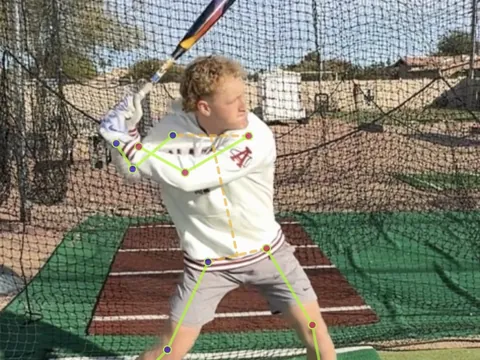
Train it: Swing Structure & Mechanics → Free tool: SwingChecker™ →You don't need a field. You don't need a cage. You don't need somebody flipping you baseballs for an hour. You need a tee with a job.
Most hitters waste the tee. They pound ball after ball with no plan and call it work. Done right, the tee lets a hitter slow the game down, clean up one movement and build strength that shows up in the swing. No chasing bad flips. No blaming the machine.
At AHD we train all 4 Pillars of a Complete Hitter: the swing, athletic development, the Hitting Processor and the mental approach. A tee isn't the whole program. But a great tee drill can train two or three of those at once. If I could keep only five, these are the five.
1. The Sheffield Series: strength and swing structure
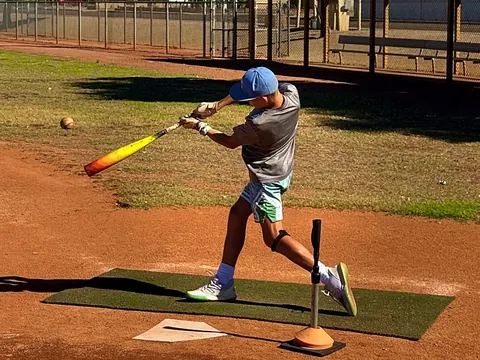
The Sheffield Series uses heavy bats and one-arm swings to build swing structure while the hitter gets stronger. Take away the help from the other hand and the leaks show up fast. The hitter has to organize the body, control the barrel and deliver it on time.
That's why it helps so many hitters. It cleans up the hitter who throws the barrel early. It helps the hitter who casts. And it builds strength that connects to the skill of hitting, which is the only kind of strength a bat can give you.
AHD focus: Don't turn it into a forearm contest. Stay organized, stay athletic and let the drill teach you how to move the barrel. Don't force it.
2. The Beltre Drill: athletic, with a quiet head
The Beltre Drill teaches a hitter to swing athletically with a quiet head and a body under control.
When hitters lose their athleticism, everything gets harder. The head moves. The barrel leaks. The legs quit helping, and the hitter starts reaching, spinning or muscling it with the hands.
This drill puts the lower half and the core back in the swing. The hitter starts from an athletic position, controls his center of mass and strikes the ball without the head wandering. Quiet doesn't mean frozen like a statue. It means the eyes have a steady platform to see the ball and attack it.
AHD focus: Power isn't falling forward at the ball. Strong hitters are athletic enough to organize force.
3. The In-Out Tee Call: plate coverage with a decision
This one is an A-plus drill. It trains plate coverage with a decision attached, and every good hitter has to own that skill.
Set the tee for the lane you want to train. Before each swing, make the call: in or out. The hitter takes the assignment, gets ready for it and delivers the barrel to the right spot, coming in above and inside the ball. Those are the Mechanically Advantageous Angles (MAA) we build into every AHD hitter.
This is the bridge from mechanics to the Hitting Processor. In a game, the hitter never gets the same pitch twice. He has to see it, recognize it, time it, decide and attack it. A tee can't replace live pitching, but it can build the movement and intent that live hitting demands.
AHD focus: Make the call first, then earn the swing. If the hitter can't put the barrel in the lane he called, more random reps won't fix it.
4. The Bump Drill: one swing for velocity and off-speed
The Bump Drill is a cousin of the Beltre Drill. It teaches the hitter to stay athletic, and it connects the swing to both velocity and off-speed.
Too many hitters have one move for everything. Against velocity they rush and leak forward. Against breaking balls and changeups they hang back and get stuck. The bump is the small, athletic lower-half move between the launch position and letting go of the arrow. When it's right, the swing can adjust without turning into a different swing every pitch.
Keep it small. The goal is a controlled move that keeps the hitter ready to deliver the barrel on time, so he can handle firm pitches and soft ones without losing balance or direction.
AHD focus: A hitter has to handle more than one speed. Athletic control gives him that option.
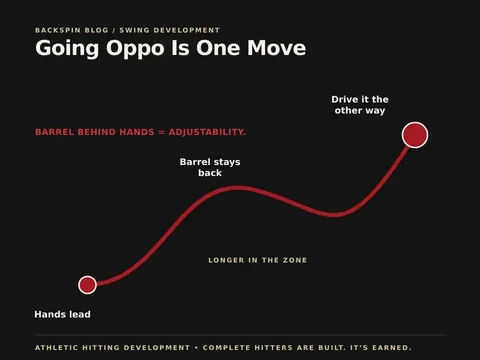
5. Oppo Domination: hard the other way from all 9 zones
Oppo Domination is simple: set the tee in all nine parts of the strike zone and hit every ball hard the other way. Right-handed hitters drive it to right field. Lefties drive it to left.
Soft contact doesn't count. This drill trains bat control, path and adjustability. On pitches away, stay through the outside of the ball and drive it into the opposite-field gap. On pitches in, don't spin off and hook it. Keep enough structure and direction to drive it hard through the other side of the field.
"Hard, down the other way means we are on our way!" A ball driven hard to the opposite field tells you the hitter was on time and stayed through it.
This drill exposes whether a hitter really controls the barrel. It also gives him a much bigger map of the strike zone.
AHD focus: The best hitters don't have one favorite spot. They adjust, stay through the ball and punish more of the zone.
6. How should a hitter use these five tee drills?
Don't do all five every day so you can say you did them. Give each drill a job. Don't collect drills. Build a complete hitter.
- Need structure, strength and barrel control? Start with the Sheffield Series.
- Head moving or losing posture? Use the Beltre Drill.
- Can't cover locations or make the right swing decision? Use the In-Out Tee Call.
- Late on velocity or out front on off-speed? Work the Bump Drill.
- Pull-happy, rolling over or stuck in one spot? Get to Oppo Domination.
A TEE WITH A JOB
5 TEEDRILLS.
- Sheffield Series: structure + strength
- Beltre Drill: athletic, quiet head
- In-Out Tee Call: coverage + decision
- Bump Drill: velocity and off-speed
- Oppo Domination: all 9 zones, hard
GIVE EVERY REP A JOB
The tee isn't boring. Random tee work is boring.
These five drills won't replace facing good pitching. They help a hitter get more out of every pitch he sees. Baseball or fastpitch, you need a tee, a ball and a drill with a purpose. It's a great day to hit!!
THELESSON.
- Random tee work is boring
- Give every drill a job
- Make the call, then earn the swing
- Hard the other way, every zone
Complete Hitters Are Built…Earned.
Want to go deeper? Read Going Oppo Is One Move and Your Tee Is Lying to You.
Quick answers
What are the best batting tee drills?
The five AHD would keep forever are the Sheffield Series, the Beltre Drill, the In-Out Tee Call, the Bump Drill and Oppo Domination. Together they train swing structure, athletic control, plate coverage, adjustability and barrel control.
Is tee work good for hitters?
Yes, when every rep has a job. Random tee swings build very little. A tee drill aimed at one problem lets a hitter slow the swing down, clean up one movement and repeat it with a clear purpose.
Should a hitter do every tee drill every day?
No. Pick the drill that matches the hitter's biggest problem and give it your best reps. Stop when quality drops. More random swings won't fix what one focused drill will.
Do these tee drills work for softball hitters?
Yes. All five work for fastpitch softball hitters the same way they work for baseball hitters. Oppo Domination and the In-Out Tee Call are especially useful for covering the whole zone.
Don’t collect drills. Build a complete hitter.
Complete Hitters Aren’t Born. They’re Built… and Earned.