How to Hit an Inside Pitch: Turn Inside Pitches Into Your Best Pitches
Pitchers come inside to jam you. Hitters who turn on it get the pitch they can drive the hardest.
READ ARTICLE →
Mechanics, movement, sequence, bat path and adjustability.
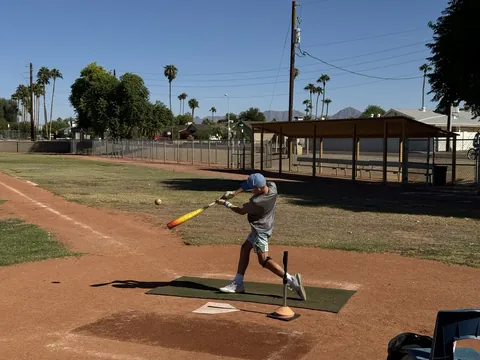
Pitchers come inside to jam you. Hitters who turn on it get the pitch they can drive the hardest.
READ ARTICLE →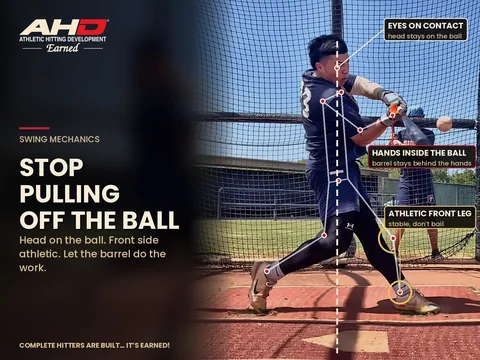
Pulling off is a symptom. Find out why the front side opens early, and the swing stays on the ball longer.
READ ARTICLE →
How great hitters adjust late to inside and away pitches without giving away force.
READ ARTICLE →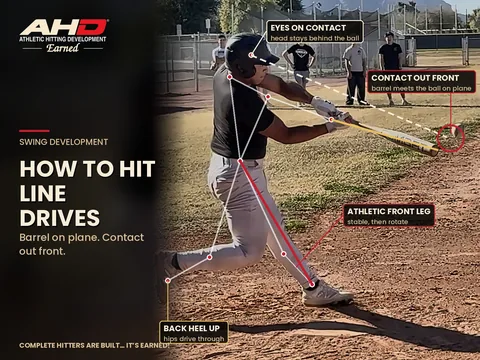
Pop-ups and weak grounders come from the same place: the barrel meets the ball at the wrong time or on the wrong plane. Here’s how to fix both.
READ ARTICLE →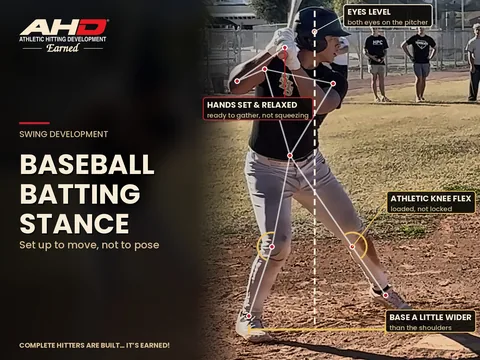
A stance isn’t a pose. It’s the starting point that has to let him load, see the ball and swing on time. Here’s how to build one.
READ ARTICLE →
A stance isn’t a pose. It’s a starting point that has to let her load, see the ball and swing on time. Here’s how to build one.
READ ARTICLE →
Same principles, different problem. What a hitter switching sports, or a coach running both, needs to keep and what needs to change.
READ ARTICLE →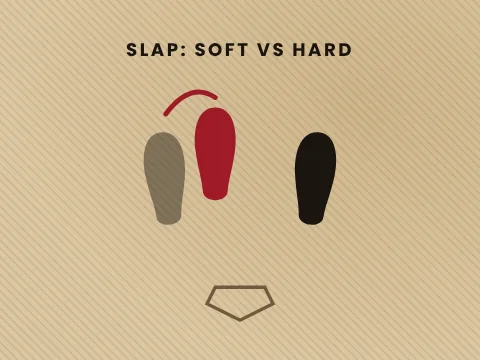
Slapping turns speed into hits from the left side. It’s a real skill with its own footwork, rules and reps, not a shortcut.
READ ARTICLE →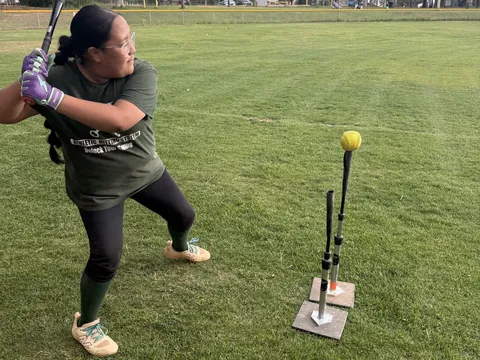
A tee, a net, some soft balls and 20 minutes. That’s enough to build a better hitter in the garage or backyard.
READ ARTICLE →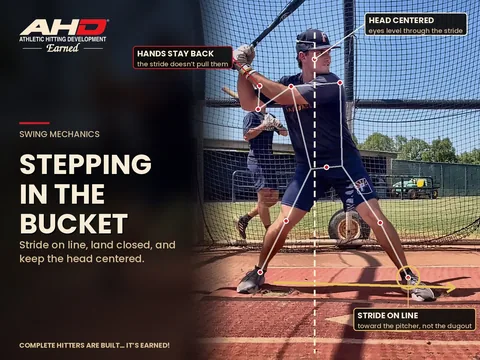
Stepping in the bucket is a symptom, not the problem. Find the cause and the stride usually fixes itself.
READ ARTICLE →
Two angles, chest high, landscape, slow motion. Get the video right and a coach can actually help your hitter.
READ ARTICLE →
Dax Kilby’s Fall League swing change shows why an adjustment has to solve a baseball problem, not chase a look.
READ ARTICLE →
Zack Gelof added bat speed and contact while swinging less. Build power and decisions together.
READ ARTICLE →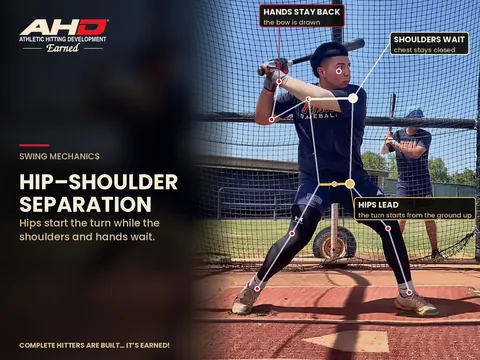
Separation grows with age. Don’t call a 10-year-old’s swing wrong: build the athletic position first and be patient.
READ ARTICLE →
The average window for sweet-spot contact was 9.36 ms. Swing path stretched or shrank it by more than ten times.
READ ARTICLE →
A study of 20 youth hitters found the swing changes off a tee. Keep the tee, but make moving-ball reps the backbone.
READ ARTICLE →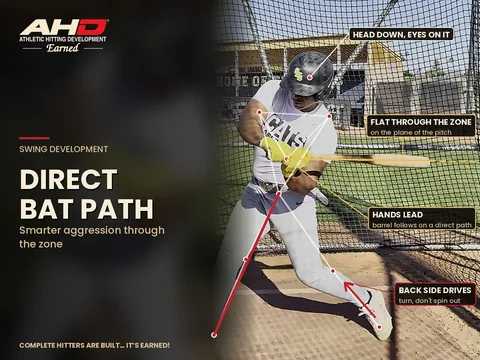
Every coach wants a direct path. But a direct barrel attacking the wrong pitch is wasted. Position, plan, then path.
READ ARTICLE →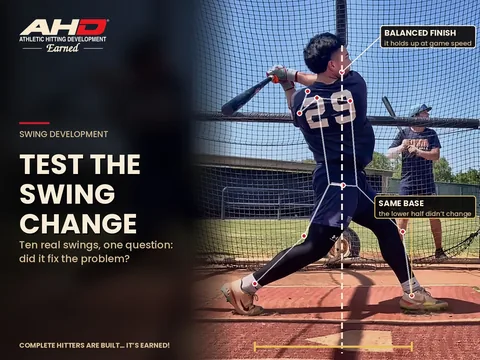
Rebuilding the swing on Tuesday and competing on Friday is how hitters get lost. Test it the AHD way.
READ ARTICLE →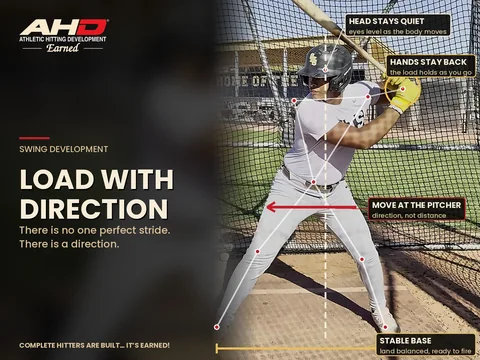
A 2026 study of 95 college hitters found no single ideal stride. Assess the whole move before you try to fix a stride.
READ ARTICLE →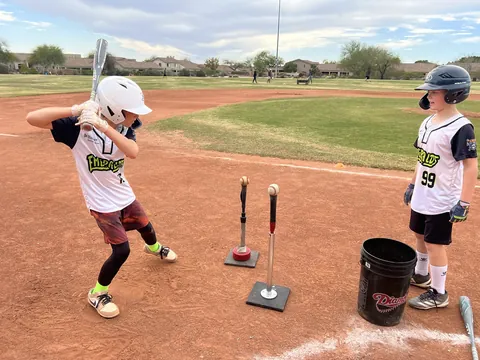
Five checkpoints, one phone and ten swings. Find the breakdown that comes first and fix that one.
READ ARTICLE →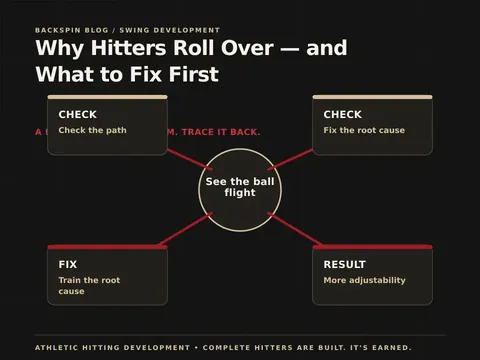
Rolling over is usually a symptom. Learn what to assess before choosing a drill.
READ ARTICLE →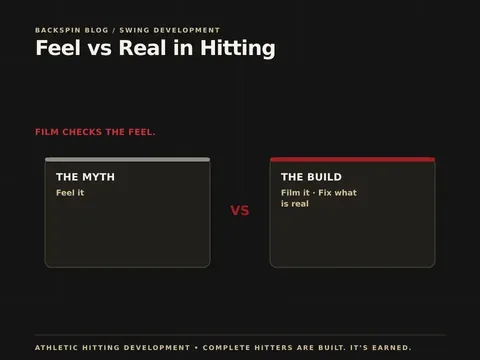
You feel on time but you’re late. You feel on the ball but you’re under it. The AHD fix: go the opposite. Under? Swing over.
READ ARTICLE →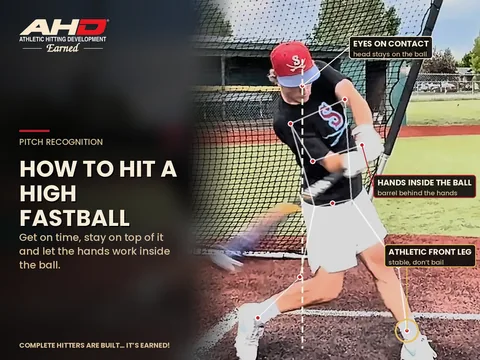
Why hitters miss the high heater, what not to change and three drills that transfer.
READ ARTICLE →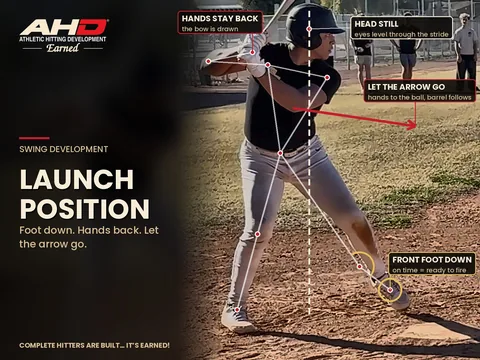
When the eyes say yes, is your hitter ready to fire? The hidden delay most hitters have, and how to train it out.
READ ARTICLE →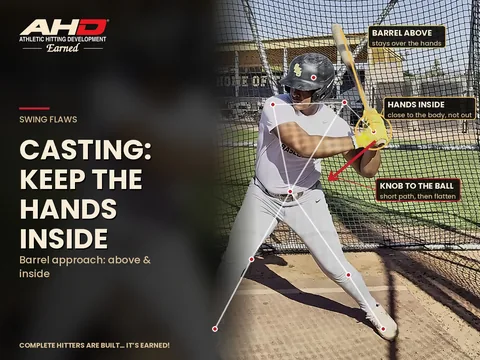
How casting lengthens the route to contact and reduces adjustability.
READ ARTICLE →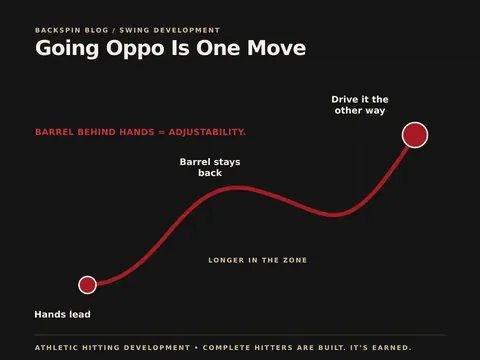
Going the other way isn’t a dozen tips. It’s one thing: hit the ball with the barrel behind your hands. And the best part is it works as a timing cue, helping you be on time and on plane more often.
READ ARTICLE →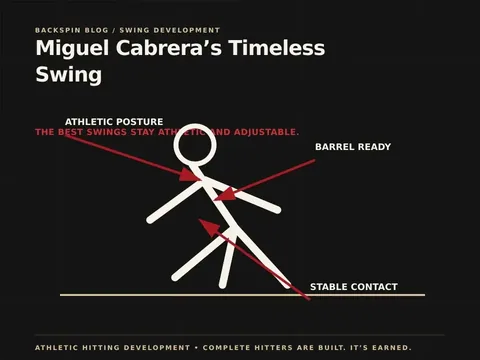
What Cabrera’s 500th home run teaches hitters about adjustability, consistency and building a swing that survives change.
READ ARTICLE →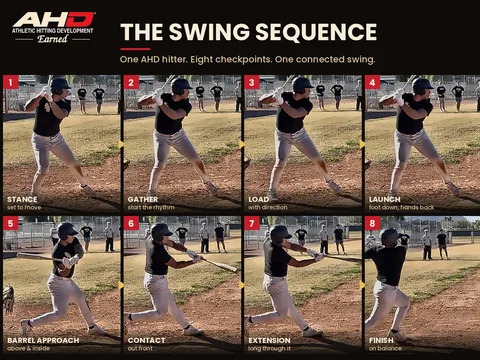
A practical breakdown of the seven AHD swing checkpoints.
READ ARTICLE →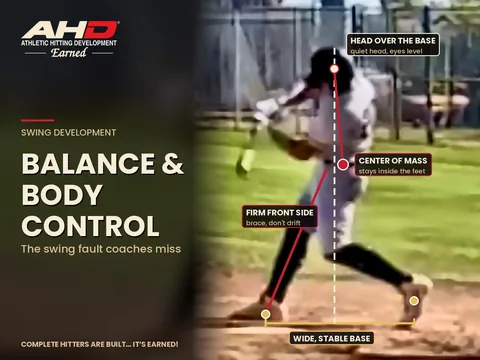
Why posture and center-of-mass control affect timing, force transfer, and barrel accuracy.
READ ARTICLE →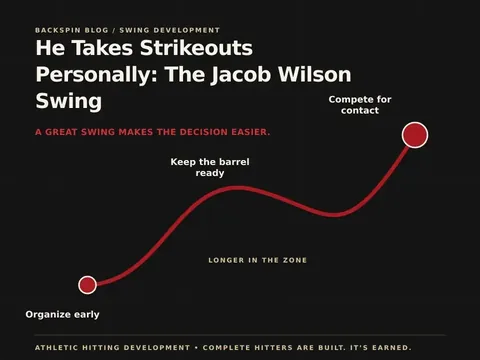
A rookie All-Star starter who almost never misses. How his swing was built, and what young hitters should copy.
READ ARTICLE →
Every swing is different, but the best ones share angles that give hitters an edge. It’s an advantage, not a rule.
READ ARTICLE →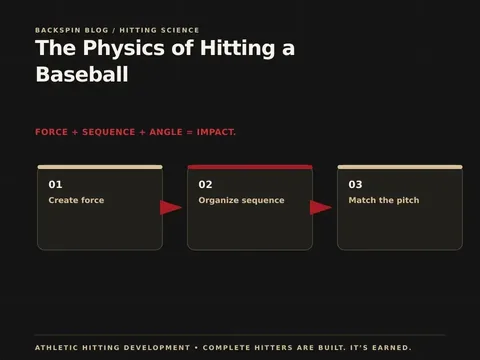
Force, torque, sequence, bat speed, collision, time and adjustability—why AHD trains the complete hitter instead of just the swing.
READ ARTICLE →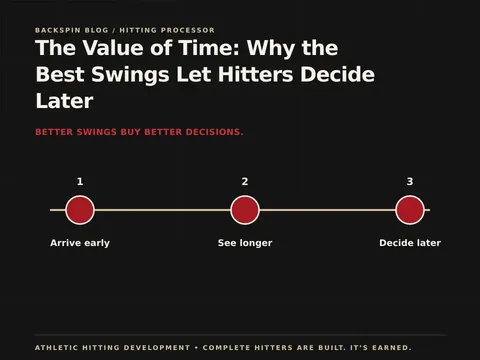
You cannot make the pitch travel slower. You can build a hitter who needs less time to execute—and keeps the decision alive longer.
READ ARTICLE →
Pujols built the model swing. Caminero has it now, and Pujols helped coach it. The fastest, flattest swing in baseball.
READ ARTICLE →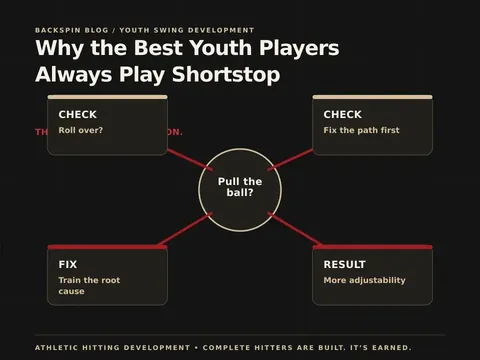
It’s not the arm or the coach’s kid. It’s a hitting problem: right-handed rollovers. Here’s the fix.
READ ARTICLE →
Learn what breaks down most often and how to start fixing it the right way.
READ ARTICLE →
How the back arm moves from launch to contact, why hitters cast, and drills to stay connected with the back elbow in the slot for a short, strong swing.
READ ARTICLE →
Why extension should go toward the pitcher, not out over the plate, and how wrist release before the roll creates solid contact and fewer rollovers.
READ ARTICLE →
Where the front foot lands, why the front leg stays flexed after the stride, and the front leg angle at contact that lets hitters hit against it.
READ ARTICLE →
“Squish the bug” is a hitting myth. What the back foot actually does at contact, and why releasing the back side helps full weight transfer.
READ ARTICLE →
What the back leg and foot do at contact, why pivoting on the back foot costs power, and five drills to release the back side.
READ ARTICLE →
Rhythm and tempo in the swing: how hitters “find their number,” the most effort they can use without losing technique, often 80 to 90 percent.
READ ARTICLE →
What a study of elite fastpitch softball hitters from Team USA, Arizona and Arizona State showed about swing mechanics compared with baseball.
READ ARTICLE →
The bump is the forward hip shift with a bent front leg and square torso before the swing decision. What it is, why it buys time and how to see it.
READ ARTICLE →
A good hitting base is about a bat’s length between the feet after the stride. Why most young hitters are too narrow and how to fix it.
READ ARTICLE →
Launch position is where the hands and body switch from moving away from the pitch to toward it. Five keys and two drills to get there every swing.
READ ARTICLE →
The front foot must be down early or on time, never late, around when the pitch is halfway to the plate. Stride timing keys and common faults.
READ ARTICLE →
The trigger is any movement that starts the swing: a timing device and the start of the load. Common triggers from hand push to leg kick.
READ ARTICLE →
The three swing faults found in almost every young hitter, starting with losing hitting posture and a long, loopy swing, plus fixes and drills.
READ ARTICLE →
Squish the bug, feet shoulder width, land softly on the toe: three things BK taught for years that elite hitters don’t do.
READ ARTICLE →
Elite swing mechanics are the same in softball and baseball. Why fastpitch hitters deserve elite swing teaching, strength training and real challenge.
READ ARTICLE →Guarantee & Refunds · Privacy · Terms · Safety · Delete My Data