By BK, Athletic Hitting Development
Complete Hitters Aren’t Born. They’re Built… and Earned.
Key takeaways
- Evaluate the whole hitter: The Swing, Athletic Development, the Hitting Processor and the Mental Approach, three skills each.
- Watch live at-bats, batting practice and one side-view swing video. A tee alone hides most problems.
- Score each skill 1 to 5. The lowest pillar total is the priority.
- Retest with the same scorecard and the same camera angles in 30 days.
To evaluate a hitter, rate 12 skills across the 4 pillars — the swing, athletic development, the Hitting Processor and the mental approach — on a 1–5 scale using live at-bats, batting practice and a side-view video. The lowest pillar is the priority, and you retest it in 30 days.
Rate 12 skills across the 4 pillars — swing, athletic development, Hitting Processor and mental approach — from 1 to 5 using game at-bats, batting practice and side-view video. Train the lowest pillar first, then retest with the same scorecard and camera angles in 30 days.
Train it: Complete Hitter Masterclass → Free tool: 4 Pillars Hitter Scorecard (free, printable) →Most hitter evaluations are just a swing evaluation. Somebody watches ten tee swings, says “get your hands inside,” and calls it an assessment. That misses half the hitter.
This guide is for one hitter at a time: a parent who wants to know what to work on, or a coach planning a player’s next month. Running tryouts for a whole team? Read Preseason Hitting Evaluation for Teams instead.
1. What should you look for when evaluating a hitter?
Complete hitters are aggressive and athletic and swing with controlled violence. The violence comes from the swing and the athlete. The control comes from the Hitting Processor and the mental approach. Rate all four.
| Pillar | Rate these 3 skills |
|---|---|
| The Swing | Load and launch timing · Bat path and contact · Mechanically Advantaged Angles at contact |
| Athletic Development | Strength and power · Speed and explosiveness · Mobility and durability |
| The Hitting Processor | Pitch recognition · Timing adjustments · Zone decisions |
| The Mental Approach | Plan at the plate · Pressure and reset · Ownership of the work |
Mechanically Advantaged Angles (MAA) are the strong positions at contact that put the body’s power behind the ball. Good hitters get there even when they have to adjust.
HITTER EVALUATION
12 SKILLS.4 PILLARS.
- Swing: load, path, MAA
- Athlete: power, speed, mobility
- Processor: see, time, decide
- Mental: plan, reset, ownership
SCORE 1–5. TRAIN THE LOWEST.
2. How do I film a hitter for an evaluation?
Video is the best friend you have here. Your eyes can’t see a swing at full speed. Your phone can.
- Two angles. One from the side, one from behind. Chest high. Landscape.
- Slow motion. 120 or 240 frames per second if your phone has it.
- Whole body and bat through the finish. Don’t crop the feet or the follow-through.
- Five off the tee, five live or front toss. The difference between them tells you a lot.
- Same angles every time. That’s what makes the retest fair.
Then watch at least a few game at-bats in person or on video. That’s where you see the Hitting Processor and the mental approach. More detail in How to Film Your Swing for Analysis.
3. How do you score a hitting assessment?
Print the free 4 Pillars Hitter Scorecard or fill it out on your phone. It has a 1, 3 and 5 description for every skill, so you’re matching what you see, not guessing.
Score each of the 12 skills from 1 to 5. A 1 means it’s missing. A 3 means it works in easy situations. A 5 means it holds up against good pitching. Use 2 or 4 when the hitter is in between.
- Add each pillarThree skills per pillar, so each pillar scores 3 to 15. The total is out of 60.
- Find the lowest pillarThat’s the priority. Not the one the hitter likes most, the one that’s weakest.
- Look for a single 1One skill scored 1 inside an otherwise solid pillar is often the quickest win.
- Break ties with gamesIf two pillars tie, start with the one costing the most in game at-bats.
A rough guide to the total: 12–29 is building the base, 30–44 is a developing hitter with one or two pillars holding the rest back, 45–60 means all four are working and the gains come from sharpening.
Score what you see in games, not what you see off a tee.
4. What mistakes do parents and coaches make in hitter evaluations?
- Only watching the tee. A pretty tee swing that falls apart live is a Processor or timing problem, not a mechanics problem.
- Listing ten faults. The hitter can’t fix ten things. Find ONE priority and no more than two skills inside it.
- Judging by results alone. A hard out and a lucky bloop tell different stories.
- Never retesting. An evaluation with no retest is an opinion.
For the parent side of this, read How Parents Can Help a Hitter Improve Without Guessing.
5. What should I retest, and when?
Retest in 30 days with the same scorecard, the same two camera angles and the same 10 swings. Count game at-bats over the same stretch. If the priority pillar moved, the next-lowest becomes the new priority.
Want a deeper read than your own eyes? The free Hitter Combine grades all 4 pillars, and SwingChecker™ ranks the hitter’s top swing priorities in about 3 minutes.
When two or more pillars score low, train them in order with the Complete Hitter Masterclass: 24 lessons across all 4 pillars, $250 at the founding price (regularly $349), 1 year of access, Lessons 1–3 free. Lesson 1 is a test and Lesson 24 is the final assessment, so the retest is built in.

THELESSON.
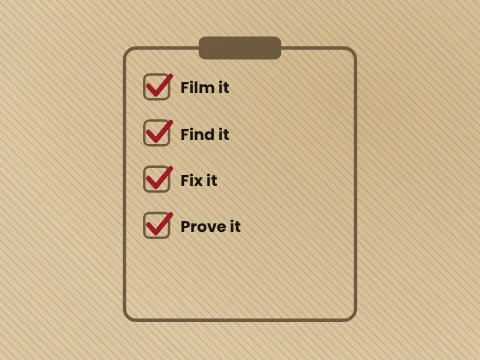
- Film two angles every time
- Watch games, not just the tee
- One priority, not ten faults
- Retest in 30 days
Complete Hitters Are Built…Earned.
Want to go deeper? Read The Preseason Hitting Evaluation Every Team Should Run and How Parents Can Help a Hitter Get Better Without Guessing.
Quick answers
How do you evaluate a baseball hitter?
Rate 12 skills across the 4 pillars — the swing, athletic development, the Hitting Processor and the mental approach — on a 1–5 scale using live at-bats, batting practice and side-view video. The lowest pillar is the priority.
What should be on a hitting assessment checklist?
Load and launch timing, bat path, positions at contact, strength, speed, mobility, pitch recognition, timing adjustments, zone decisions, an at-bat plan, the reset after a bad pitch, and how the hitter practices.
How often should a hitter be evaluated?
Every 30 days during focused training. Use the same scorecard and the same camera angles so the comparison is fair.
Can a parent evaluate their own kid’s swing?
Yes, with a simple scorecard and video. Parents are often good at seeing game habits; a free tool like SwingChecker helps with the swing details.
Don’t collect drills. Build a complete hitter.
Complete Hitters Aren’t Born. They’re Built… and Earned.