By Athletic Hitting Development
Complete Hitters Are Built… It’s Earned!
Almost every parent wants to help their hitter. And almost every parent has had a backyard session or a car ride turn into an argument.
Stop guessing. Find your hitter’s #1 priority first, use one cue at a time with the same words, film instead of fixing, praise the process and keep the car ride about them, not the at-bats. Let the coach diagnose and prescribe; your job is to make the work happen.
Train it: Hitting Coach Certification →🛠️ Not sure where to start? Run the free SwingChecker™. It finds your hitter’s #1 priority in a few minutes.
It’s not because you care too much. It’s because helping without a plan means guessing — a new tip every night, a cue from a video, a drill from another dad. The hitter hears ten things and fixes none of them.
Don’t collect drills. Build a complete hitter.
1. Why helping turns into arguments
- Too many cues. “Keep your head down. Hands up. Stay back. Swing harder.” Four fixes in one swing is zero fixes.
- Feedback on results, not the process. A 0-for-3 doesn’t tell you what to fix. It tells you the hitter is upset.
- The wrong time. Right after a game, nobody learns. They defend.
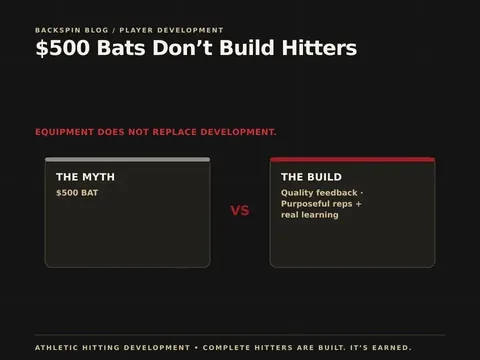
- Buying instead of building. A new bat feels like progress. $500 bats don’t build hitters — reps on the right thing do.
2. Your job vs. the coach’s job
The coach’s job
Diagnose what is happening, why it is happening and what to work on next. Prescribe the drill and the cue.
Your job
Make the work happen: schedule it, film it, feed the ball, keep the cue consistent — and protect your hitter’s love of the game.
When parents try to do both jobs, the hitter gets mixed messages. When each person does their job, the hitter gets one clear plan.
FOR PARENTS
STOPGUESSING.
- Find the priority
- One cue at a time
- Film, don’t fix
- Praise the process
ONE CUE. SAME WORDS.
3. The 5 parent rules
- Find the priority first. Before you work on anything, find out what matters most. SwingChecker™ is free, takes about 3 minutes and ranks your hitter’s top priorities across all 4 pillars.
- One cue at a time. Use the one cue from the plan — every session, the same words — until it sticks. Then move to the next priority.
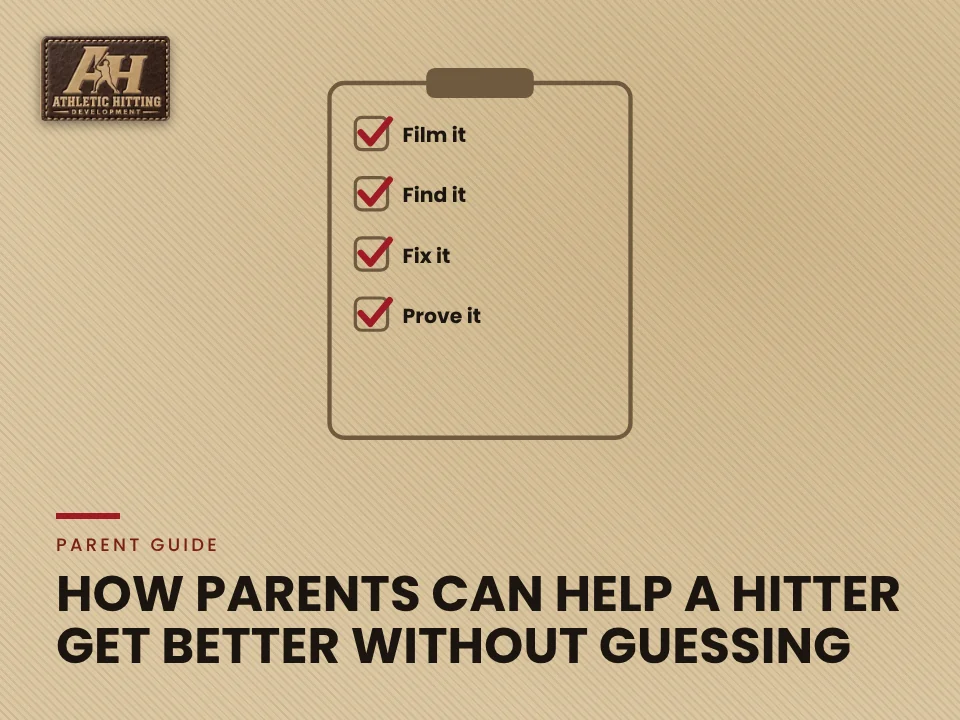
- Film, don’t fix. Once a week, film five swings from the side and the front. Video ends arguments, because the hitter can see it for themselves.
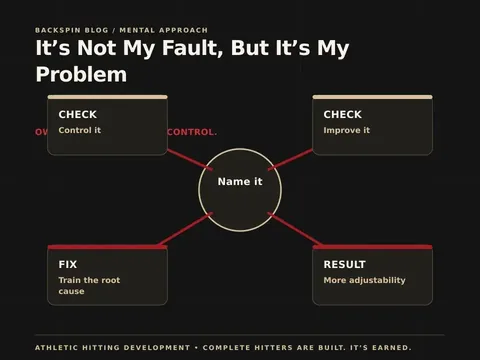
- Praise the process. Praise the plan, the decision, the effort and the routine — not the box score. A hard out on a good decision is a win. (Not your fault, still your problem is a great read together.)
- Keep the car ride about them, not the at-bats. Let the hitter bring up the game. If they don’t, talk about anything else.
Your hitter doesn’t need another coach in the car. They need someone who believes in the work.
4. A simple weekly rhythm
- 2–3 short sessions on the #1 priority — 15 to 20 minutes, one drill, one cue.
- 5 minutes a day of the Daily Hitting Processor Plan — eyes and decisions, no machine required.
- 1 film day — same two angles, same five swings, compared to last week.
- Every 14 days — re-run SwingChecker and see what moved.
5. What to say — and what not to say
| Try this | Instead of this |
|---|---|
| “What was your plan that at-bat?” | “You have to swing at that.” |
| “What did you see on that pitch?” | “Keep your eye on the ball.” |
| “Show me your cue.” | A new tip from a video. |
| “I love watching you compete.” | A replay of every at-bat. |
6. When to bring in a coach
If you’ve trained the priority for a few weeks and the video isn’t changing, or your hitter has a big goal — high school varsity, college, a scholarship — it’s time for a coach’s eyes. A good coach gives you the same thing this guide does, just sharper: what is happening, why, and what to work on next.
AHD offers remote coaching anywhere and private hitting lessons in Scottsdale. Either way, start with the free SwingChecker so the first conversation is about the right thing.
More for parents: The 4 absolutes of being a good parent of a young athlete · The game gives you another chance
THELESSON.
- Find the priority first.
- Same words every time.
- Film it.
- Keep the car ride about them.
Complete Hitters Are Built…Earned.
Quick answers
How can I help my child hit better without arguing?
Find the one priority first, use one cue at a time, film swings instead of correcting every rep, praise the process instead of results, and keep the car ride about your hitter rather than the at-bats.
What should parents work on with a young hitter at home?
Work only on the hitter’s #1 priority with one drill and one cue, two or three short sessions a week, plus five minutes a day of pitch recognition and decision reps. Film once a week to see progress.
Should parents coach their own kids in hitting?
Parents can absolutely help, but it works best when the parent’s job is to make the work happen and the coach’s job is to diagnose and prescribe. That keeps the hitter from getting mixed messages.
How do I know what my hitter needs to work on?
Start with an assessment instead of a guess. AHD’s free SwingChecker takes about 3 minutes and ranks your hitter’s top priorities across the swing, strength, the Hitting Processor and the mental game.
What should I say to my kid after a bad game?
Ask about the process, not the box score: “What was your plan that at-bat?” or “What did you see on that pitch?” Better yet, let them bring up the game. If they don’t, talk about anything else and tell them you love watching them compete.
From the 2015 archive: How to Teach Hitting: The What, Why, How Method.
This article is part of the AHD guide Youth Hitting Development. Start there for the full picture and every related article.