By BK, Athletic Hitting Development
Complete Hitters Are Built… It’s Earned!
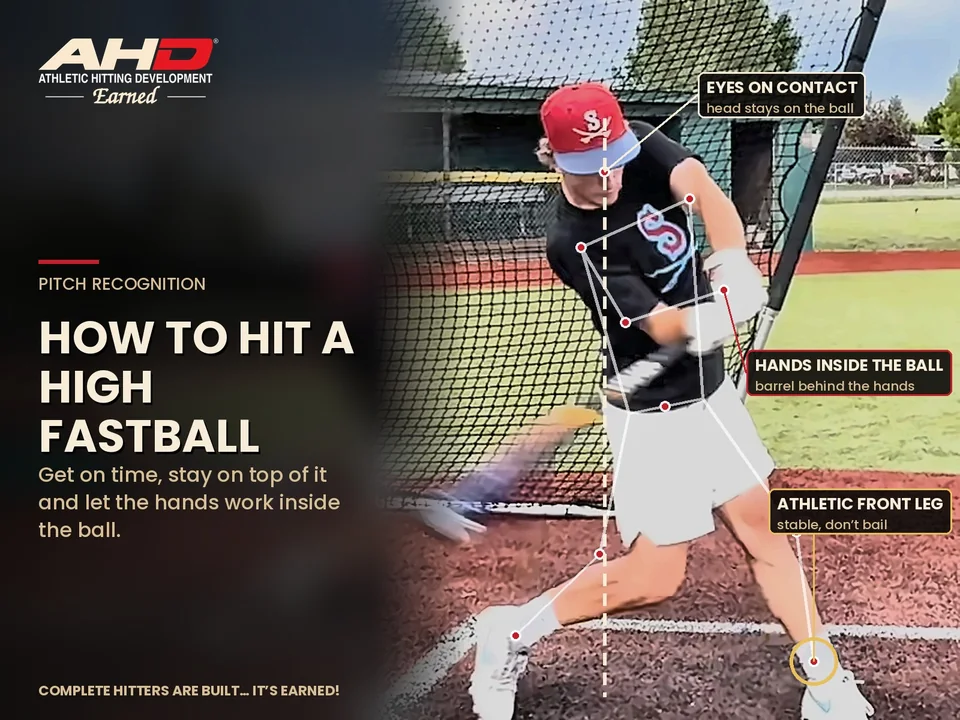
The high fastball gives hitters trouble because it exposes almost everything.
Start by deciding whether the high fastball is a pitch you should attack — above the hands, it usually isn’t. When it’s a strike, be on time and keep the barrel on top of the ball’s plane so you don’t swing under it.
Train it: Hitting Processor Masterclass →It exposes late timing. It exposes a barrel that dumps early. It exposes posture that rises too soon. It exposes a hitter who cannot decide early enough whether the pitch is in the zone.
So the answer is not simply, “Get your hands on top.”
That cue can make a hitter chop down, lose their best path, or create a new problem while trying to solve an old one.
To hit a high fastball, the hitter needs a better plan, a better decision and a swing that can arrive on time without falling apart.
1. First: Is it a pitch you should attack?
Not every high fastball is a good pitch to hit.
Some are above the hitter’s usable zone. Some are too far inside. Some are set up by a pitcher who knows the hitter is late.
Before changing mechanics, ask:
- Is this pitch actually in my attack zone?
- Am I swinging because I chose it, or because it beat me?
- Was I ready for velocity early enough?
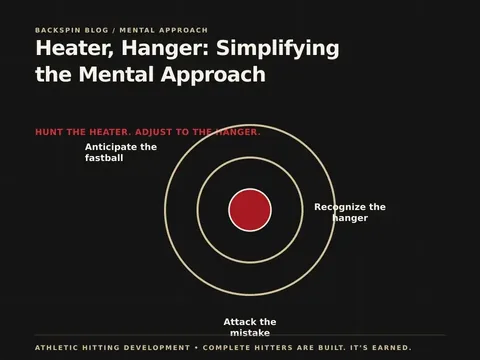
The best hitters do not try to cover every pitch equally. They enter the box ready for their heater—the fastball they can attack hard—then adjust.
That is the heart of the Heater, Hanger approach.
2. Why hitters miss high velocity
There are several common reasons:
They are late.
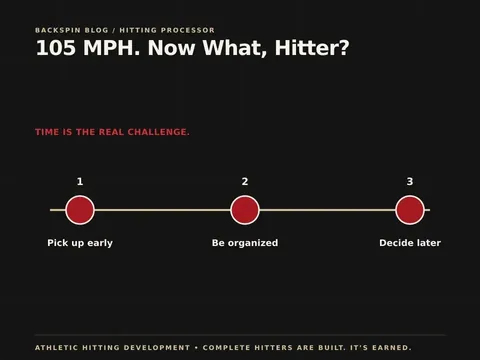
The hitter sees the pitch late, starts late, or needs too much time for the barrel to enter the zone. They swing under it, foul it straight back, or never catch up.
They lose athletic posture.
Some hitters stand up or pull off as they swing. The eyes move. The body leaks. The barrel is no longer arriving with control.
The barrel dumps.
When the barrel falls toward the ground too early, the hitter often has to rescue it back up to reach the high pitch. That is a hard move against real velocity.
They train only easy, low flips.
If all practice pitches are at the belt and perfectly timed, the high fastball will always look faster and more uncomfortable in a game.
THE HIGH HEATER
DON’T CHOP.BE ON TIME.
- Is it in your zone?
- Ready for velocity
- Hold your posture
- Keep the barrel up
TIMING BEFORE MECHANICS.
3. What a better high-fastball swing looks like
Every hitter is different. But the hitter needs a swing with a chance:
- Athletic position holds through the move.
- The forward move stays organized toward the pitcher.
- The hands and barrel work efficiently instead of casting away.
- The barrel can get on plane early and stay through the ball.
- The hitter has enough decision time to recognize the pitch and attack it.
This is not about trying to make everybody’s swing look the same. It is about giving the hitter a larger margin for error on solid contact.
Review the seven swing checkpoints if your high-fastball problem starts with a breakdown in movement.
4. Three drills that transfer
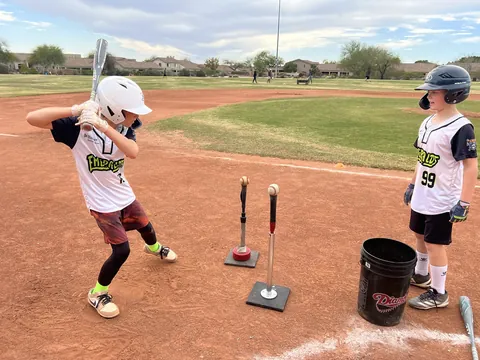
1. High-tee line drives
Set the tee at the top of the strike zone, not above it. The target is a hard line drive through the middle or slightly to the pull side—not a pop-up and not a chop.
Make five controlled reps, then five game-intent reps. If posture rises or the barrel dumps, reset instead of swinging harder.
2. Mixed-height front toss
Use three locations: middle, top of the zone and take. Do not announce the pitch.
The hitter must decide. This is more valuable than mindlessly attacking ten high tosses because the game never announces location in advance.
3. High-velocity game rounds
In a machine, overhand front toss, or live environment, create a count. Give the hitter two high fastballs in the zone, two pitches to take and two mixed pitches.
Score decisions and solid contact. The hitter learns to hunt the pitch without chasing the one above the letters.
5. Do not overcorrect
When hitters struggle high, they often make huge changes:
- They lower the hands dramatically.
- They force a steep uppercut.
- They try to swing down.
- They start earlier and lose adjustability on everything else.
That is how one issue becomes three.
Use video. Compare what you felt to what happened. The high fastball might be a swing-path problem—but it might be timing, vision, pitch selection or balance.
Read Feel vs. Real before installing a major fix based on one bad round.
6. The bottom line
The high fastball is not a special pitch that requires a magic drill.
It requires a complete hitter: athletic enough to hold posture, efficient enough to get the barrel there, prepared enough to see velocity early, and confident enough to attack the right pitch.
Train it with purpose. Then trust it when the heater shows up.
If you need to identify why the pitch is beating you, start with SwingChecker™.
Complete Hitters Are Built… It’s Earned!

THELESSON.
- High-tee line drives.
- Mixed-height toss.
- Score the decision.
- Don’t overcorrect.
Complete Hitters Are Built…Earned.
Quick answers
How do you hit a high fastball?
Decide early whether it is in your attack zone, be ready for velocity, hold an athletic posture and keep the barrel from dumping so it can get on plane and stay through the ball. Train it with high-tee line drives and mixed-height front toss.
Why do hitters pop up high fastballs?
Usually late timing, posture that rises early or a barrel that drops and has to come back up. Each needs a different fix, so check video first.
Should I get my hands on top of the ball?
That cue often makes hitters chop down and lose their best path. Focus on timing, posture and an efficient barrel path instead.
How do you stop swinging under the high fastball?
Be ready earlier, set your eyes at the top of the zone and let the barrel work on top of the ball. Most pop-ups on high fastballs come from being late or swinging at pitches that were never strikes.
This article is part of the AHD guide Pitch Recognition & Timing. Start there for the full picture and every related article.