By BK, Athletic Hitting Development
Complete Hitters Are Built… Not Given. Earned!
On June 26, Brewers ace Jacob Misiorowski fired a 105.5 mph fastball to Pete Crow-Armstrong. It’s the fastest pitch ever thrown by a starting pitcher.
Jacob Misiorowski’s 105.5 mph fastball reaches the plate in about 0.37 seconds, leaving roughly 0.22 seconds to see, recognize, time, decide and attack. Velocity beats hitters who are late in any pillar, so load early, stay short to the ball, pick it up out of the hand and go up with one plan.
Train it: Hitting Processor Masterclass →It tied Ben Joyce’s 105.5 from 2024 for the third-fastest pitch tracked since 2008. Only Aroldis Chapman has thrown harder, at 105.8 mph in 2010. Since pitch tracking began, only four pitchers have officially hit 105: Chapman, Misiorowski, Joyce and Jordan Hicks.
Velocity doesn’t beat hitters because it’s fast. It beats hitters who are late in one of the four pillars.
1. The clock: how much time do you get?
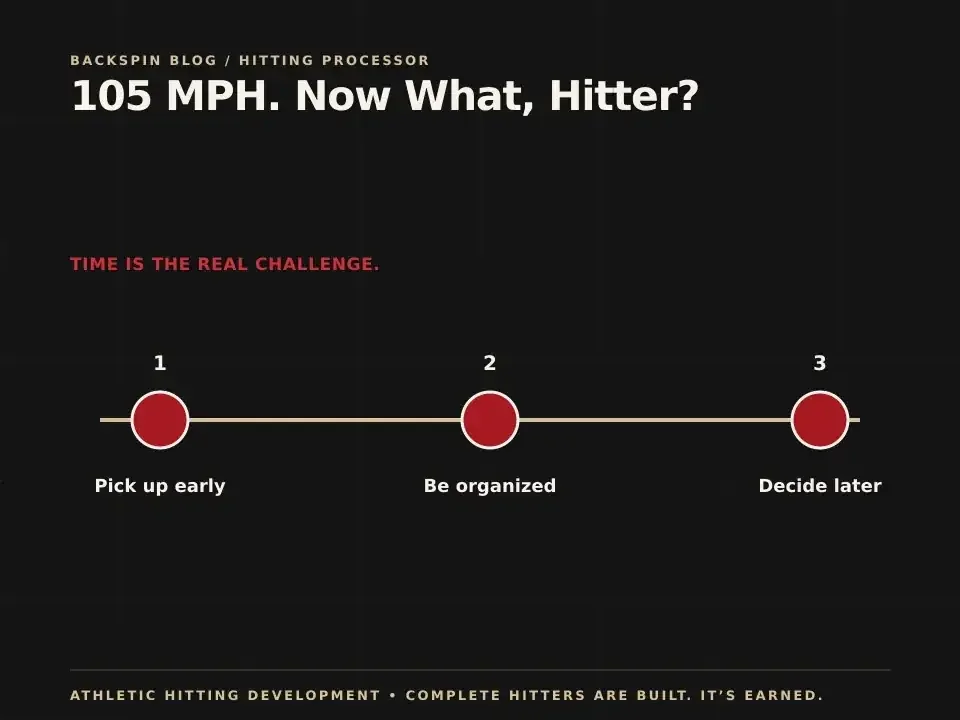
A 105 mph fastball reaches the plate in about 0.37 seconds. Take away roughly 0.15 seconds for the swing itself, and the hitter has about 0.22 seconds to see it, recognize it, time it, decide and attack it.
The brain alone needs around a tenth of a second just to process what the eyes see. So against elite velocity, the decision has to be made before the ball is halfway home.
Look at the bottom row. A 60 mph pitch from 46 feet gives a youth hitter about the same time as an 80 mph fastball from 60′6″. Every hitter faces their own version of “too fast,” and the skills that handle it carry all the way up.
105 MPH TO THE PLATE
0.37SECONDS.
- About 0.15 s to swing.
- About 0.22 s to decide.
- Decide before it's halfway home.
VELOCITY BEATS HITTERS WHO ARE LATE.
2. What 105 exposes in all four pillars
1. The swing
There’s no time for a long, loopy path. The barrel has to get on plane early and stay there. Short to the ball, long through it.
2. Athletic development
Bat speed buys time. The faster your barrel moves, the longer you can wait before you commit. That’s strength, rotational power and explosiveness, not just more swings.
3. The hitting processor
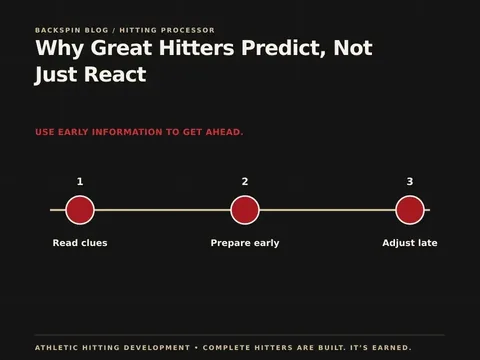
This is where velocity is won or lost. Hitters who pick the ball up out of the hand get a head start (that’s why great hitters predict). Hitters who wait to “see it” are already late. See It → Recognize It → Time It → Decide → Attack It.
4. The mental approach
A busy mind is a slow mind. One plan, one zone, one timing trigger. Get on time for the fastball and let your hands adjust to everything else.
One pillar alone won’t get you there. A great swing with a slow processor still loses. Big bat speed with no plan still chases. That’s why AHD trains all four, together.

WHERE VELOCITY IS WON OR LOST
PICK IT UPEARLY.
- See it ↓ Recognize it ↓ Time it
- Decide ↓ Attack it
A BUSY MIND IS A SLOW MIND.
3. How AHD hitters train for velocity
You don’t need to face 105 to train like it’s coming. You need to shrink your reaction window on purpose.
The velocity plan
1. Short-distance fastballs. Firm BP from a shorter distance, behind a screen, squeezes your time. Start easy, then move in.
2. Machine velo with a plan. Short rounds above game speed. The goal is on time and on plane, not pull-side home runs.
3. Release-window reads. A partner flashes a color or number from the release point. Call it out before contact. Then use the Galvan Method between rounds.
4. Load early. Start your load as the pitcher’s hands separate, not at release. Late loads die against velocity.
5. Bat speed blocks. Overload and underload bats plus rotational med-ball throws. Measure it so you know it’s moving.
6. One-pitch plan reps. Name your pitch and zone before every round. Swing at that. Take the rest.
4. For players and parents
- Players: pick two of the drills above and do them three times a week for a month. Track the results.
- Parents: when your hitter is beaten by velocity, ask “Were you on time?” before you ask about the swing.
- Coaches: train velocity on purpose. Shorter distance, a clear plan, and a reason for every round.

THELESSON.
- Shrink the reaction window.
- Load early.
- Short to it, long through it.
- Build bat speed.
- One plan. One zone.
- Train all four pillars.
Complete Hitters Are Built…Earned.
5. Build the complete hitter
Don’t collect drills. Build a complete hitter.
Start with SwingChecker™ to find your #1 priority for free. The AHD Complete Hitter Masterclass trains all four pillars together, starting with Lesson 1 free. Want a plan built for your hitter? See online remote baseball and softball training with BK.
Source note: Velocity records come from CBS Sports, MLB.com, ESPN and Legion Report. Time-to-plate figures are AHD estimates. This article is AHD’s coaching interpretation.
Quick answers
How long does a 105 mph fastball take to reach the plate?
About 0.37 seconds from release to the front of the plate. Take away roughly 0.15 seconds for the swing itself, and the hitter has only about 0.22 seconds to see the pitch, recognize it, time it, decide and attack it.
How do you hit a high-velocity fastball?
Start your load early, keep the swing short to the ball, pick the ball up out of the pitcher’s hand, and go to the plate with one clear plan. Bat speed helps too, because a faster barrel lets you wait longer before you commit.
How can young hitters train for velocity?
Shrink the reaction window on purpose: firm BP from a shorter distance behind a screen, short rounds of machine velocity, release-point recognition drills, and bat speed work. Train all four pillars together, not just the swing.
When should a hitter start his load against a hard thrower?
Start the load as the pitcher’s hands separate, not at release. Late loads die against velocity.
This article is part of the AHD guide Pitch Recognition & Timing. Start there for the full picture and every related article.