By BK, Athletic Hitting Development
Complete Hitters Are Built… It’s Earned!
Key takeaways
- Fear of the ball is a normal protective reflex, not a sign your kid is soft or doesn’t want to play.
- Yelling “don’t be scared” makes it worse. So do surprise throws, forced reps and toughness tests.
- Rebuild trust gradually: a safe athletic position, watching pitches without swinging, softer balls, then controlled contact.
- Move up a step only when the current step feels easy; readiness sets the pace, not the calendar.
To help a kid who’s afraid of the ball, stop treating it as a toughness problem and start treating it as a trust problem. Fear is the body protecting itself, so you rebuild trust with safe, gradual reps the child can win — never by yelling “don’t be scared” or forcing them to stand in.
Treat fear of the ball as a protective reflex, not a toughness problem. Rebuild trust gradually with a safe position, watching pitches without swinging, soft announced tosses and easy contact, moving up only when each step feels easy, and never yell or force reps.
Train it: Scared of the Baseball Fix →I’ve watched this at the fence for 52 years. A kid steps in, the pitch comes, and the front foot bails, the head turns, the bat goes limp. Mom or Dad yells “Stay in there!” and the next pitch looks worse.
Here’s what’s actually going on, what makes it worse, and the step-by-step plan I use with young hitters in baseball and softball.
1. Is it normal for a kid to be afraid of the ball?
Yes. Completely. A hard ball is coming at a small body, and the brain is built to protect that body. Flinching, turning away and stepping out are reflexes, not choices.
Some kids have been hit. Some saw a teammate get hit. Some just moved up to faster pitching, a bigger field or a new pitcher who throws hard. And some kids never had a reason; the fear just showed up.
Fear isn’t weakness. It’s a reflex doing its job.
That matters, because you don’t talk a reflex out of existence. You retrain it with experience. The body has to learn, rep by rep, that it can be in the box and still be safe and in control.
2. How do I know if my kid is scared of the ball?
Kids rarely say “I’m scared.” They show it. Watch a few at-bats quietly and look for these:
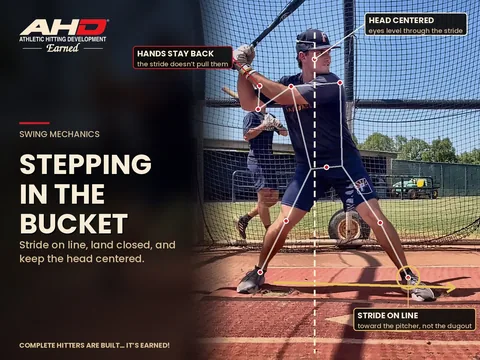
- Stepping in the bucket. The front foot strides away from the plate. I wrote about this in Stepping in the Bucket: Why It Happens and the Fix.
- Head and eyes turning away early. The child stops watching the ball before it arrives.
- Standing far off the plate. Outside pitches become impossible to reach.
- Never swinging, or swinging late and soft. The bat is there for show.
- Great on the tee, lost in games. The swing is fine until a real ball is coming.
The tee-versus-live test is the big one. If the swing looks good with no ball coming at them and falls apart against live pitching, fear is often the cause, not mechanics.
AFRAID OF THE BALL
WHAT FEARLOOKS LIKE.
- Stepping in the bucket
- Head turns away early
- Standing far off the plate
- Late, soft or no swings
- Great on the tee, lost live
IT’S A REFLEX, NOT A CHOICE
3. What should parents NOT do when a kid is afraid of the ball?
Most of what we do out of love makes this worse. I’ve seen every one of these, and none of them work.
- Yelling “don’t be scared” or “stay in there.” It adds pressure and shame to a reflex the kid can’t control.
- Toughness tests. Throwing at a kid on purpose, or “wearing one to get over it,” teaches the body that the box IS dangerous.
- Surprise throws. Fear grows when the child can’t predict what’s coming.
- Forced reps. Twenty more pitches while the kid is upset just practices the flinch.
- Comparing them to a sibling or teammate. It turns a confidence problem into an identity problem.
Be a detective, not a drill sergeant. Ask calmly on the ride home: “How does the ball look when it’s coming in?” You’ll learn more from that one question than from a season of yelling.
4. How do you help a child who is scared of the ball?
Go in order. Each step should feel easy and successful before you move on. If a step feels hard, go back one. Readiness sets the pace, not the calendar.
- Build a safe, strong position.Teach an athletic stance and how to turn the front shoulder in and tuck the chin if a pitch is coming at them; knowing how to be safe lowers fear.
- Watch without swinging.Let the child track soft tosses all the way in with no bat, or with the bat on the shoulder, calling “ball” or “strike”; seeing the ball is a win.
- Use softer balls you announce.Foam, tennis or soft training balls in slow front toss, always telling the child where it’s going; no surprises.
- Swing at the easy ones.Contact on predictable, slow tosses, short sessions, and stop while it’s still fun and successful.
- Add speed and real balls slowly.Speed up or switch back to real balls only when the current level feels boring, and drop back after a bad rep instead of pushing through.
- Practice the plan for games.A simple pre-pitch routine and a breath give the child something to do instead of something to fear.
Keep sessions short: 10 to 15 minutes of good reps beats an hour of tense ones. A short breathing routine before each rep helps more than you’d think.
5. What about kids under 12?
Younger kids need the slowest version of this and a parent in the loop. They don’t have the vocabulary to explain what scares them, and they need lots of small, easy wins.
For ages 7 to 12, our parent-led version lives at 46/60 Academy. It walks Mom or Dad through each step so practice at home stays calm and safe.
For ages 12 to 21, the Scared of the Baseball Fix, our fear of the ball course is 30 guided lessons over about four weeks, for baseball and softball. It goes from a safe, strong position and watching without swinging, to seeing the ball early and owning the space, to controlled contact, to a return-to-competition plan. Every lesson offers an easier step, a repeat or the next step. Lessons 1–3 are free, and it’s $49 one time with a year of access.
One honest note: it’s hitting coaching, not medical or mental-health treatment, and it doesn’t promise an immediate return to live pitching. If your child was hit in the head or face, or has pain, dizziness or vision changes, see a doctor first.
6. Will my kid ever stop being afraid of the ball?
Most kids can, with patience. Confident hitters aren’t fearless; they trust what they see and trust their body to handle it. That’s the Mental Approach pillar and the Hitting Processor (see it, time it, decide, attack it) working together.
Once the fear settles, the swing usually looks better on its own. AHD hitters build Mechanically Advantaged Angles (MAA) that hold up against live pitching, but no swing works if the hitter is bailing out. If you’re not sure whether it’s fear or mechanics, run the free SwingChecker. It ranks your hitter’s top priority across the 4 pillars in about 3 minutes.

THELESSON.
- Never force it or yell it
- No surprise throws
- Soft, predictable, winnable reps
- Readiness sets the pace
Complete Hitters Are Built…Earned.
Want to go deeper? Read Stepping in the Bucket: Why It Happens and the Fix and How Parents Can Help a Hitter Get Better Without Guessing.
Quick answers
Why is my child suddenly afraid of the ball?
Common triggers are getting hit, seeing a teammate get hit, or moving up to faster pitching or a new pitcher. Sometimes there is no clear reason. Either way, it’s a normal protective reflex.
Should I make my kid keep hitting until they get over it?
No. Forced reps and toughness tests usually make fear worse. Use short sessions with soft, predictable tosses and stop while it’s still successful.
Do softer balls help a kid who is scared of the ball?
Yes, in my experience. Foam or tennis balls in slow, announced front toss let the child see the ball and make contact without worrying about getting hurt. Move back to real balls slowly.
How long does it take for a kid to stop being afraid of the ball?
It depends on the child. Some settle in a few weeks; others need longer. Move to the next step only when the current one feels easy, and go back a step after a bad rep.
Don’t collect drills. Build a complete hitter.
Complete Hitters Are Built… It’s Earned!
This article is part of the AHD guide The Mental Game of Hitting. Start there for the full picture and every related article.