By BK, Athletic Hitting Development
Complete Hitters Are Built… It’s Earned!
Key takeaways
- Stepping in the bucket means the front foot strides away from the plate, pulling the body and barrel off the ball.
- It’s a symptom. The usual causes are fear of the ball, pulling the front side or head early, poor stride direction, trying to pull everything, or a bat that’s too heavy.
- Yelling “stride to the pitcher” rarely works because it doesn’t touch the cause.
- Diagnose it on video from behind, match the fix to the cause, and build confidence with softer balls when fear is the reason.
Stepping in the bucket is when a hitter’s front foot strides away from home plate instead of toward the pitcher, which pulls the body and bat off the ball. It’s usually caused by fear of the ball, pulling the head and front side early, or a bat that’s too heavy — and the fix has to match the cause.
Every youth coach has seen it. The pitch comes, the front foot bails toward third base (for a righty), and the swing comes off the ball. Weak contact on the outside pitch, or a miss.
Here’s what I look for, why the usual yelling doesn’t help, and the fixes I use for each cause.
1. What does stepping in the bucket mean in baseball?
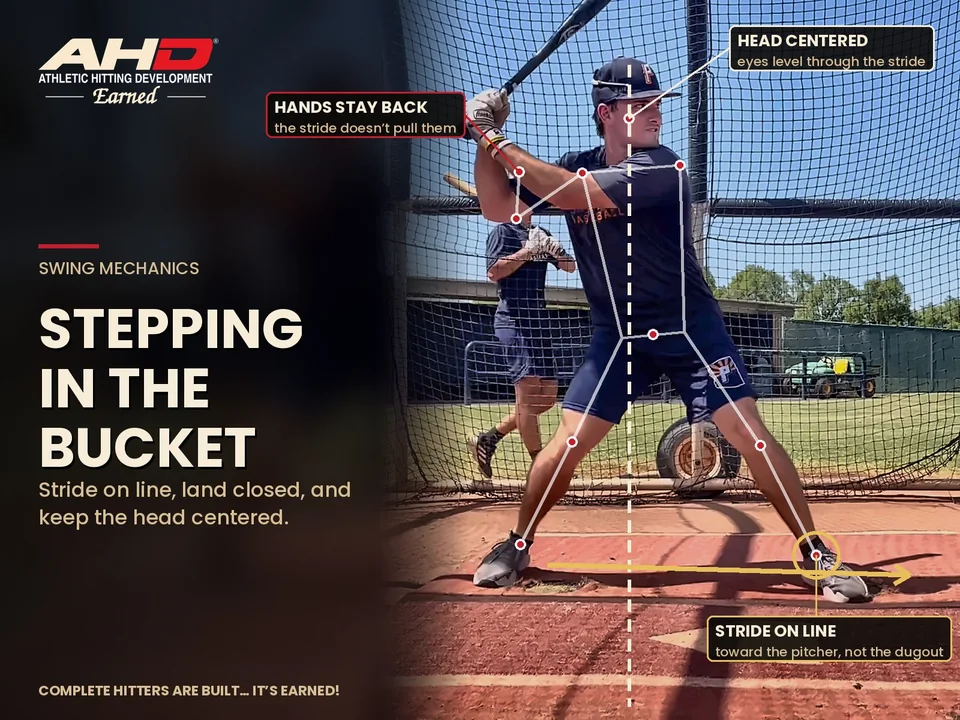
The name comes from the old ballpark picture of a ball bucket sitting near the dugout. A right-handed hitter who steps in the bucket strides toward third base. A lefty strides toward first.
When the front foot opens up like that, the hips and shoulders tend to open with it. The barrel pulls away from the outer half of the plate. Outside pitches become almost impossible to hit hard.
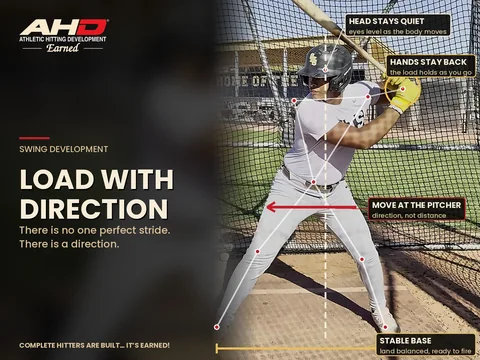
One honest note: not every open stride is a problem. Some good hitters stride a little open and still stay on the ball. There’s no one perfect stride, and I wrote about that in There Is No Perfect Stride in Hitting. The problem is when the stride pulls the hitter OFF the ball.
2. Why does my kid step in the bucket?
In my experience, it comes down to five causes. Most kids have one main one.
- Fear of the ball. The most common cause in young hitters, especially after getting hit. The body protects itself by bailing out. If this is your hitter, start with how to help a kid who’s afraid of the ball or the Scared of the Baseball Fix.
- Pulling the front side or head early. The hitter wants to see where the ball went before it’s hit. The head and front shoulder fly open and the foot follows.
- Poor stride direction. Sometimes it’s just a habit. Nobody ever showed the hitter where the stride should go.
- Trying to pull everything. A hitter who wants to yank every ball opens early to get there.
- Bat too heavy. A bat the hitter can’t control drags the body around to swing it.
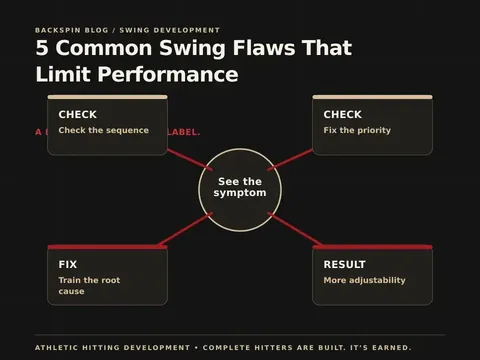
STEPPING IN THE BUCKET
FIND THECAUSE.
- Fear of the ball
- Head and front side pull early
- Poor stride direction
- Trying to pull everything
- Bat too heavy
THE STRIDE IS THE SYMPTOM
3. Why doesn’t yelling “stride to the pitcher” fix it?
You can’t yell away fear.
If a hitter is afraid of the ball, telling her to step toward it makes it worse. If he’s pulling his head early, a straighter stride won’t keep the head on the ball. If the bat is too heavy, no cue fixes that.
“Stride to the pitcher” only treats the symptom. Even when the foot lands better, the hitter often still pulls off with the shoulders. Find the cause first. For more on direction, see Stride at the Pitcher: Why Direction Matters.
Here’s what I tell parents at the fence: be a detective, not a drill sergeant. Watch a few at-bats quietly. Ask your hitter how the ball looks coming in. Kids will often tell you they’re scared if you ask calmly instead of yelling a cue.
Then pick ONE thing to work on for a couple of weeks. Changing the stride, the hands and the bat all at once just confuses a young hitter.
4. How do you diagnose stepping in the bucket on video?
Film from behind and from the side, chest high, in slow motion (120 or 240 fps). Get 5 tee swings and 5 live or front toss swings.
- Compare tee and live swings.If the stride is fine on the tee and bails on live pitching, fear or early head pull is the likely cause.
- Watch the head.If the head moves off the ball before contact, the front side is pulling early.
- Check the stride on every swing.If it lands open even on the tee, it’s a stride direction habit.
- Watch inside vs. outside pitches.Opening up mostly on outside pitches often means the hitter is trying to pull everything.
- Watch the barrel.If the barrel drops or drags and the body spins to help, check bat weight.
If you’d like a trained eye on it, our online swing analysis uses this same filming checklist. Or run the free SwingChecker to rank your hitter’s top priority in about 3 minutes.
5. What drills fix stepping in the bucket?
Match the fix to the cause. Don’t collect drills.
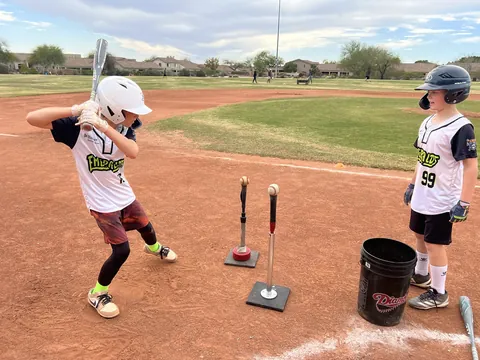
- Fear of the ball: soft balls and wins.Use tennis balls, foam balls or softer training balls in front toss; start slow, let the hitter succeed, and build up speed only as confidence grows. Teach how to turn away safely on an inside pitch so the ball isn’t scary.
- Head pulling early: see it hit.On the tee, the hitter keeps the eyes on the spot where the ball was for a beat after contact.
- Stride direction: a line on the ground.Lay a bat or chalk line toward the pitcher and take dry swings and tee swings landing near it; it’s a target, not a rule.
- Pulling everything: oppo rounds.Front toss on the outer half where the goal is a line drive to the opposite field.
- Bat too heavy: the hold test.Have the hitter hold the bat straight out by the handle for about 10 seconds; if the barrel sags fast, try a lighter bat.
With fear, patience is the fix. A young hitter who got hit needs to rebuild trust in the box. Pushing too fast makes it worse. That’s the Mental Approach pillar working with The Swing.
AHD hitters build Mechanically Advantaged Angles (MAA), body and bat positions that let them stay on the ball. A stride that lands where it should is part of that. For the full structure, see the Swing Structure & Mechanics course.

THELESSON.
- Diagnose it on video first
- Match the fix to the cause
- Soft balls build confidence
- Check the bat weight
Complete Hitters Are Built…Earned.
Want to go deeper? Read Stride at the Pitcher: Why Direction Matters and There Is No Perfect Stride in Hitting.
Quick answers
What does stepping in the bucket mean?
It means the hitter’s front foot strides away from home plate, toward third base for a righty or first base for a lefty. It pulls the body and bat off the ball, especially on outside pitches.
How do I get my child to stop being afraid of the ball?
Use softer balls like tennis or foam balls in front toss, start slow and let the hitter succeed. Teach how to turn away safely on an inside pitch and build speed only as confidence grows.
Is stepping in the bucket always bad?
Not always. Some hitters stride slightly open and still stay on the ball. It becomes a problem when the stride pulls the head, shoulders and barrel off the pitch.
Can a heavy bat cause stepping in the bucket?
Yes. A bat that’s too heavy can drag the body around during the swing. If the barrel sags quickly when the hitter holds it straight out, try a lighter bat.
Don’t collect drills. Build a complete hitter.
Complete Hitters Are Built… It’s Earned!
This article is part of the AHD guide Baseball Swing Mechanics. Start there for the full picture and every related article.