By BK, Athletic Hitting Development
Complete Hitters Are Built… Not Given. Earned!
Key takeaways for hitters
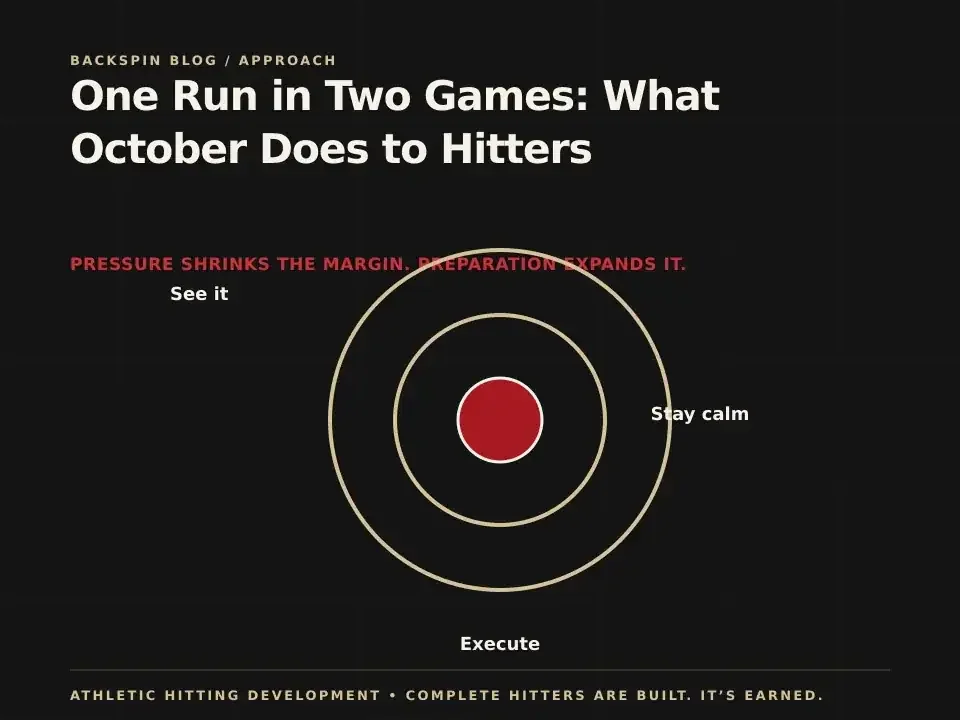
- The Cubs led MLB in runs this season. Against the Padres in the Wild Card Series, they scored one run in two games.
- October takes away mistakes. Better arms, fresh bullpens and pitch-by-pitch game plans shrink every at-bat.
- Gavin Sheets came off the bench and hit a 101 mph fastball 394 feet. You can’t react to 101. You have to be on time before it’s thrown.
- San Diego’s first two runs in Game 2 came on a single and a sac fly. October rewards the hitter who does the small job.
The best offense in baseball scored one run in two games.
October takes away the mistakes, so hitters have to make fewer mistakes too: the Cubs led MLB in runs and scored one run in two games against the Padres. The lesson is to be ready before the pitch, walk up with one plan and do the small job, because the best-prepared hitters win in October.
Train it: Mental Approach Masterclass →Read that again, because it’s the whole lesson.
The Chicago Cubs led the major leagues in runs during the regular season. Then they ran into the San Diego Padres in the National League Wild Card Series and scored a single run in 18 innings. The Padres won Game 1 8-0, the biggest shutout win in franchise postseason history, and closed out the sweep with a 4-1 win in Game 2.
The Padres move on to face the 103-win Brewers in the NLDS. The Cubs go home.
So what happened to the best offense in the game? And what does it mean for your hitter?
1. October takes away the mistakes
All season long, good offenses feed on mistakes. The hanging breaking ball. The fifth starter on a Tuesday. The middle reliever who leaves a fastball over the plate. Do that for 162 games and you lead the league in runs.
October is different. The rotation shortens. The best relievers pitch every big inning. Every hitter has a scouting report with his holes circled.
In Game 1, Michael King allowed only an infield single through seven innings. In Game 2, after Nico Hoerner’s RBI single off Nick Pivetta in the 4th, the Padres bullpen of Bradgley Rodriguez, Jason Adam, Adrian Morejon and Mason Miller threw five scoreless innings. Morejon faced the minimum, six up and six down, over two innings.
In October, the pitcher makes fewer mistakes. So the hitter has to make fewer mistakes too.
That’s not a talent problem. The Cubs have good hitters. It’s a processor problem, and the processor is what the playoffs test.

CUBS VS. PADRES • WILD CARD
OCTOBER TAKESMISTAKES.
- Better arms.
- Fresh bullpens.
- Pitch-by-pitch game plans.
EVERY AT-BAT GETS SMALLER.
2. Gavin Sheets and the 101 mph fastball
Now look at the swing that broke Game 2 open.
Fourth inning. Gavin Sheets comes off the bench as a pinch-hitter with Xander Bogaerts on base. On the mound, Daniel Palencia, who throws as hard as anybody in baseball.
Palencia fires 101. Sheets hits it 394 feet with an exit velocity of 107 mph. Two-run homer. The Padres had all the runs they would need.
Think about that at-bat. He’s been sitting for hours. No warm-up at-bats. No feel for the game yet. And the first real test is triple-digit velocity in a playoff elimination game.
Here’s the truth every young hitter needs to hear: nobody reacts to 101. At that speed the ball gets to the plate in about four-tenths of a second. If you wait to see it and then start your swing, you’re late. Every time.
Hitters who beat elite velocity win it before the pitch:
1. They’re loaded and ready early
The move starts on time, before release, not after. The swing is short and athletic enough that it doesn’t need a running start.
2. They know what they’re hunting
Against a 101 mph arm, you aren’t looking for everything. You’re looking for the fastball in your zone, and you’re committed to it.
3. They decide early and trust it
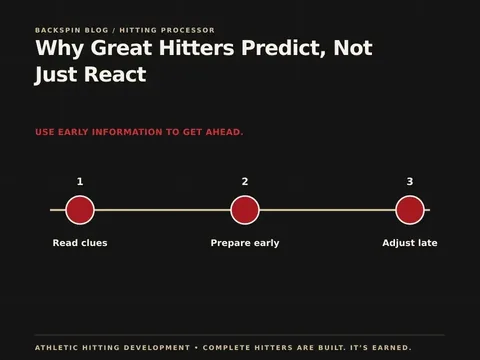
See It → Recognize It → Time It → Decide → Attack It. Against velocity, those steps get shorter, not skipped. That’s why great hitters predict.
That swing wasn’t luck. It was preparation meeting a plan.

GAVIN SHEETS VS. 101 MPH
YOU CAN'TREACT.
- Off the bench.
- 101 mph fastball.
- 394 feet, two-run homer.
YOU HAVE TO BE READY BEFORE IT.
3. The boring at-bats won the game too
Everybody will watch the Sheets homer. Don’t skip the second inning.
San Diego’s first two runs came on a Bogaerts RBI single that scored Ty France and a sacrifice fly from Ethan Salas that scored Jackson Merrill. No highlight reel. Just two hitters doing the job the situation asked for.
That’s complete hitting. Get the runner in. Hit the ball where the run scores. Take the RBI single instead of trying to hit a three-run homer that isn’t there.
The scoreboard doesn’t care how the run got there.
4. What this means for your hitter
Your hitter isn’t playing in the NLDS. But he’s going to face his own October: the playoff game, the showcase, the ace on the other team who doesn’t miss. Here’s how to get ready for it now.
- Train velocity on purpose. Machine work, short-distance BP, firm front toss. If he only sees 60 percent effort in the cage, the game will always feel fast.
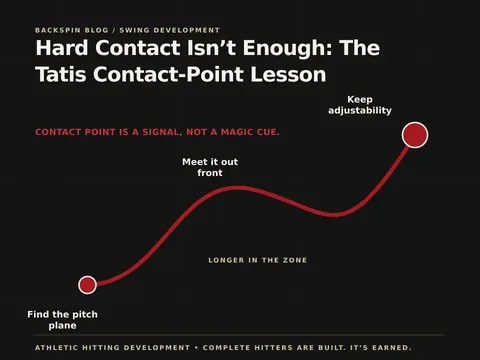
- Get on time before the pitch. Start the load early. Make contact point and timing part of every round.
- Walk up with one plan. One pitch, one zone. Know it before you step in.
- Practice the job at-bats. Runner on third, less than two outs. Runner on second, nobody out. Score the round on whether the job got done.
- Be ready off the bench. Pinch-hit rounds: no warm-up swings, one pitch, compete. That’s what Sheets did.
The best offense doesn’t win in October. The best-prepared hitters do.
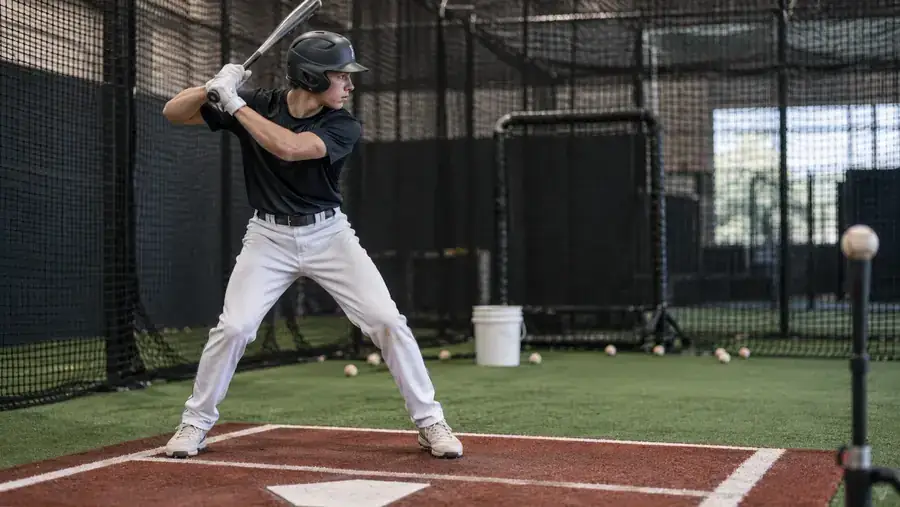
THELESSON.
- Train velocity on purpose.
- Start the load early.
- Hunt one zone.
- Do the boring job too.
- Get ready for your October.
Complete Hitters Are Built…Earned.
Quick answers
How do you hit a 100 mph fastball?
You can’t react to it after release, so you prepare before it. Start the load early, keep the swing short and athletic, hunt a fastball in one zone, and commit to it. Train against high velocity in practice so game speed doesn’t surprise you.
Why do great offenses struggle in the playoffs?
Playoff pitching makes fewer mistakes. Teams shorten their rotations, use their best relievers in every big spot and attack each hitter’s weaknesses. Offenses that feed on mistakes during the season have to win with a sharper plan and better pitch decisions.
What is a productive at-bat?
One that does what the situation asks: an RBI single, a sacrifice fly with a runner on third, moving a runner over. In Padres–Cubs Game 2, San Diego’s first two runs came from exactly those at-bats.
How can youth hitters prepare for big games?
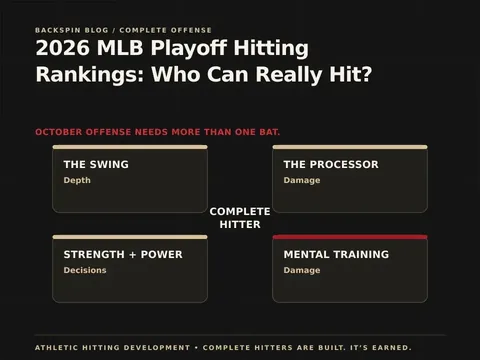
Train with game-speed intent, build a simple pre-pitch plan, practice situational at-bats and take some rounds with no warm-up to simulate coming off the bench. The 2026 MLB playoff hitting rankings show what that looks like at the top level.
How do you prepare to pinch-hit?
Practice it. Take pinch-hit rounds with no warm-up swings: one pitch, compete. Know what you’re hunting before you step in, and get your load started early so you’re on time even when you’ve been sitting for hours.
Don’t collect drills. Build a complete hitter.
Find your #1 priority with SwingChecker™ for free. Then see how the AHD Complete Hitter Masterclass and the Hitting Processor train timing, plan and pitch decisions every day, or contact Coach about online remote baseball and softball training.