By BK, Athletic Hitting Development
Complete Hitters Are Built… It’s Earned!
Key takeaways
- Fear after a hit-by-pitch is a normal protective response, not a sign you’re soft or done.
- Head or face hit? Doctor first. Any concussion signs mean no hitting until a health care provider clears you.
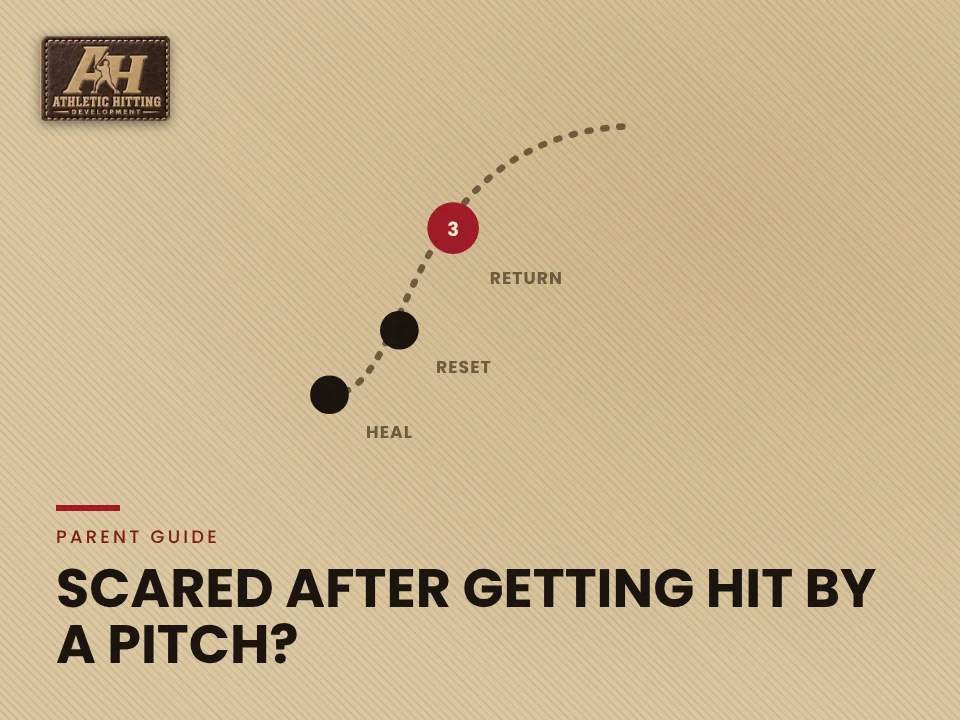
- Come back in stages: safe and in control, see it and own the space, controlled contact, then return to competition.
- Have a plan for the inside pitch and a pre-at-bat routine, so the box feels like your space again.
If you’re scared after getting hit by a pitch, that’s normal. Your body learned the box can hurt, and you get your confidence back by retraining that reflex in controlled stages: safe position, seeing the ball early, controlled contact, then game reps. You don’t get it back by “toughing it out.”
Fear after a hit-by-pitch is a normal protective reflex. Get a doctor’s clearance first for any head or face hit, then rebuild in stages: safe position and tracking, seeing it early with an inside-pitch plan, controlled contact, and finally a gradual return to games.
Train it: Scared of the Baseball Fix →Play this game long enough and you get hit. I’ve seen it from the box, the dugout and the fence. The bruise heals in a week. The flinch can hang around for a season if nobody handles it right.
This is for hitters 12 to 21, and the parents watching from the stands. Here’s what to do first, why the fear sticks, and how to earn your way back.
1. What should you do first after getting hit by a pitch?
Before we talk confidence, we talk health. If the pitch hit your head, face or helmet, or you have any concussion signs, stop. That means headache, dizziness, blurry or changed vision, nausea, feeling foggy or “off,” or trouble sleeping.
Head or face hit? Doctor first. Hitting second.
The CDC’s HEADS UP program says a child with a concussion needs to be seen by a health care provider, and an athlete should only return to sports with that provider’s approval. No coach, parent or player makes that call alone.
Same for a hand, wrist or elbow that still hurts. Pain changes how you swing, and swinging through pain teaches your body more fear. Get cleared, then start the plan below.
2. Why am I afraid to bat after getting hit?
Because your brain is smart. It stored a lesson: ball from that direction equals pain. Now it tries to protect you before you even decide anything.
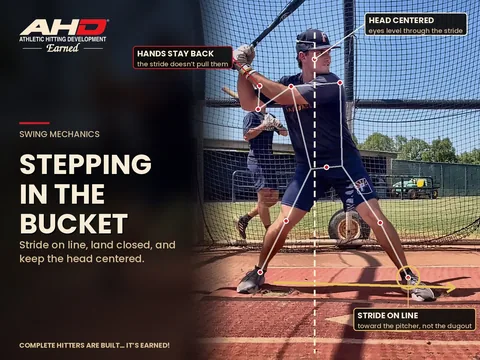
You’ll see it in a few ways. The front foot bails toward the dugout (stepping in the bucket). The head pulls off early. Every inside pitch looks like it’s coming at you. You start taking pitches you used to drive.
AFTER THE HIT-BY-PITCH
SIGNS THEFEAR STUCK.
- Front foot bails out
- Head pulls off early
- Every inside pitch looks scary
- Taking pitches you used to drive
A LEARNED REFLEX CAN BE RETRAINED
Here’s the good news. A reflex that was learned can be retrained. But not by telling yourself “don’t be scared.” You retrain it by giving your body a lot of reps where the ball comes, you see it, and nothing bad happens.
3. Should you just “wear one” and get back in there?
No. Toughness tests, surprise throws and forced live reps right away usually make it worse. If you step back in against live pitching too soon and flinch on every pitch, you’re practicing the flinch.
- Don’t rush straight to live pitching. Build back up to it.
- Don’t let anyone throw at you to “get over it.” That teaches your body the box IS dangerous.
- Don’t hide it. Tell your coach or a parent. Most coaches would rather know.
- Don’t judge yourself by one bad at-bat. Bad reps happen. Recovering from them is part of the plan.
4. How do you get your confidence back after being hit by a pitch?
Come back in stages. Move up only when the current stage feels easy. If a session goes badly, go back a stage. That’s not failure. That’s how it works.
- Safe, strong and in control.Build an athletic safe position, learn to turn the front shoulder in and tuck the chin on a pitch that’s coming at you, and track pitches without swinging; own the take.
- See it early and own the space.Pick up the ball early and decide fast: “ball” or “mine.” Have a plan for the inside pitch, find your rhythm before the pitch, and attack only your pitch.
- Controlled contact.Hit predictable, controlled pitches until contact feels normal again, then work the inside pitch on purpose, at a speed you can handle.
- Return to competition.Add speed with control, build a pre-at-bat plan and count awareness, then take it into practice and games.
This is exactly how the Scared of the Baseball Fix, our fear of the ball course is built: 30 guided lessons over about four weeks, for baseball and softball players 12 to 21. Week 1 is Safe, Strong, and in Control. Week 2 is See It and Own the Space. Week 3 is Controlled Contact. Week 4 is Return to Competition, including how to talk to your coach about coming back to practice and making game day, not fear day.
Every lesson gives you an easier step, a repeat or the next step, so readiness sets the pace, not the calendar. No forced exposure, no surprise throws. Lessons 1–3 are free, and it’s $49 one time with a year of access. It’s hitting coaching, not medical or mental-health treatment, and it doesn’t promise an instant return to live pitching. Stop and get help if you have pain, dizziness, new vision symptoms, a possible head injury, or distress that won’t settle.
5. How do you stop flinching on inside pitches?
Fear grows where there’s no plan. Most hitters who got hit have no answer for the inside pitch except “hope.” Give yourself one.
- Know your safe move. If it’s at you, turn in and tuck. Practiced, it becomes automatic.
- Know your inside pitch. Which inside pitch is a strike you can hit? Decide before the at-bat.
- Have a reset. Step out, breathe, one cue, step back in. A short breathing routine works.
- Own the take. Taking a ball inside with your eyes on it is a WIN, not a retreat.
This is the Hitting Processor and the Mental Approach pillars working together: see it, time it, decide, attack it, with a calm head. AHD hitters with Mechanically Advantaged Angles (MAA) have a swing built to get to the inside pitch, but the swing only shows up when the hitter trusts the box again.
Not sure if it’s fear or a swing issue? Film tee swings and live swings and compare, or run the free SwingChecker to rank your top priority in about 3 minutes.

THELESSON.
- Doctor first for any head hit
- Come back in stages
- Have an inside-pitch plan
- Readiness sets the pace
Complete Hitters Are Built…Earned.
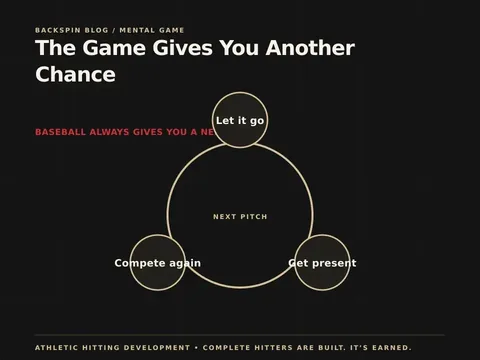
Want to go deeper? Read Stepping in the Bucket: Why It Happens and the Fix and The Game Gives You Another Chance.
Quick answers
Is it normal to be scared after getting hit by a pitch?
Yes. Your body learned that the ball can hurt and is trying to protect you. It’s a normal response, and it can be retrained with gradual, controlled reps.
When can my kid bat again after getting hit in the head?
Only after a health care provider has evaluated and cleared them. Any head or face hit, or concussion signs like headache, dizziness or vision changes, means no hitting until a doctor says so.
How long does it take to get confidence back after a hit by pitch?
It varies by hitter. Moving up only when each stage feels easy matters more than any timeline. Going back a stage after a rough session is part of the process.
Should I tell my coach I’m scared to bat?
Yes. A good coach would rather know and help you build back up than watch you bail out in games. Ask for a plan to return to live pitching gradually.
Sources: CDC HEADS UP: Concussion Basics · CDC HEADS UP: Guidelines and Recommendations
Don’t collect drills. Build a complete hitter.
Complete Hitters Are Built… It’s Earned!
This article is part of the AHD guide The Mental Game of Hitting. Start there for the full picture and every related article.