By BK, Athletic Hitting Development
Complete Hitters Aren’t Born. They’re Built… and Earned.
Key takeaways
- Slapping is a left-side approach where the hitter moves toward the pitcher and puts the ball in play on the run to use her speed.
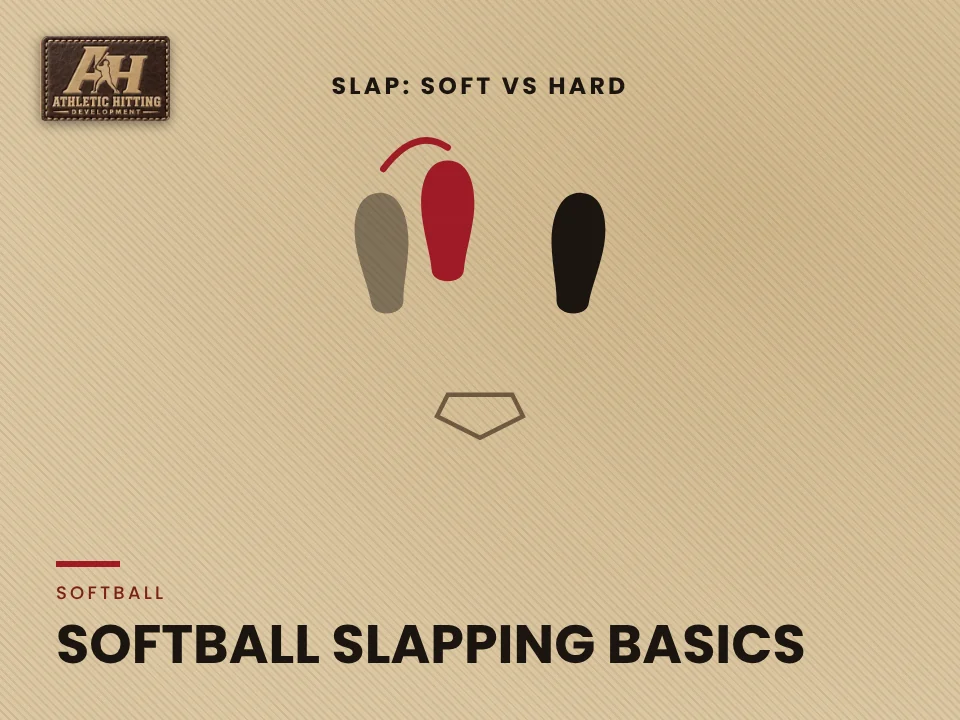
- Soft slap vs hard slap: the soft slap places a soft ball on the left side; the hard slap is a short, firm swing that drives the ball through the infield.
- In USA Softball and NFHS play, a batter is out if an entire foot is completely outside the box at contact; NCAA is stricter, so footwork must finish INSIDE the lines.
- Slapping fits fast, committed athletes who will put in daily footwork reps. It is not a fix for a hitter who is struggling to swing.
Slapping is a fastpitch approach where a hitter in the left-handed batter’s box moves toward the pitcher with a crossover step and puts the ball in play on the run, using speed to beat the throw. Beginners learn three tools from the same footwork: the bunt, the soft slap and the hard slap.
To slap in softball, start in the back of the left-handed box, take a short step, cross over toward the pitcher and make contact as that foot lands inside the box, then run. Beginners learn the soft slap first, then the hard slap.
Train it: Swing Structure & Mechanics →I coached high school and college softball in Arizona and Texas for 30 years. Good slappers changed games for us. So did kids who were turned into slappers for the wrong reasons.
Here’s who should learn it, how the footwork works, what the rule book says about the box, and how to practice it so it actually holds up in a game.
1. What is slapping in softball?
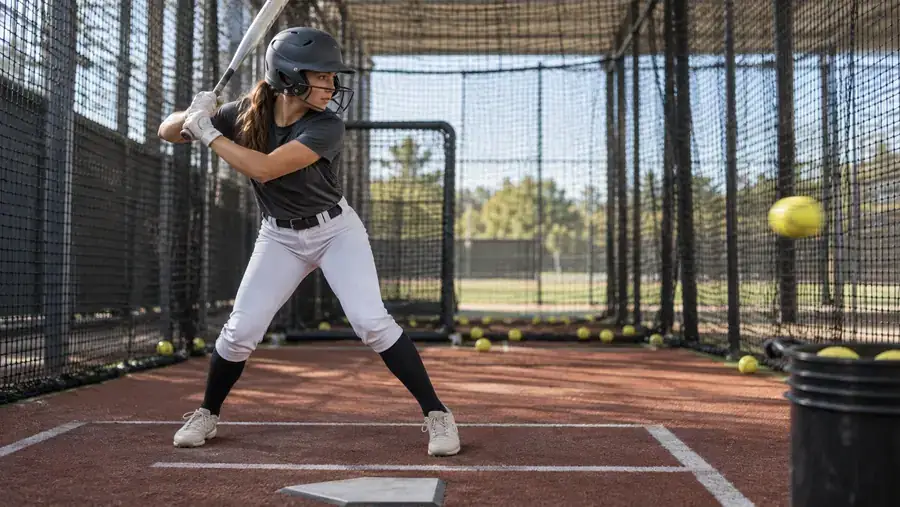
A slapper starts in the left-handed batter’s box, usually toward the back. As the pitch comes, she steps toward the pitcher and makes contact while her body is already moving down the line to first base.
The goal is simple: get the ball on the ground or through a hole on the left side of the infield and make the defense hurry. From the left side she starts a step or two closer to first, and she’s already running.
Most slappers carry three options off the same look: the bunt, the soft slap and the hard slap. The defense can’t sit on one if all three look the same until late.
2. Who should learn to slap?
Honest answer: not every kid. Slapping makes sense when a few things line up.
- She has real speed. Slapping works because of the run. Without speed, it’s just a weak ground ball.
- She’s willing to hit from the left side. Many slappers are natural right-handers who learn left-handed. That takes months of daily reps.
- She’s willing to commit. Footwork, timing and bat control have to be trained daily, just like a full swing.
- It’s her choice too. A slapper who doesn’t want to slap won’t practice it.
Slapping is a skill, not a shortcut.
Too often a kid who is struggling to hit gets moved to the left side and told to slap. That rarely fixes anything. She now has two skills to learn instead of one. My preference: build a real swing first, then add the slap as a weapon. The best slappers I coached could also swing away from the left side when the defense crept in.
3. How does slap footwork work?
There are a few footwork styles, and coaches teach them differently. The common beginner pattern is a short first step, then a crossover. For a left-side hitter it looks like this:
- Set up in the back of the box.Feet comfortable, hands up, eyes on the pitcher’s release.
- Short first step with the right (front) foot.A short jab step toward the pitcher, timed to her motion; it starts the movement without lunging.
- Cross the left foot over toward the pitcher.The left foot crosses in front and lands pointing toward the pitcher, still inside the lines.
- Make contact as the left foot lands.The hands and barrel stay back and work to the ball; the run starts after contact, not before.
The most common beginner mistake is running before hitting. The shoulders and hands leave early, the barrel drags, and she pops it up or whiffs. Contact first. Then run.
SLAP BASICS
CONTACT FIRST.THEN RUN.
- Back of the left-side box
- Short step, then crossover
- Foot lands INSIDE the line
- Hands and barrel stay back
SPEED IS THE WEAPON
4. What’s the difference between a soft slap and a hard slap?
| Tool | What it is | When it works |
|---|---|---|
| Bunt | A bunt off the slap look, often pushed or dragged | Corners play back, or you need a sure out-to-advance |
| Soft slap | A short, controlled swing that places a soft ball on the left side | Third and short play deep or the pitch is down |
| Hard slap | A short, firm swing that drives the ball on the ground or a line through the infield | Corners charge in for the bunt and soft slap |
Beginners usually start with the soft slap because control matters more than power. The hard slap comes next, once she can get to the ball on time with the barrel. Read the defense every pitch: where the third baseman and shortstop are standing tells her which tool to use.
Bunting is part of the slap package. For the mechanics, see How to Teach a Kid to Bunt.
5. Can a slapper step out of the box when she hits?
No, and this is where young slappers lose outs. The rule depends on the level you play, so know your rule book.
| Level | Rule at bat-ball contact | Rule |
|---|---|---|
| USA Softball | Batter is out when an entire foot is touching the ground completely outside the batter’s box | 7.6F |
| NFHS (high school) | Same as USA Softball | 7-4-8 |
| NCAA | Batter may not contact the pitch with any part of her body touching the ground outside the lines; delayed dead ball, defensive coach chooses the result of the play or a strike | 11.2.5, 11.15.1 |
The safe habit at every level: the crossover foot lands inside the lines at contact. Train it that way from day one so she never has to change it when she moves up. These rules are from USA Softball’s 2026 rule-differences comparison; check your league’s current book each season.
6. What drills help a beginner learn to slap?
Don’t collect drills. Pick a few that train footwork, contact and decisions, and do them often.
- Box-line footwork, no bat.Chalk or tape a box and do 20 footwork reps a day; the crossover foot must land inside the line every time.
- Tee at the contact point.Set the tee where the crossover foot lands and hit soft slaps to a target on the left side; 15 reps.
- Front toss soft and hard.Coach calls “soft” or “hard” as the toss starts so she learns to change tools late off the same footwork.
- Read-the-defense rounds.Place a cone at third and short, move them between reps, and have her choose bunt, soft or hard.
Film from the side and from behind so you can check the feet and the barrel. Then run the free SwingChecker to see her top priority across the 4 pillars. For softball-specific coaching, see our Online Fastpitch Softball Lessons. The swing behind the slap still matters: AHD hitters build Mechanically Advantaged Angles (MAA), and the Swing Structure & Mechanics course builds the barrel control a slapper needs.
THELESSON.
- Speed plus commitment
- Soft slap before hard slap
- Know your box rule
- Build a real swing too
Complete Hitters Are Built…Earned.
Want to go deeper? Read How to Teach a Kid to Bunt: A Step-by-Step Guide and Softball Hitting Drills at Home (No Cage Needed).
Quick answers
Do slappers have to be left-handed?
Slappers hit from the left-handed batter’s box because it starts them closer to first base and already moving that way. Many slappers are natural right-handers who learned to hit from the left side.
What is the difference between a soft slap and a hard slap?
A soft slap is a short, controlled swing that places a soft ball on the left side of the infield. A hard slap is a short, firm swing that drives the ball on the ground or a line through the infield when the corners play in.
Is it illegal to step out of the box when slapping?
In USA Softball and NFHS play, the batter is out if an entire foot is touching the ground completely outside the box at contact. NCAA is stricter: any part of the body touching the ground outside the lines at contact is a violation.
What age should a softball player learn to slap?
There’s no set age, but she should have real speed, decent bat control and the willingness to train it daily. I prefer building a solid swing first and adding the slap as a weapon, not as a fix for struggling.
Sources: USA Softball: 2026 Rule Differences (USA Softball, NCAA, NFHS)
Don’t collect drills. Build a complete hitter.
Complete Hitters Aren’t Born. They’re Built… and Earned.
This article is part of the AHD guide Fastpitch Softball Hitting. Start there for the full picture and every related article.