By BK, Athletic Hitting Development
Complete Hitters Are Built… It’s Earned!
Key takeaways
- You don’t need a cage: a tee, a net, wiffle or foam balls and about 20 minutes a day is plenty.
- Short and daily beats long and weekly. Quality reps with a purpose build hitters.
- Film the same angles every time so you can see real progress instead of guessing.
- Train all 4 Pillars at home: the swing, strength and explosiveness, the Hitting Processor and the mental approach.
The best softball hitting drills at home need only a tee, a net, soft balls and about 20 minutes: tee work into a net, wiffle or foam ball toss, dry swings with a checkpoint, and pitch recognition drills without swinging. Do them short and often, and film the swing so you know it’s improving.
Parents ask me all the time if they need a cage at home. No. Some of the best hitters I’ve coached built their swings in a garage.
What you need is a plan. Here are the drills I’d use, a 20-minute session you can run tonight, and how to keep it fun so she actually wants to come back tomorrow.
1. What do you need to practice softball hitting at home?
- A tee. One that adjusts high and low is worth the money.
- A net. A hitting net 7 feet or bigger works in most garages and yards.
- Soft balls. Wiffle balls, foam balls or light training balls for anything tossed or hit near the house.
- Her game bat, plus a phone to film.
- Space to swing safely. Clear the area and keep everyone out of the swing path.
That’s it. No machine, no cage, no gadgets. Don’t collect drills, and don’t collect equipment either.
One safety rule I don’t bend on: the person tossing stays off to the side or behind a screen, and nobody walks near a swinging bat. Use soft balls anywhere near windows, cars or little brothers. A broken window ends practice fast.
2. What are the best softball hitting drills at home?
Here are nine I trust. Pick three or four per session. Don’t try to do all of them every day.
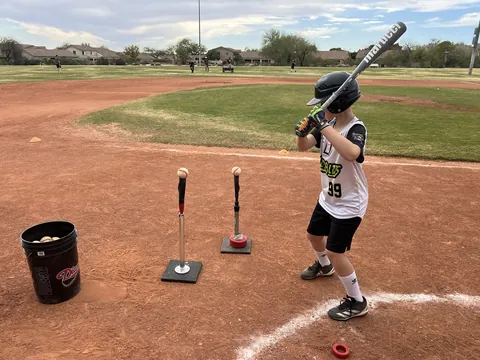
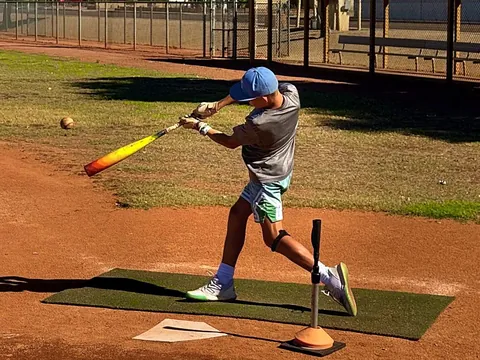
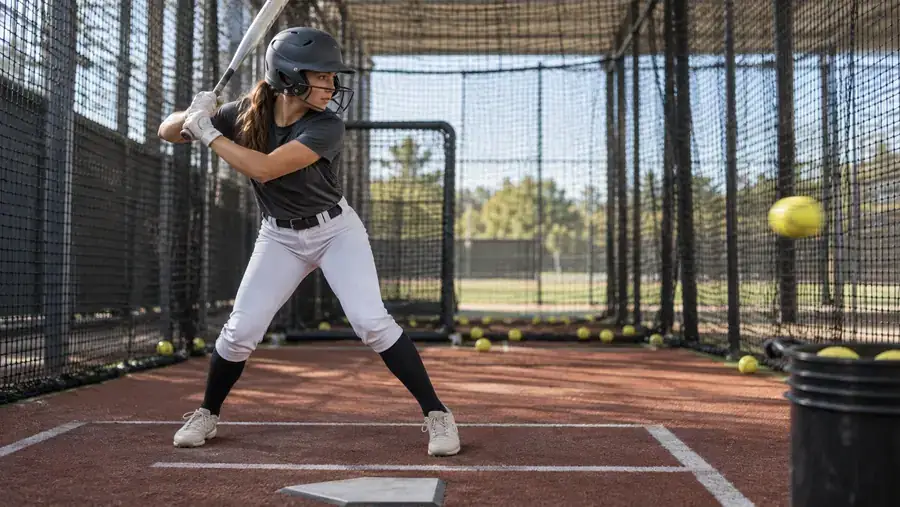
- Tee into a net, three heights.Set the tee at the top, middle and bottom of the zone and hit 5–8 balls at each; the goal is a hard line drive into the middle of the net.
- Tee, inside and outside.Move the tee in front of the plate for inside pitches and deeper for outside; she learns that contact point changes with location.
- Wiffle ball front toss.Kneel 10–15 feet away, off to the side, and toss underhand into the zone; wiffle balls are safe in a yard or driveway.
- Foam ball soft toss from the side.Toss from the side into the hitting zone so she can hit into a net in a small garage.
- Dry swings with a checkpoint.10 slow swings stopping at one checkpoint, like the landing position or contact, then 10 at full speed; slow builds the feel, fast makes it real.
- Call-it-out recognition.She stands in her stance without swinging while you toss or show balls; she calls “YES” for strikes and “NO” for balls before they arrive.
- Color or number calls.Mark a few wiffle balls with colors or numbers; she calls the mark as early as she can, which trains the eyes to pick up the ball fast.
- Med ball rotational throws.For older hitters, side throws into a wall or to a partner with a med ball sized to her age and strength; always with an adult present.
- Band rotations.Light resistance band anchored at hip height for controlled rotations; young hitters should use light bands and good form only, with an adult watching.
For recognition ideas, read Train the Eyes Without Swinging. For strength by age, see Strength Training for Young Hitters.
NO CAGE NEEDED
TEE. NET.20 MINUTES.
- Tee at three heights
- Wiffle or foam front toss
- Dry swings with a checkpoint
- Call-it-out eye reps
SHORT, DAILY, ON PURPOSE
3. What does a 20-minute home hitting session look like?
| Minutes | Block | What she does |
|---|---|---|
| 0–3 | Warm-up | Jog, arm circles, 10 easy dry swings |
| 3–6 | Eyes | Call-it-out or color calls, 15–20 reps |
| 6–12 | Tee work | Three heights into the net, 15–20 swings |
| 12–16 | Toss | Wiffle or foam front toss, 15 swings |
| 16–19 | Athletic work | Med ball or band rotations, age-appropriate |
| 19–20 | Compete | A 5-swing game: score each line drive |
That’s 50–60 quality swings plus recognition and athletic work. Four or five days a week beats one long Saturday session every time.
Short, daily and on purpose. That’s how hitters get built.
4. How should you film softball hitting at home?
Video turns guessing into knowing. Use the same setup every time:
- Two angles. One from the side, one from behind.
- Chest high, landscape. Hold the phone sideways at chest height.
- Slow motion. 120 or 240 frames per second.
- Whole body and bat through the finish in the frame.
- 5 tee swings and 5 toss swings, same angles every time.
Compare clips week to week, not swing to swing. If you want a trained eye on the video, see our online swing analysis.
5. How do you keep home hitting practice fun?
A hitter who dreads practice won’t get better. Keep it a game.
- Score it. Line drive into the middle of the net is 3 points, anything else hit hard is 1. Beat yesterday’s score.
- Let her pick one drill. Ownership keeps her coming back.
- Stop on a good one. End with a hard line drive, not a frustrated miss.
- Coach less, praise effort. One cue per session is plenty from a parent.
That last one is the Mental Approach pillar at home. A calm, confident hitter learns faster. For more on your role, read How Parents Can Help a Hitter Get Better Without Guessing.
6. How do you know what to work on first?
Drills are only as good as the problem they solve. The free SwingChecker takes about 3 minutes and ranks her top priority across the 4 Pillars with cues, drills and free lessons that match.
Great hitters share a few things: a swing with Mechanically Advantaged Angles (MAA), real athleticism, a trained Hitting Processor and a strong mental approach. AHD hitters build all four. If you want softball-specific coaching from home, see our Online Fastpitch Softball Lessons, or build the whole hitter step by step with the Complete Hitter Masterclass.
THELESSON.
- Pick 3–4 drills, not 12
- Film the same angles
- Score it and keep it fun
- Find the top priority first
Complete Hitters Are Built…Earned.
Want to go deeper? Read Baseball Hitting Drills at Home: A 15-Minute Daily Plan and Train the Eyes Without Swinging.
Quick answers
How can my daughter practice softball hitting at home without a cage?
Use a tee and a hitting net, plus wiffle or foam balls for toss. A 20-minute session of tee work, soft toss, dry swings and recognition reps is plenty.
How many swings should a softball player take a day at home?
Around 50 to 60 quality swings in a focused 20-minute session, four or five days a week, is a good target for most youth and high school hitters. Quality matters more than volume.
Are wiffle balls good for softball hitting practice?
Yes. Wiffle balls are safe in small spaces and great for front toss and recognition work. Use her real game bat so the swing stays the same.
What age can a softball player start med ball training?
Light, age-appropriate med ball throws can start young if form is good and an adult is present. Scale the ball weight to the player and stop if form breaks down.
Don’t collect drills. Build a complete hitter.
Complete Hitters Are Built… It’s Earned!
This article is part of the AHD guide Fastpitch Softball Hitting. Start there for the full picture and every related article.