By BK, Athletic Hitting Development
Complete Hitters Are Built… It’s Earned!
Key takeaways
- The 2026 Brewers won 103 games and scored 832 runs while ranking 29th in home runs.
- There is more than one way to build an offense: contact, speed, walks, the bunt and power all create runs.
- Speed only helps with baseball IQ: 162 steals, but 54 caught stealing too.
- Every young hitter should be able to drive the ball, bunt, run the bases, take a walk and compete with two strikes.
As a baseball coach who LOVES line drives, LOVES stolen bases, believes bunting is a weapon when used correctly, and absolutely HATES striking out… I LOVE THIS 2026 MILWAUKEE BREWERS TEAM!
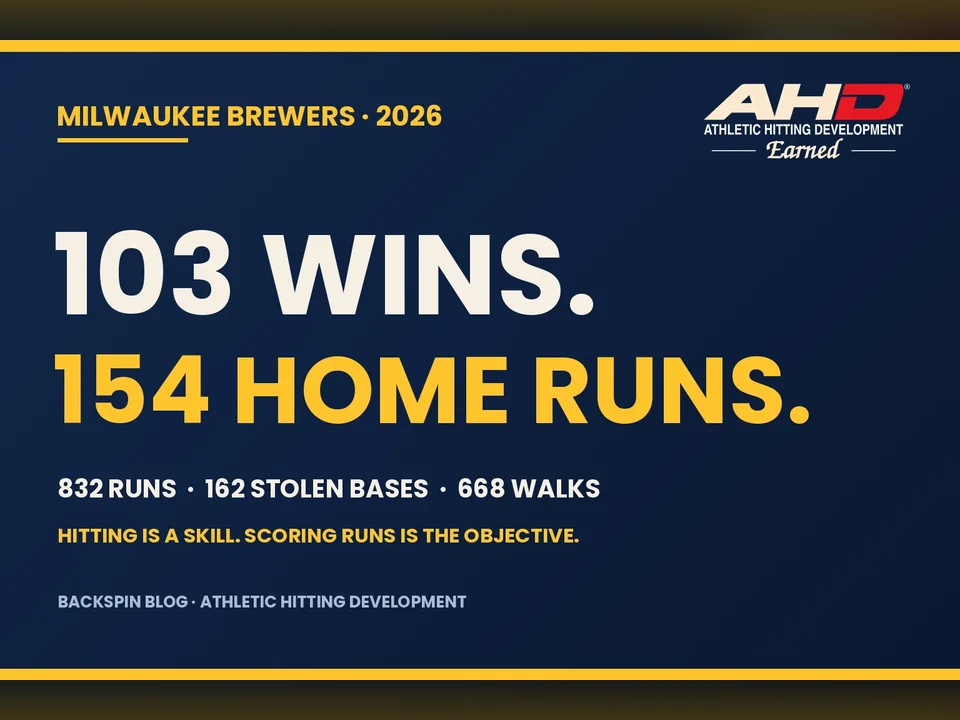
The 2026 Brewers won 103 games and scored 832 runs while ranking 29th in home runs. They did it with contact to all fields, 162 stolen bases, 668 walks and smart bunting. Hitting is a skill, but scoring runs is the objective.
Train it: Complete Hitter Masterclass →I love baseball players who know how to play baseball. Not just hit. Not just launch balls in batting practice. Not just produce beautiful swings on social media.
I’m talking about players who understand how to win a baseball game. Players who can drive a ball through the middle, use the opposite field, steal a base, recognize when a bunt makes sense, fight through a tough at-bat, and find a way to manufacture a run when the big hit isn’t coming.
That’s what makes Milwaukee so refreshing. And the numbers tell a remarkable story.
1. 103 Wins. Only 154 Home Runs. 832 Runs Scored.
Read those numbers again. The Brewers finished the 2026 regular season with:
- 103 wins, the best record in Major League Baseball.
- 832 runs scored, second-most in MLB.
- 154 home runs, ranking 29th.
- 162 stolen bases, fifth-most in baseball.
- 37 sacrifice bunts, also fifth-most.
- 668 walks, with a .341 team on-base percentage.
They scored more than five runs per game without needing to lead the league in home runs. That should get every youth, high school, college and professional hitting coach’s attention.
It doesn’t prove power is unimportant. Far from it. It proves there are multiple ways to build a productive offense.
You don’t have to hit the baseball over the fence to be an outstanding offensive baseball team.
2. Give Me Line Drives All Day Long
I’ve loved line drives for as long as I’ve coached. There is nothing prettier than a hitter getting into an athletic position, sequencing the body correctly, delivering the barrel through the baseball, and driving a ball into the gap. That’s hitting.
The Brewers have an approach I appreciate, even though the numbers require an important distinction: they aren’t actually a team that leads baseball in line-drive hitting. In fact, their 2026 offense produced MLB’s highest ground-ball rate.
What I love is their willingness to let the ball travel, use the opposite field, and make defenders handle difficult balls. An August MLB Statcast analysis found Milwaukee was making contact deeper than 28 of the other 29 teams and was the only MLB club whose overall bat attack direction favored the opposite field.
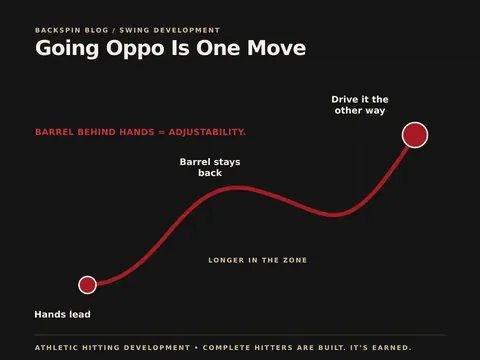
That’s fascinating. They aren’t simply trying to yank every pitch into the seats. They’re demonstrating that contact location, bat path, timing and adjustability matter. For more on that, read how to hit the ball the other way.
Now, would I prefer more hard line drives over routine ground balls? Absolutely. But the willingness to use the entire field and adjust the barrel to the pitch is something every developing hitter needs to understand.
2026 BREWERS
MORE THANONE WAY.
- 832 runs, only 154 HR
- 162 stolen bases
- 668 walks, .341 OBP
- 37 sacrifice bunts
SCORING RUNS IS THE OBJECTIVE.
A great swing isn’t defined by how it looks. It’s defined by what it can accomplish against different pitches.
3. STEAL BASES! Put Pressure on the Defense.
162 stolen bases! I love that number. Speed is an offensive weapon, and the Brewers aren’t afraid to use it.
A single can become a double without another ball being hit. A walk can put a runner into scoring position. An infielder can rush a throw. A pitcher can become distracted. A catcher has to think about something other than the hitter.
But the lesson isn’t to run recklessly. Milwaukee was also caught stealing 54 times, so there is room for improvement in choosing the right opportunities.
What I love is the commitment to making baserunning part of offensive development. At Athletic Hitting Development, we believe strength, explosiveness and athleticism should translate into actual baseball performance. Running the bases is one more opportunity to turn athletic ability into runs.
Speed without baseball intelligence is just speed. Speed with baseball intelligence can change games.
4. THE BUNT IS NOT DEAD!
I’ve never believed every player should bunt constantly. I’ve never believed sacrificing an out is automatically smart. But I have always believed every baseball player should know HOW to bunt. And more importantly, WHEN to bunt.
Milwaukee recorded 37 successful sacrifice bunts during the regular season. That doesn’t mean bunting carried its offense. Those plays represented a very small percentage of the team’s plate appearances. But it means the Brewers retained an offensive skill that too many players and teams have abandoned.
- A drag bunt against a third baseman playing deep.
- A bunt for a base hit from a player with exceptional speed.
- Advancing the winning run in the right late-game situation.
Those can be legitimate weapons. The statistics also tell us sacrifice bunts often reduce overall run expectancy. So I’m not advocating giving away outs without a reason. I’m advocating having the skill available when the situation calls for it.
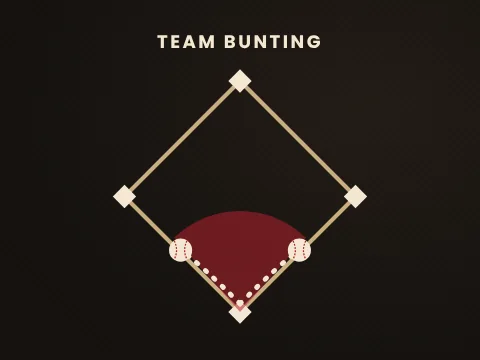
In Game 1 of the 2026 NLCS, Milwaukee executed two sacrifice bunts, one of which helped set up a run in a 2–1 victory over Los Angeles. That’s baseball intelligence in action. The more things your players can execute, the more options you have to beat a good opponent. If you coach a team, here’s our team bunting practice.
5. I HATE STRIKING OUT. And Milwaukee Still Has Work to Do.
Here’s where I’m going to be completely fair. The Brewers struck out 1,383 times during the regular season, about 22% of their plate appearances. That’s roughly league-average, not some incredible contact rate. And I would love to see that number come down.
I understand strikeouts are part of modern baseball. I understand the value of power. I understand that productive hitters sometimes strike out a lot. But I will never coach a hitter to accept a strikeout as an unimportant outcome.
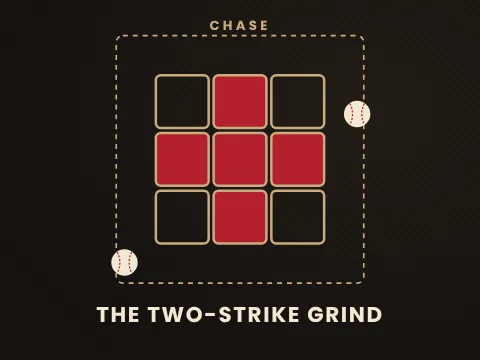
There are times when moving a runner, shortening an approach with two strikes, recognizing a breaking ball, or simply putting a difficult pitch in play can make a difference. (We broke down the Brewers’ two-strike grind here.)
What Milwaukee does especially well is work counts and avoid offering at pitches its hitters don’t want. The Brewers walked 668 times and finished with one of baseball’s best walk rates. That reflects an approach built around patience, pitch selection and understanding the strike zone.
At AHD, we call this developing The Hitting Processor:
See It → Recognize It → Time It → Decide → Attack It.
The better a hitter processes information, the better the opportunity to make a quality decision. I still want fewer strikeouts. But I also love hitters who understand that a walk is an offensive success and that not every pitch deserves a swing.
6. The Brewers Understand That OFFENSE Is Bigger Than HITTING.
This might be my favorite part of the entire Milwaukee story. The Brewers aren’t waiting around for someone to hit a three-run homer. They’re looking for ways to create opportunities.
A disciplined walk. An opposite-field hit. A stolen base. A well-placed bunt. An extra base taken on a ball in the gap. And when somebody gets a pitch to drive? They can still hit it a long way. That’s important.
This isn’t an anti-home-run argument. It’s an argument against one-dimensional offensive development. The 2026 Brewers ranked near the bottom in home runs yet near the top in scoring because their offense found value in several different skills. There are lessons here that go well beyond Milwaukee. And that’s why I enjoy watching this team play.
7. WHAT EVERY YOUNG HITTER SHOULD LEARN FROM MILWAUKEE
If you’re a 12-year-old baseball player, a varsity hitter, a college athlete or an aspiring professional, don’t miss the bigger lesson. Your job is not simply to develop a swing. Your job is to become the most complete offensive baseball player you can be.
- Can you drive a line drive?
- Can you make adjustments when you’re a little early or late?
- Can you recognize a breaking ball?
- Can you take a walk?
- Can you compete with two strikes?
- Can you bunt?
- Can you steal a base?
- Can you run the bases aggressively and intelligently?
- Can you help your team score when you’re not hitting the ball hard?
These are baseball skills. And they matter. At Athletic Hitting Development, that’s why we train all four pillars: The Swing, Strength & Explosiveness, The Hitting Processor and the Mental Approach. Because a great hitter needs more than one tool.

THELESSON.
- Drive the ball, use the field
- Steal with baseball IQ
- Bunt when it makes sense
- Take the walk, battle at 2 strikes
Complete Hitters Are Built…Earned.
8. My Final Thought
I’ve coached long enough to know that there isn’t just one correct offensive philosophy. I’ve seen talented teams that could hit the ball out of any ballpark. And I’ve seen teams that beat more talented opponents because they understood how to play the game.
The 2026 Milwaukee Brewers remind me of something I wish more young players understood.
Hitting is a skill. But scoring runs is the objective.
And the better you are at ALL the different skills that create runs, the more valuable you become. Give me the hitter who drives line drives, runs the bases, competes through tough counts, can bunt when needed, and refuses to become one-dimensional.
Give me baseball players. Give me complete hitters. And give me more teams like the 2026 Milwaukee Brewers!
Want to go deeper? Read Drag Him Down With You and Going Oppo Is One Move.
Quick answers
How did the 2026 Brewers score so many runs with so few home runs?
They won 103 games and scored 832 runs while ranking 29th in home runs by combining contact to all fields, 162 stolen bases, 668 walks and situational bunting.
Is bunting still worth teaching?
Yes, as a skill to use in the right situation. Sacrifice bunts often lower run expectancy, so don't give away outs without a reason, but every player should know how and when to bunt.
Does this mean power doesn't matter?
No. Power matters. The lesson is that one-dimensional offenses are easier to beat, and hitters who can do several things create more ways to score.
What should young hitters learn from the Brewers?
Be a complete offensive player: drive the ball, adjust, recognize pitches, take walks, compete with two strikes, bunt, and run the bases with intelligence.
Sources: Baseball-Reference: 2026 Milwaukee Brewers team statistics · MLB.com: How the Brewers’ offense works (Aug. 26, 2026) · MLB.com: Brewers are winning with the opposite of small ball (Oct. 15, 2026) · MLB.com: Brewers use three straight bunts (Apr. 16, 2026) · MLB.com: Bunting increasing across MLB in 2026 (May 7, 2026)
Don’t collect drills. Build a complete hitter.
Complete Hitters Are Built… It’s Earned!