By Athletic Hitting Development
Complete Hitters Are Built… It’s Earned!
It’s a one-run game, runner on first, nobody out. You put the bunt on. The ball pops up to the pitcher, and it’s a double play.
Run a 20-minute, four-station rotation (grip and mirror, set early, catch it with the barrel, bunt to both lines), then finish with a scored target game. Keep it to about ten minutes every practice, post the leaderboard and add live situations once the basics hold up.
Train it: Camps & Clinics →That wasn’t bad luck. It was practice. Most teams bunt a handful of balls before the game and call it covered. A team that can really bunt puts pressure on the defense every inning, and it’s one of the most teachable skills in the game.
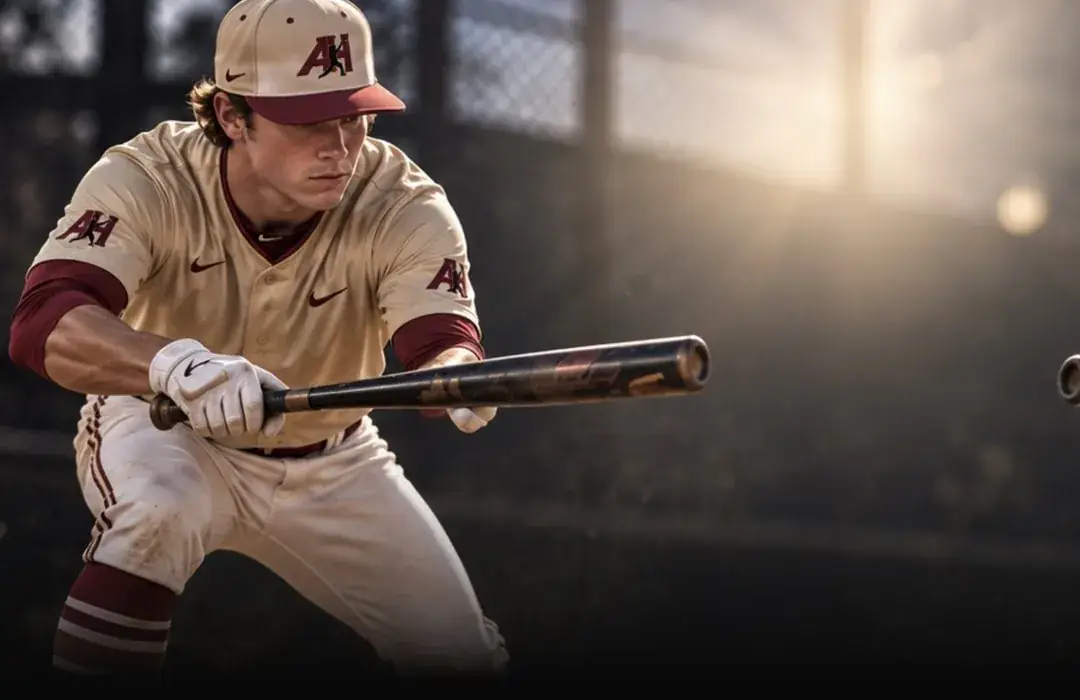
Pinch it. Set early. Barrel above the hands.
1. Why team bunting breaks down
- Unsafe or tight grips: fingers wrapped around the barrel, or a grip so tight the ball rockets back to the pitcher.
- Late feet: the hitter isn’t set when the ball leaves the hand, so the barrel can’t stay quiet.
- Barrel below the hands: the number-one cause of pop-ups.
- No score: “good job” on every bunt means nobody knows who can really do it.
2. The 20-minute rotation
Four stations, five minutes each, groups of three or four.
Station 1 — Grip and mirror
Dry squares in front of a mirror or a fence. Top hand slides up and pinches the bat between thumb and the side of the index finger, fingers behind the bat. Check that the barrel stays above the hands at the top of the zone. Cue: “Pinch it, don’t grab it.”
Station 2 — Set early
Partner mimics a pitcher’s motion. The hitter must be set, square or pivoted, before the release. The partner calls “late” on any rep that isn’t. Cue: “Eyes level and square before release.”
Station 3 — Catch it with the barrel
Soft toss with tennis balls or soft-core balls. The hitter catches the ball on the barrel and deadens it, no jab. Adjust to low pitches with the legs, not by dropping the barrel.
Station 4 — Lines
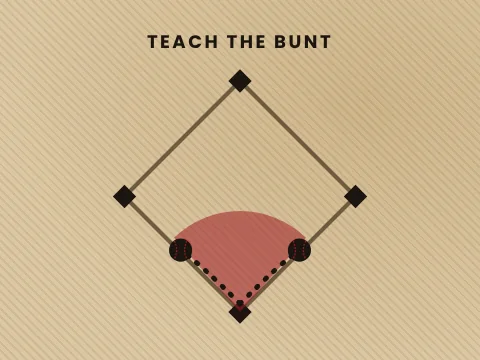
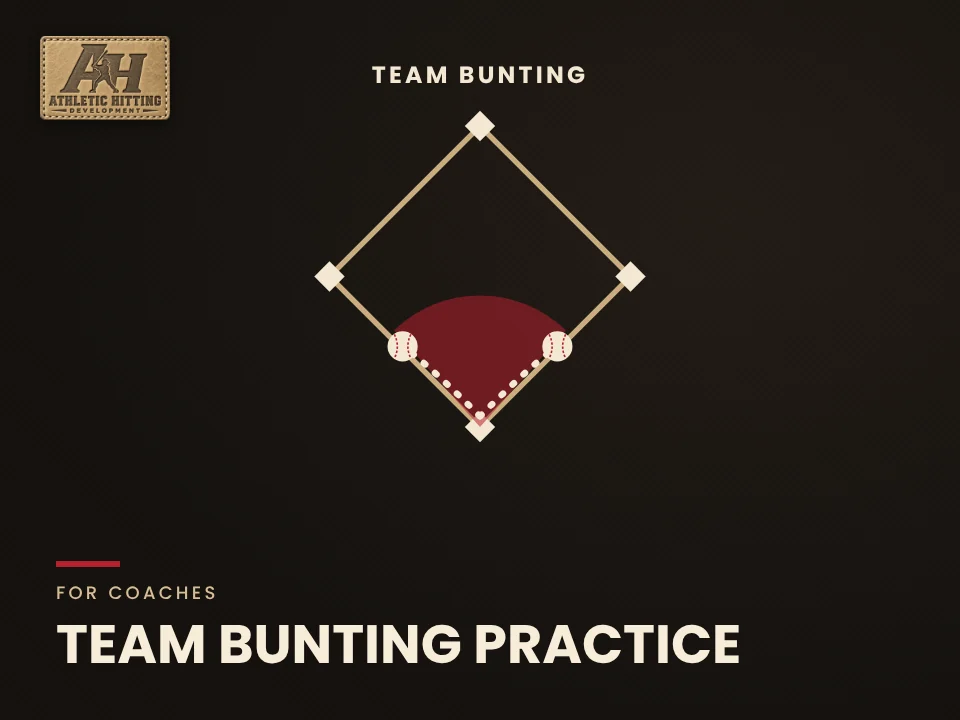
Front toss, alternating first-base and third-base lines. Barrel angled slightly toward the line you want.
TEAM SHORT GAME
SCOREEVERY BUNT.
- Grip and mirror
- Set early
- Catch it with the barrel
- Bunt to both lines
KEEP SCORE.
3. The target game
Place a towel or hoop about 3 feet wide, roughly 15–20 feet up each foul line, just inside fair territory. Each player takes 10 bunts off front toss, 5 to each line.
| Result | Points |
|---|---|
| In the box | 2 |
| Fair and on the ground outside the box | 1 |
| Foul, popped up or back to the pitcher | 0 |
Out of 20. Under 8 needs work, 8–11 is solid, 12–15 is strong and 16–20 is game-ready. Post the team leaderboard. Split the team in two and add the scores for a competition. Run it again in two weeks and see who moved.
Bunting gets better the day you start keeping score.
4. Add situations
Once the basics hold up, add the game: sacrifice with a runner on first (third-base side is usually the target), sacrifice with runners on first and second (make the third baseman field it), the drag bunt, and for fastpitch, the bunt-and-slap look. Let a defense play it live and score the result: runner advanced or not.
5. Build it into every practice
Ten minutes of short game in every practice beats one long bunting day a month. Make bunting a station in your regular hitting rotation, like the short-game station in our 60-minute team hitting practice plan. Players who see a score climb start asking for the bunt sign instead of dreading it.
6. Bring it to your team
The Bunting & Small Ball Program gives every player 8 lessons on the full short game: the sacrifice, the drag, the push, bunting for a hit, the fastpitch bunt-and-slap crossover and the safety and suicide squeeze. Start with Lesson 1: The Target Test — the first three lessons of every course are free, so you can run them with your team before you decide anything.
Team pricing
Put your whole roster on an AHD course, with one price for the team. Every player gets the daily lessons, the scored challenges and a retest to show progress. Contact BK for a team quote →
Camps & clinics
Want BK in front of your players? AHD runs hitting camps and clinics for teams, clubs, leagues and schools, in Arizona and nationwide. See camps & clinics →
See the full Bunting & Small Ball Program →
THELESSON.
- Ten minutes every practice.
- Post the leaderboard.
- Add situations.
- Ask for the sign.
Complete Hitters Are Built…Earned.
Quick answers
How do you run a team bunting practice?
Use a short station rotation — grip and mirror work, getting set early, catching the ball with the barrel and bunting to each line — then finish with a scored target game so you know who can really bunt.
What is a good bunting drill for a team?
The target game: place a box up each foul line, give each player 10 bunts, score 2 for the box, 1 for fair on the ground and 0 for foul or popped up. It is fast, competitive and shows progress over time.
How often should a team practice bunting?
About ten minutes in every practice. Frequent short reps build the skill far better than an occasional long bunting session.
How do you stop players from popping up bunts?
Teach them to keep the barrel above the hands, start at the top of the strike zone and adjust to lower pitches with the legs instead of dropping the barrel.
How should you grip the bat to bunt?
Slide the top hand up and pinch the bat between the thumb and the side of the index finger, with the fingers behind the bat. Pinch it, don’t grab it. A grip that’s too tight sends the ball rocketing back to the pitcher.
This article is part of the AHD guide Baseball Hitting Drills by Age. Start there for the full picture and every related article.