By Athletic Hitting Development
Complete Hitters Are Built… It’s Earned!
The Milwaukee Brewers hit fewer home runs than anybody in baseball, and they’re still standing in October.
The Brewers win without the long ball by making every at-bat a grind. Their rallying cry is “Drag him!” — when you’re in a hole, pull the pitcher down into it with you. They let the ball travel, hit it where it’s pitched and run up pitch counts until the pitcher breaks. That takes all four pillars of the complete hitter.
Try it: the free Two-Strike Plan →While the rest of the league sells out for launch angle and pull-side bombs, Milwaukee built its offense around one ugly, beautiful idea. Make him throw one more pitch. Then another. Then another. Until he breaks.
That isn’t old-school baseball. That’s an AHD hitter.
Your back’s against the wall. So make him uncomfortable.
1. What Milwaukee actually does at the plate
The Brewers’ clubhouse mantra is two words: “Drag him!” The idea traces back to former All-Star Lance Berkman, who pictured himself stuck in a pit and pulling the pitcher down in there with him. Outfielder Sal Frelick took it a step further: every at-bat, he asks how far down he can drag that pitcher.
Here’s what that looks like on the field:
- They let the ball travel. As of late August, Milwaukee was making contact deeper in the zone than 28 of the other 29 MLB teams.
- They hit it where it’s pitched. They’re the only team in baseball whose bat path attacks toward the opposite field, and no team in a decade has pulled the ball in the air less.
- They make pitchers work. In a July win over the Giants, six hitters forced a starter to throw 37 pitches in one inning, starting with a 10-pitch at-bat, and knocked him out of the game.
- They don’t need the long ball. Fewest home runs in baseball. Still winning.
Manager Pat Murphy’s formula is simple: make contact, put the ball in play and stay relentless.
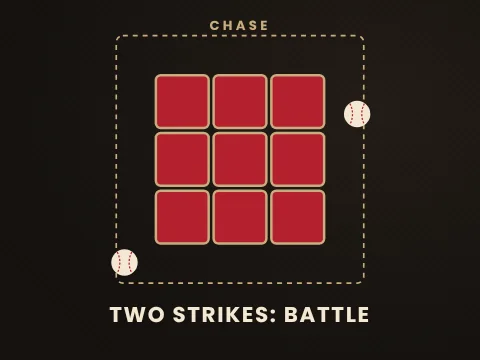
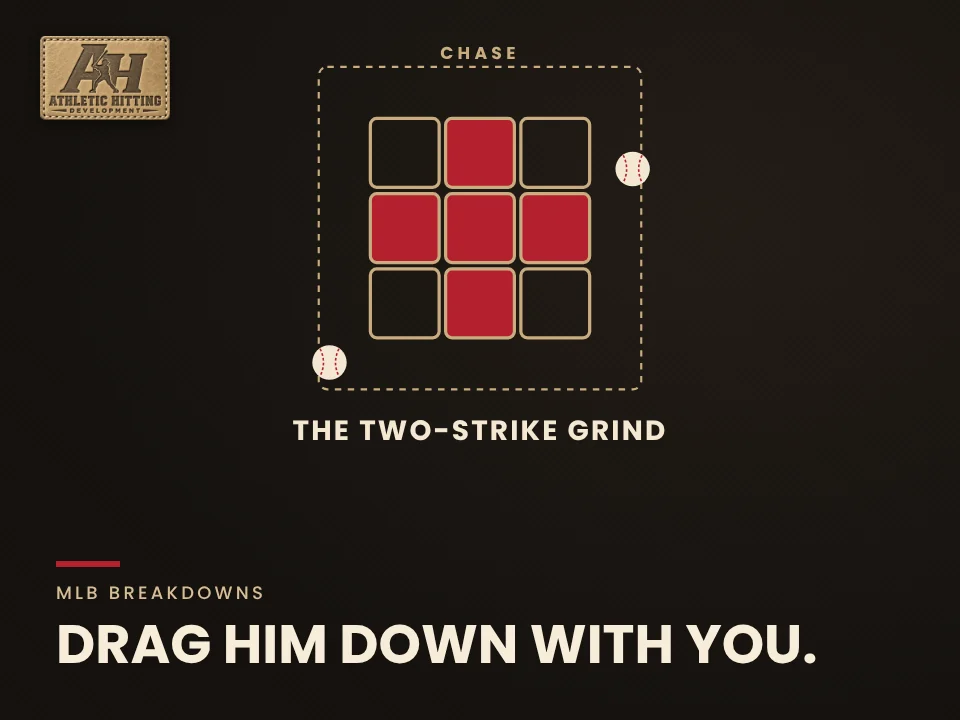
THE BREWERS’ TWO-STRIKE GRIND
DRAGHIM.
- Let it travel
- Hit it where it’s pitched
- Foul off the tough one
- Make him throw one more
EVERY EXTRA PITCH IS PRESSURE.
2. “Drag him” runs on all four pillars
You can’t drag a pitcher anywhere with one or two tools. A grinding at-bat takes all four pillars of the complete hitter, working together.
1. The swing: stay on plane, hit it where it’s pitched
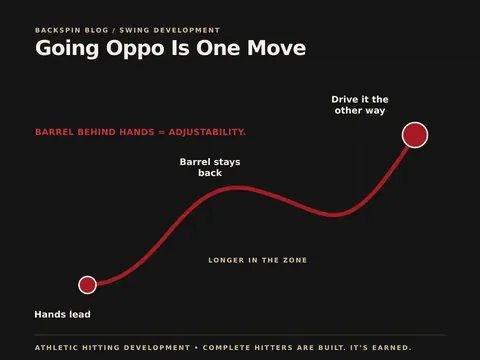
Letting the ball travel only works if your swing can stay on plane through the zone. AHD hitters build Mechanically Advantaged Angles (MAA) so the barrel gets on the ball’s path early and stays there long. That’s what lets you drive the pitch away the other way instead of rolling over on it. More in Going Oppo Is One Move.
2. Athletic development: speed buys time
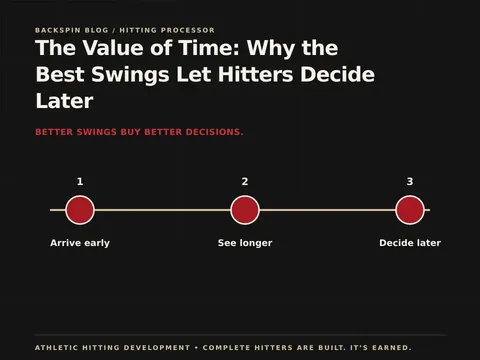
Here’s what nobody tells you: you can only wait on the ball if you’re fast enough to catch up to it. Bat speed, rotational power and explosiveness buy you time. Weak hitters have to cheat. Strong, explosive hitters get to see it longer.
3. The hitting processor: a 10-pitch at-bat is a recognition clinic
Spit on the breaking ball in the dirt, foul off the tough pitch on the black and recognize the mistake when it finally shows up. See It → Recognize It → Time It → Decide → Attack It. That’s vision, timing and decision-making, trained daily, not hoped for.
4. The mental approach: get competitive at 0-2
“Drag him” is a two-strike mindset. Down 0-2, most hitters panic. A complete hitter gets competitive. Every foul ball is a small win. Every extra pitch is pressure on his arm, his pitch count and his bullpen. More in how to battle with two strikes.

THE TWO-STRIKE MINDSET
SHORTEN UP.DON’T GIVE UP.
- Start every rep 0-2.
- Let it travel.
- A tough foul is a win.
MAKE HIM UNCOMFORTABLE.
3. The AHD “Drag Him” Challenge
Take this into your next live BP, machine session or scrimmage. Every at-bat starts 0-2. Your job is to drag the pitcher down with you, then score the at-bat:
| Result | What earned it |
|---|---|
| Single | Saw 4+ pitches, put the ball in play |
| Double | Saw 6+ pitches, or worked a walk |
| Triple | Saw 6+ pitches and hit it hard where it was pitched |
| Home Run | Saw 8+ pitches and squared it up |
| Out | Chased out of the zone, or struck out looking |
Coaching rules
Start every rep 0-2. So many at-bats get decided with two strikes. Train there.
Let it travel. Middle and away go the other way. Don’t try to pull the outside pitch.
Shorten up, don’t give up. A tough foul ball is a win, not a failure.
Track it. Log pitches seen per at-bat and watch the number climb week over week.
4. For parents and coaches
- Parents: stop judging the at-bat by the box score. A 9-pitch groundout that ran up the pitcher’s count is a quality at-bat. On the ride home, ask: “How many pitches did you make him throw?” That one question changes how kids compete.
- Coaches: count pitches seen per at-bat as a team stat, right next to hits. A lineup that averages one extra pitch per hitter pushes the opposing starter out of the game earlier and gets you into the bullpen. That’s how a team without a home-run hitter wins. Bring your roster through the AHD system with team roster pricing, or bring AHD to your town for a Camp or Clinic.

THELESSON.
- Start at 0-2.
- Let it travel.
- Hit it where it’s pitched.
- Make him throw one more.
- Count pitches seen.
Complete Hitters Are Built…Earned.
5. Build the complete hitter
Find out which pillar breaks first when your hitter gets to two strikes.
- Run the free AHD Hitter Combine to see where your hitter stands across all four pillars.
- Build a free Two-Strike Plan and practice calls with the Pitch Recognition Trainer.
- Go deeper in the AHD Academy with the Hitting Processor and Mental Approach masterclasses. Enrollment opens November 15.
The Brewers don’t out-slug anybody. They out-compete them, one pitch at a time. Your hitter can too.
Don’t collect drills. Build a complete hitter.
Source note: Brewers stats and approach come from MLB.com’s breakdown of the Brewers’ offense (Aug. 26, 2026). The “Drag him!” story comes from MLB.com’s Brewers–Tigers story, and the 37-pitch inning from MLB.com’s Brewers–Giants recap. Inspired by The Wall Street Journal’s coverage of Milwaukee’s October run. This article is AHD’s coaching interpretation.
Quick answers
What does “drag him” mean in baseball?
It’s the Brewers’ rallying cry for a grinding at-bat. When the hitter is in a hole, he makes the pitcher work: fouls off tough pitches, takes balls and keeps the at-bat alive until the pitcher makes a mistake or runs up his pitch count.
How do you get better at hitting with two strikes?
Train there. Start reps at 0-2, let the ball travel, shorten up without giving up the swing, and treat a tough foul ball as a win. Track pitches seen per at-bat so the hitter can see the grind improving week over week.
Why does letting the ball travel help hitters?
Contact a little deeper gives the hitter more time to recognize the pitch and lets him hit it where it’s pitched, including the other way. It takes bat speed and a swing that stays on plane through the zone to do it well.
Is a long at-bat that ends in an out a good at-bat?
Often, yes. A 9-pitch groundout that runs up the pitcher’s count helps the team. Parents and coaches can judge at-bats by pitches seen and decisions made, not only by hits.
This article is part of the AHD guide Pitch Recognition & Timing. Start there for the full picture and every related article.