By BK, Athletic Hitting Development
Complete Hitters Are Built… It’s Earned!
Key takeaways
- A hitter’s move and a hitter’s decisions aren’t separate projects.
- The cage doesn’t ask enough questions. Test every mechanical change against a decision.
- Every swing cue needs a game question.
- Selective is not passive. Selective hitters are ready hitters with a plan.
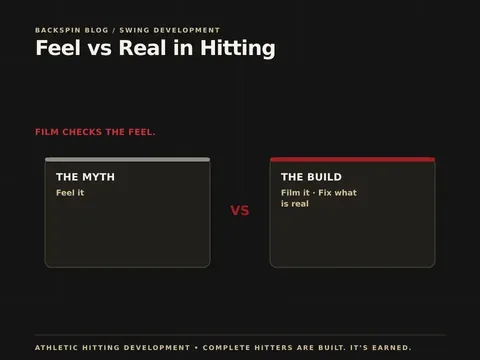
So many hitters make a beautiful cage change and then look exactly the same in games.
A swing change only counts when it survives real decisions, because the cage removes the speed, location and timing questions a game asks. Build the move, add a damage zone, then add uncertainty, and keep the change only if it competes against real pitching.
Train it: Complete Hitter Masterclass →The change may have been real. The swing may have looked better. He may even have gained bat speed.
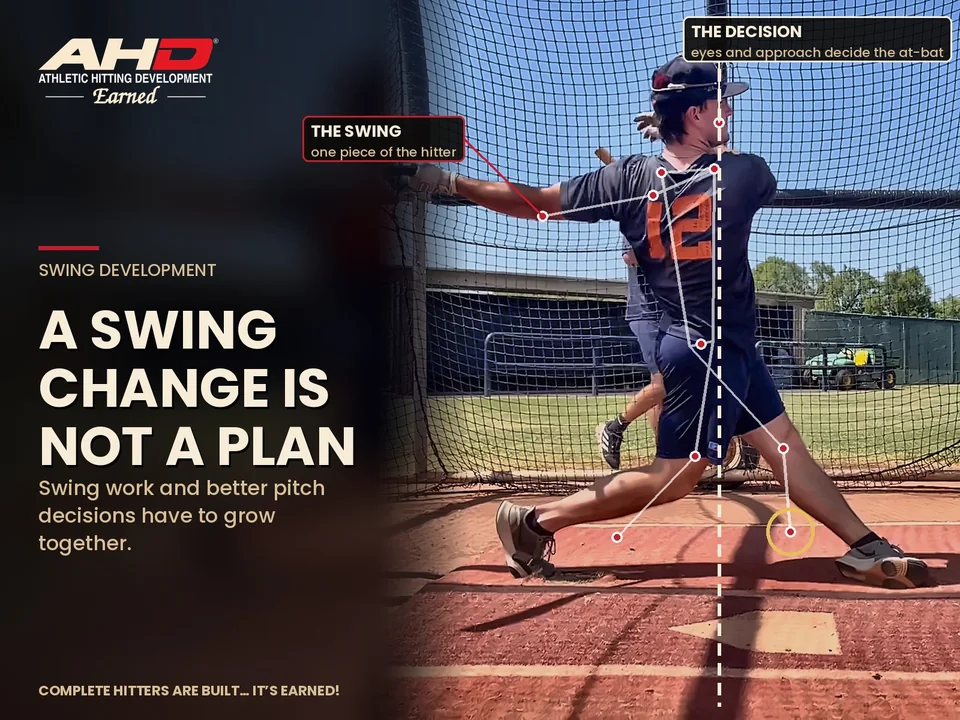
But a swing change is not a plan.
1. Swing and approach go together
In an October MLB.com interview, Braves prospect Tate Southisene talked about two things in the same breath: adjustments to his swing and being more disciplined at the plate. That pairing matters.
A hitter’s move and a hitter’s decisions are not separate projects. They have to grow together.
2. The cage doesn’t ask enough questions
In the cage, the hitter usually knows the speed, the location and the timing. He can rehearse a pattern with no penalty for swinging at a bad pitch.
In a game, none of that is guaranteed. The pitcher changes speed. He changes eye level. The count changes his options. The hitter has to decide before he has certainty.
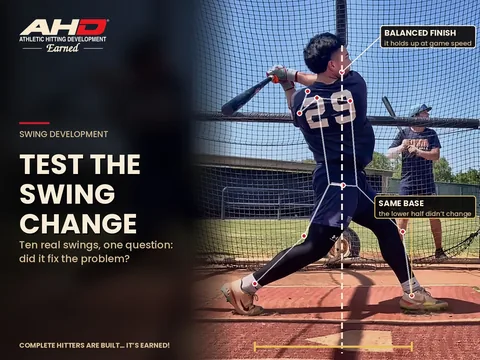
So test every mechanical change against a decision. If a hitter is working to keep the barrel above the ball, can he do it on a middle-away fastball? Can he do it after seeing a breaking ball? Can he take the slider off the plate without changing his posture? Can he attack a heater without getting early on everything else?
If not, the work isn’t finished.
3. Every swing cue needs a game question
| Swing cue | Game question |
|---|---|
| Stay athletic through contact | Can I still see the ball and adjust when the pitch changes speed? |
| Keep the barrel above the ball | Can I cover the top half of the zone without dumping early? |
| Get started on time | Can I be ready for velocity without committing to every pitch? |
| Shorten the move | Can I make a better two-strike decision without getting weak or defensive? |
The cue is never the finish line. It’s the tool that gives the hitter a better chance to solve the problem. A swing built on Mechanically Advantaged Angles (MAA) only pays off when the hitter brings it to the right pitch.
CAGE TO GAME
ONE CUE.ONE QUESTION.
- Build the move.
- Add a zone.
- Add uncertainty.
- Keep it only if it competes.
MECHANICS SERVE THE GAME.
4. Selective is not passive
Young hitters hear “be selective” and get afraid to swing. That’s not the goal.
Selective hitters are ready hitters. They know what they’re looking for and where they want it. They can be aggressive because they have a plan. Passive hitters wait because they don’t know what to attack. Huge difference.
The AHD Heater/Hanger plan keeps it simple:
- Hunt the heater in your damage zone.
- Adjust and attack the hanger.
- Let the pitcher’s pitch go by.
With that plan, swing work gets more useful. He doesn’t need ten thoughts in the box. He needs one physical feel and one clear attack plan.
5. How to connect swing work to decisions
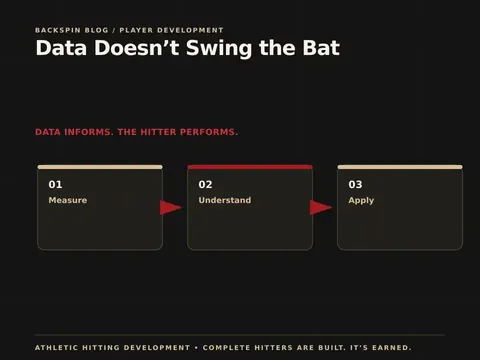
- Build the moveTee or front toss with one clear physical task. Keep it short. The hitter should know exactly what success feels like.
- Add a zoneHe gets a damage zone and must take pitches outside it. Now the cue has to survive a decision.
- Add uncertaintyVary location and speed. Score points for good decisions and quality contact, not just balls in play.
This sequence teaches the hitter that mechanics are there to serve the game.
6. What to measure
Don’t decide a swing change worked because one ball went far. Track whether the hitter:
- Holds his athletic position through contact.
- Gets the barrel to the right contact window more often.
- Takes more pitches outside his attack zone.
- Adjusts better to spin and speed.
- Carries a clear plan from one at-bat to the next.

THELESSON.
- A swing change…
- …is not a plan.
- One feel.
- One attack plan.
- Test it in the game.
Complete Hitters Are Built…Earned.
Quick answers
Why does a swing change look good in the cage but not in games?
The cage removes uncertainty. In games the hitter has to decide on speed, location and pitch type before he’s certain, so a change has to be tested against real decisions.
What is the difference between being selective and being passive?
Selective hitters know what they’re looking for and are ready to attack it. Passive hitters wait because they don’t know what to attack.
How should a hitter practice a swing change?
Build the move with tee or front toss, add a damage zone where everything else is a take, then add varied speeds and locations scored on decisions and contact quality.
How do you know a swing change is working?
Track athletic position through contact, barrel in the right contact window, takes outside the attack zone, adjustments to spin and speed, and a clear plan between at-bats.
What is a damage zone for a hitter?
It’s the area where a hitter wants his pitch and is ready to attack it. In the AHD Heater/Hanger plan, he hunts the heater in his damage zone, adjusts to the hanger and lets the pitcher’s pitch go by.
Inspired by: MLB.com, “Tate Southisene on swing adjustments, approach, more” (Oct. 7, 2026). This article expands the interview topic into AHD teaching principles.
Don’t collect drills. Build a complete hitter.
Complete Hitters Are Built… It’s Earned!
This article is part of the AHD guide Baseball Swing Mechanics. Start there for the full picture and every related article.