
Baseball Swing Mechanics
Good baseball swing mechanics come down to an athletic setup, a forward move that lands on time, a sequence that starts from the ground, and a barrel that stays above the ball and through the zone. There is no one perfect swing — but there are positions every good swing gets to.
By BK · 52 years playing, coaching and scouting · Updated October 16, 2026
Find your path
- I need help getting betterOnline baseball & softball hitting lessonsAHD Academy courses →
- What’s wrong with my swing?Casting, rolling over, dumping the barrel, balance, bat pathFree SwingChecker™ →
- What should my kid do?Plans for 8U, 10U, 12U, 14U and high schoolDrills by age →
- How do I hit this pitch?Fastball, curveball, changeup, high heat, rise and drop ballHitting Processor hub →
- How do I train at home?Practice plans, tee work, strength, drills by ageTraining plans →
- I need a real coachScottsdale lessons, remote coaching, team campsCoaching options →
The parts of the baseball swing
- Setup. Athletic, balanced and ready to move — not a pose. Batting stance.
- Gather and stride. Load into the back side and move forward on time. There is no one perfect stride.
- Land athletic, then launch. Foot down, head quiet, hands still in a position to work. Launch position timing.
- Sequence. Ground, hips, torso, arms, barrel. Hip-shoulder separation and the full swing sequence.
- Bat path and contact. Hands and barrel above the ball until it is time to hit it, then a long stay in the zone. Direct bat path.
- Finish. Balanced and in control. Balance and body control.
What’s wrong with my swing? The common flaws
Most swing problems are a symptom of something earlier — position, timing or a decision. Fix the first break, not the last one you see. Start with the free SwingChecker™ to find the priority, then use these guides:
- Casting — the hands push away from the body and the barrel gets long. Casting: causes and fixes.
- Rolling over — weak ground balls to the pull side. Why hitters roll over.
- Dumping the barrel — the barrel drops below the hands early and the hitter pops up or swings under. How to hit line drives.
- Balance — standing up, falling off or spinning out. Balance and body control.
- Stepping in the bucket — the front side bails. Why it happens and the fix.
- Bat path — in and out of the zone too fast. The 9-millisecond window.
See all of them in 5 common baseball swing flaws, and what to check first if you’re a parent.
Mechanically Advantaged Angles (MAA)
Every great swing looks a little different. What the best ones share are Mechanically Advantaged Angles — the body and barrel positions that let a hitter create force and still adjust. AHD hitters train MAA as an advantage, not a rule. Read MAA: Mechanically Advantaged Angles.
How to change a swing (and know it’s working)
A swing change is not a plan. Change one thing for a reason, train it, then test it at game speed. What a hitter feels and what the video shows are often two different things.
Change with a reason · Feel vs real · The 4-step test · A swing change is not a plan.
Power, bat speed and exit velocity
Mechanics move the barrel. The body powers it. If the swing looks right but the ball doesn’t jump, the next step is usually strength and rotational power — the second pillar.
How to hit for power · Bat speed and rotational power · Exit velocity · Physics of hitting.
The complete baseball swing mechanics library
Every AHD guide on this topic, in the order I’d read them.
Swing structure
 The Swing Sequence: From Athletic Setup to FinishLearn the baseball swing sequence in 8 steps, from athletic setup, gather, load with direction and launch to barrel approach, contact, extension and finish, and what each phase does.
 Baseball Batting Stance: The Setup That Lets Him MoveBaseball batting stance basics: width, weight, knees, hands and bat angle, open vs closed vs square, where to stand in the box and the mistakes to fix.
 There Is No Perfect Stride in HittingA 2026 biomechanics study of 95 college hitters found no single ideal stride. Why coaches should assess the whole move instead of forcing one stride style.
 Let the Arrow Go: Launch Position TimingIs your hitter ready to fire the moment the eyes say yes? Launch position timing, the hidden delay most hitters have, and how to train a faster, cleaner launch.
 Hip-Shoulder Separation Isn’t AutomaticHip-shoulder separation in youth hitters grows with age. A three-season study shows U12–U13 hitters have more than U11. What parents should coach first.
 A Direct Bat Path Is Not EnoughA direct bat path only works from an athletic position, with an attack plan and the courage to be selectively aggressive.
 The 9-Millisecond Window: How Bat Path Buys TimeBat path and timing: college hitters had a 9.36 ms sweet-spot window that ranged from 2.5 to 30.4 ms by swing path. How to build a path that buys time.
 MAA: Mechanically Advantaged AnglesEvery swing is different, but the best share Mechanically Advantaged Angles. Coach Kehoe explains MAA, where it shows up and why it’s an advantage, not a rule.
Fix the flaw
 5 Common Swing Flaws That Limit PerformanceLearn 5 common baseball swing flaws, including casting, dumping the barrel and poor stride direction, what causes them and why to fix causes first.
 Casting: What It Is and Why It Hurts Bat PathCasting in the baseball swing happens when the hands and barrel move away from the body too early. Learn why it hurts hitters and how to fix the sequence.
 Why Hitters Roll Over: What to Check FirstWhy baseball and softball hitters roll over, a 60-second self-check to find where the breakdown starts, one drill to begin with and a 7-day plan to fix it.
 Balance & Body Control: The Swing Fault Coaches MissLearn how balance and body control in the baseball swing affect posture, barrel path and timing, and how to train them in the cage and the gym.
 Stepping in the Bucket: Why It Happens and the FixStepping in the bucket in baseball: the real causes, why yelling “stride to the pitcher” rarely works, how to spot it on video, and 5 fixes that fit.
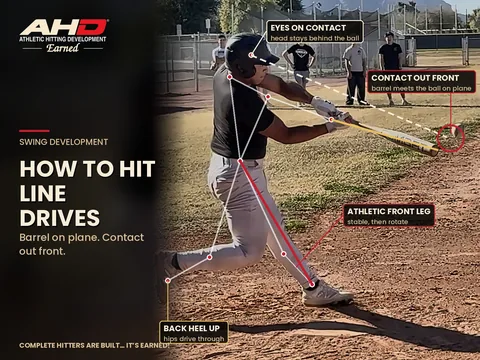 How to Hit Line Drives (and Stop Popping Up or Rolling Over)How to hit line drives in baseball: contact point, barrel on plane, attack angle made simple, why hitters pop up or roll over, and drills to fix it.
 Going Oppo Is One Move: Barrel Behind the HandsHow to hit to the opposite field: contact the ball with the barrel behind the hands and let it into the Oppo Nitro Zone. Two cues, one complete hitter.
 How to Hit an Inside Pitch: Turn Inside Pitches Into Your Best PitchesHow to hit an inside pitch in baseball and softball: keep the hands inside the ball, turn the body, catch it out front and pull it with authority.
 How to Fix Your Kid’s Swing: What to Check FirstA parent’s guide to fixing a youth baseball or softball swing: the 5 checkpoints to film, how to find the one that breaks first, and the drill that matches it.
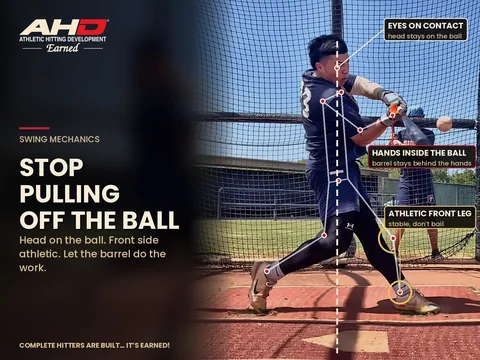 How to Stop Pulling Off the Ball: Causes, Video Checks and FixesHow to stop pulling off the ball in baseball and softball: what it looks like, the 4 real causes, how to spot it on video, and drills that fix it.
Change it and prove it
 Change With a ReasonDax Kilby rebuilt his stance in the Arizona Fall League. The lesson for hitters: a swing change should solve a baseball problem, not chase a look.
 Feel vs Real in HittingYou feel on time but you’re late. You feel on the ball but you’re under it. Feel vs real in hitting, and the AHD fix: go the opposite. Under? Swing over.
 How to Know If a Swing Change Is WorkingBefore calling a swing change good or bad, test it against the problem it was built to solve. The AHD 4-step test and 10-swing rule.
 A Swing Change Is Not a PlanA hitter doesn’t get better just by changing his swing. Improvement happens when swing work and better pitch decisions grow together.
 Are You a 500 or a 10,000?How many reps does it take to build a swing? Some hitters need 500, some 10,000. The myelin science behind muscle memory, and why “want to” is a skill.
Power and big-league models
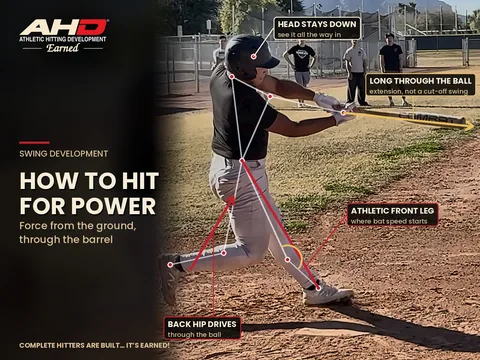 How to Hit for Power in Baseball (and Hit the Ball Farther)How to hit for power in baseball: bat speed, square contact and launch. Where power comes from, why drills alone don’t add it and what to train first.
 Bat Speed Isn’t in Your ArmsBat speed isn’t in your arms. It comes from the ground, hips and core. How rotational power works and how young hitters can build it safely.
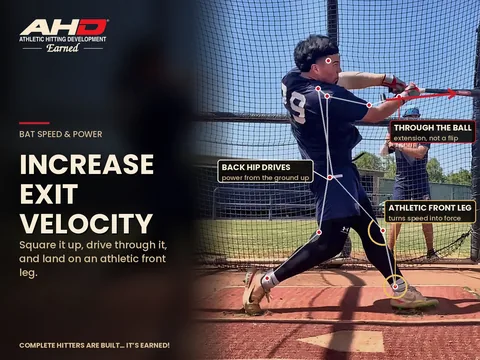 How to Increase Exit Velocity: The 4-Pillar PlanHow to increase exit velocity: bat speed, squared-up contact, strength, timing and intent — plus a 6–8 week plan and how to measure it fairly.
 The Physics of Hitting a BaseballThe physics of hitting a baseball made simple: ground force, torque, sequence, bat speed, collision quality and bat path, and how each shapes your swing.
 Hard Contact Isn’t Enough: The Fernando Tatis Jr. Contact-Point LessonFernando Tatis Jr.’s 2025 power drought raised a contact point question. Learn why getting it out front is the wrong fix and what to evaluate first.
 Junior Caminero vs. Albert Pujols: Current & Former AHD ModelsAlbert Pujols built the model swing. Junior Caminero has it now, and Pujols helped coach it. The shared angles behind the fastest, flattest swing in baseball.
 Miguel Cabrera’s Swing Stands Up to Father TimeMiguel Cabrera’s swing held up for nearly two decades. Learn what young hitters should take from it: adjustability, using the whole field, decision time.
 He Takes Strikeouts Personally.How Jacob Wilson built an elite contact swing, from backyard small-barrel training to staying inside the ball, plus drills for baseball and softball.
Your next step
About 3 minutes. Ranks your hitter’s #1 priority across the 4 pillars with cues, drills and free lessons.
Run it free →16 lessons to build a repeatable, adjustable swing. $139, Lessons 1–3 free.
See the course →Remote coaching with BK: starting evaluation across all 4 pillars, a personal 90-day plan, all 7 courses, video analysis of swings and game at-bats, and direct text access. $1,995 for 90 days, limited to 12 athletes.
See remote coaching →Private and semi-private lessons for baseball and fastpitch hitters in Scottsdale and the Phoenix area. Text Coach for current rates.
Scottsdale lessons →12 to 60 players, ages 8 through high school, baseball, fastpitch or combined. Coach travels.
Camps & clinics →Questions
What are the basic mechanics of a baseball swing?
An athletic setup, a gather and stride that land on time, a sequence from the ground up through the hips and torso, a barrel path that stays above the ball and in the zone, and a balanced finish.
Is there one correct baseball swing?
No. Great hitters move differently, but they reach similar positions. AHD calls them Mechanically Advantaged Angles and teaches principles instead of a copied swing.
How do I stop casting the bat?
Casting usually starts earlier in the swing with posture, sequence or timing. Find the first break on video, keep the hands and barrel above the ball, and retest. Our casting guide walks through it.
How long does it take to change a swing?
A real change takes weeks of focused reps, not one session. Change one thing for a reason, train it daily and test it at game speed before calling it done.
More AHD guides
Don’t collect drills. Build a complete hitter.
Complete Hitters Are Built… It’s Earned!