By BK, Athletic Hitting Development
Complete Hitters Are Built… Not Given. Earned!
Key takeaways for hitters
- The Red Sox were swept by the Yankees in a two-game Wild Card Series and scored two runs, both on solo home runs.
- Take away those two swings and Boston never got a runner to third base.
- Willson Contreras said data and computers aren’t enough. You still need experience to win.
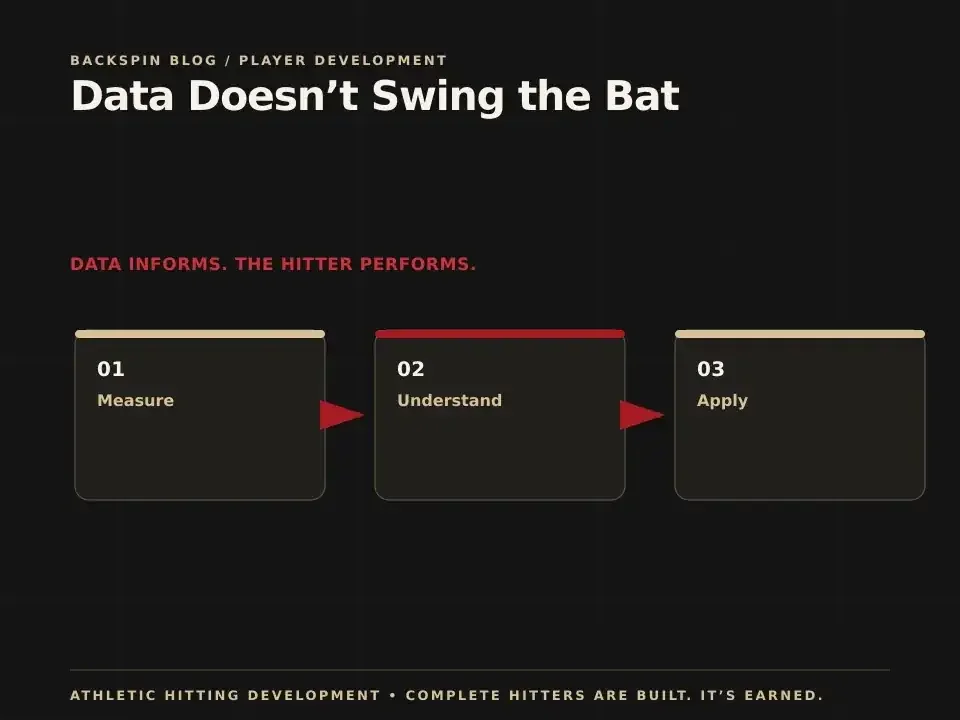
- Data is a flashlight. It shows you where to look. It doesn’t swing the bat for you.
“It’s not enough when you have talent, or you have data, or you have computers telling you what to do, because this is baseball.”
Data is a flashlight: it shows you where to look, but it doesn’t swing the bat. Use the numbers to find the problem, then train the whole hitter, including timing, decisions and approach, to execute when it counts.
Train it: Complete Hitter Masterclass →That was Willson Contreras, less than an hour after the Red Sox season ended in New York. He went on: “The data is here to help us, but at the end of the day, you need experience and veteran guys to win games.”
A catcher said the quiet part out loud. I’ve been around this game for 52 years, playing, coaching and scouting. I’ve heard some version of what he said in every era. It’s true every time.
1. Two runs, two games
Boston scored two runs in the series. Both came on solo home runs, and one came when the series was all but over.
Take those two swings away and the Red Sox never put a runner on third base in two games. Not once.
That doesn’t happen because a team lacks information. Every big-league club has more data than it can use. It happens when hitters can’t turn what they know into what they do, with the season on the line.
RED SOX VS. YANKEES • WILD CARD
2 GAMES.2 RUNS.
- Both on solo home runs.
- No other runner reached third.
- Not a lack of information.
KNOWING IT AND DOING IT ARE DIFFERENT.
2. This isn’t anti-data. Neither am I.
Contreras didn’t say throw out the numbers. He said the data is there to help. That’s exactly right.
Bat speed, attack angle, chase rate and exit velocity all tell you something real. At AHD we measure. We film. We track. But a number tells you what happened. It doesn’t teach a hitter how to fix it with two strikes, down a run, in a ballpark full of people who want him to fail.
Data is a flashlight. It shows you where to look. It doesn’t walk the path for you.

THIS ISN'T ANTI-DATA
DATA IS AFLASHLIGHT.
- It shows you where to look.
- It tells you what happened.
- It doesn't swing the bat.
MEASURE IT. THEN TRAIN THE HITTER.
3. What the numbers can’t do in the box
When the lights get bright, the swing you built in the cage meets everything else. A pitcher who changes his plan. A strike zone that moves. Your own heartbeat in your ears.
That’s where experience shows up. Hitters who have been there slow the game down. They see the ball earlier, make cleaner decisions and trust their swing instead of thinking about it.
Two games, two solo homers and nobody else standing on third. That isn’t a mechanics problem. It’s a complete-hitter problem.
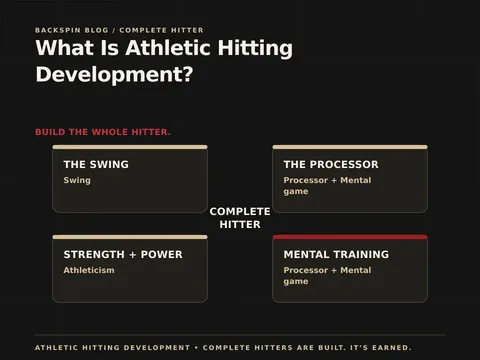
4. The 4 pillars of a complete hitter
This is why AHD trains all four pillars, not just one or two:
1. The Swing
Structure and mechanics you can repeat. This is where most data lives.
2. Athletic Development
Strength, speed and explosive power to drive the ball.
3. The Hitting Processor
Vision, pitch recognition, decisions and timing. See It → Recognize It → Time It → Decide → Attack It.
4. The Mental Approach
A plan, a routine and the composure to execute it when it counts.
Most programs live in pillar one and call it hitting. The hitters who win in October have all four synced up.
5. What this means for your hitter
- Use the numbers. Don’t worship them. Measure to find the problem, then train the whole hitter to fix it.
- Practice with pressure. Count leverage, consequences and competition in every session.
- Build the processor. Seeing the ball and making decisions is a skill. Train it like one. Start with pitch recognition.
- Earn experience. Every competitive at-bat is a rep for the next big one.
Data doesn’t swing the bat. Complete hitters do.

THELESSON.
- Use the numbers.
- Don't worship them.
- Practice with pressure.
- Build the processor.
- Earn experience.
Complete Hitters Are Built…Earned.
Quick answers
Is data bad for young hitters?
No. Bat speed, attack angle, exit velocity and chase rate tell you what happened. Use them to find the problem. Then train the whole hitter, including timing, decisions and approach, to fix it.
What did Willson Contreras say about data?
After the Red Sox were swept by the Yankees, he said talent, data or computers telling you what to do aren’t enough on their own. The data is there to help, but you need experience to win games.
What are the 4 pillars of a complete hitter?
The Swing, Athletic Development, the Hitting Processor and the Mental Approach. AHD trains all four and syncs them together instead of training only one or two.
How can youth hitters build experience?
Make practice look like games: count leverage, consequences, live velocity and situational at-bats. Every competitive rep is experience banked for the next big at-bat.
What can swing data not tell you about a hitter?
A number tells you what happened. It can’t teach a hitter how to fix it with two strikes, down a run, with his heartbeat in his ears. That takes training all four pillars and practicing with real pressure.
Don’t collect drills. Build a complete hitter.
Find which pillar is holding your hitter back with SwingChecker™ for free. Then see how the AHD Complete Hitter Masterclass trains all four pillars every day, or contact Coach about online remote baseball and softball training.
Contreras quotes and series details via Barstool Sports.
Complete Hitters Are Built… Not Given. Earned!