By Athletic Hitting Development
Complete Hitters Are Built… Not Given. Earned!
Wednesday in Atlanta, the Phillies were one loss from going home. They had dropped Game 1 of the Wild Card Series, and in the seventh inning of Game 2 things started to slip away.
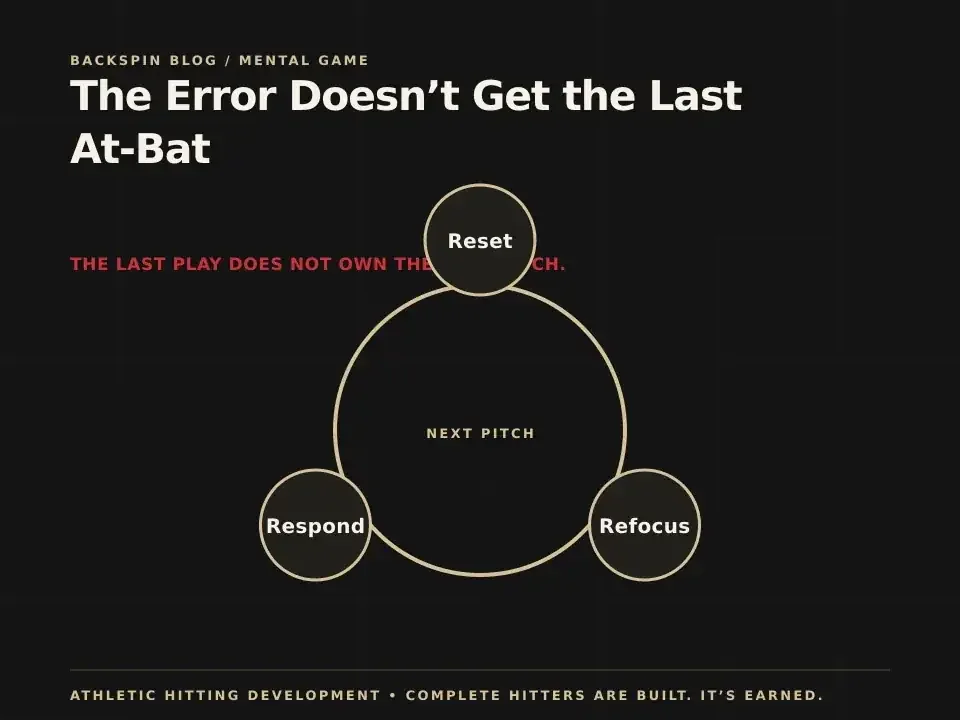
Alec Bohm’s late throw helped Atlanta take the lead, and three innings later his two-out, 10th-inning homer won the game. The lesson: own the mistake fast, learn one thing, reset your body and go win the next pitch instead of carrying it into the box.
Train it: Mental Approach Masterclass →Sean Murphy walked. Ha-Seong Kim put down a sacrifice bunt. Alec Bohm, playing first base, went for the lead runner at second and the throw was late. Everybody was safe. A fly ball to right glanced off Bryce Harper’s glove for an RBI double, a sacrifice fly followed, and the Braves led 3–1.
Three innings later, with two outs in the 10th, Bohm hit a home run to right field off Didier Fuentes. Phillies 4, Braves 3. Series tied. Season alive.
The error happened. It just didn’t get the last at-bat.
1. The moment every hitter knows
Every player has been there. You make the mistake. Everybody saw it. The run scores, the dugout goes quiet, and now you have to walk up to the plate carrying it.
This is where most hitters lose the next at-bat before it starts. They replay the throw. They try to make up for it all at once. They swing at the first pitch they see because they need to do something big right now.
The mistake costs one run. Carrying it into the box can cost the whole game.
2. Own it, then drop it
After the game Harper didn’t make excuses about the ball in right. “Probably should have been caught, obviously,” he said. That is the right order: own it quickly, then let it go.
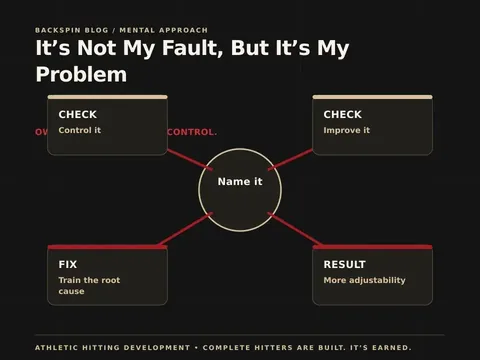
We wrote about this in It’s Not My Fault, But It’s My Problem. You can’t control a bad hop or a bad call. You can control what you do next. And when the mistake is yours, the job is the same: own it, learn the one thing there is to learn, and get to the next pitch.
The short-memory routine
1. Name it. One sentence, to yourself. For example: “Rushed the throw.”
2. Learn it. One adjustment, not ten. For example: “When it’s close, take the sure out.”
3. Release it. A physical reset: a deep breath, adjust your gloves, wipe it off your jersey, whatever your trigger is.
4. Next job. The next pitch, the next ground ball, the next at-bat. That’s the only one you can still win.
THE SHORT-MEMORY ROUTINE
OWN IT.DROP IT.
- Name it
- Learn it
- Release it
- Next job
ONE ADJUSTMENT, NOT TEN.
3. Two outs in the tenth
Bohm’s homer went to right field. For a right-handed hitter, that’s the opposite way, and it was his first opposite-field home run since Opening Day.
That matters for young hitters. With the season on the line, the easy mistake is trying to do too much: pull everything, swing for the fences, jump at the first fastball. Driving a ball the other way usually comes from letting it travel, staying on the pitch and putting a good swing on it. The damage comes from a good swing, not a bigger one.
Earlier, Kyle Schwarber and Harper had tied the game with back-to-back home runs in the eighth off Dylan Lee, 447 and 418 feet. Then rookie Andrew Painter threw three scoreless innings and got the final out on a strike call upheld by the automated ball-strike challenge, the first postseason game ever to end on one.
Nobody on that team won the game alone. Everybody just did the next job.
4. The four pillars in one comeback
1. Mental approach: next pitch, next play
The seventh inning didn’t decide the tenth. A hitter who can let go of the last play gets to use everything he has on this one.
2. The hitting processor: know the situation
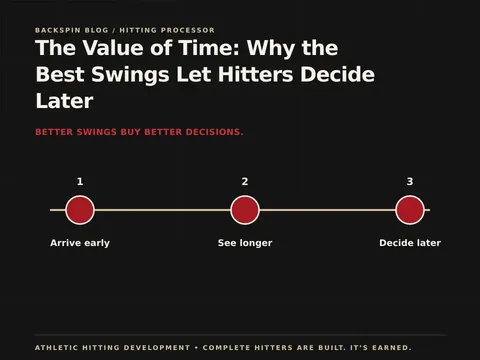
Two outs, extra innings, tie game, season on the line. See It → Recognize It → Time It → Decide → Attack It. Pressure doesn’t change the process. It makes the process more important.
3. The swing: let it travel
A swing that can drive the ball to all fields keeps a hitter dangerous even when he isn’t perfectly on time. That is margin for error.
4. Athletic development: be ready in the tenth
Extra innings of a playoff game ask your body for the same swing you had in the first. Strength and conditioning are what make the late at-bats look like the early ones.

TWO OUTS IN THE TENTH
LET ITTRAVEL.
- Don't try to do too much.
- Stay on the pitch.
- Put a good swing on it.
A GOOD SWING, NOT A BIGGER ONE.
5. For players and parents
- Players: build your own reset. Practice it after every bad rep in training so it’s automatic in games.
- Parents: after a mistake, skip the replay in the car. Ask, “What did you do the next time up?”
- Coaches: praise the response, not just the result. The kid who answers a mistake with a good at-bat is learning the most valuable skill in the game.

THELESSON.
- Own it quickly.
- One adjustment, not ten.
- Reset with a breath.
- Next pitch, next play.
- Let the ball travel.
Complete Hitters Are Built…Earned.
6. Build the complete hitter
Great hitters make mistakes all the time. What separates them is that the mistake doesn’t follow them to the plate.
Don’t collect drills. Build a complete hitter.
Start with the free SwingChecker™ hitting evaluation to find your first priority, including your mental approach. The AHD Complete Hitter Masterclass trains all four pillars together, and the Mental Approach Masterclass goes deep on routines and resets.
Source note: Game details and Harper’s quote come from the Associated Press game story (via ClickOrlando), MLB.com’s Braves recap and MLB.com’s Phillies recap. Game 1 result: MLB.com. This article is AHD’s coaching interpretation.
Quick answers
How do you get over a mistake in baseball?
Use a short-memory routine. Name it in one sentence to yourself. Learn one adjustment, not ten. Release it with a physical reset like a deep breath or adjusting your gloves. Then go to the next job: the next pitch, the next ground ball, the next at-bat. That is the only one you can still win.
Why do hitters struggle after making an error in the field?
They carry the mistake to the plate. They replay the throw, try to make up for it all at once, and swing at the first pitch because they feel they need something big right now. The mistake cost one run. Carrying it into the box can cost the whole game.
What should parents say to their kid after an error?
Skip the replay in the car. Ask, "What did you do the next time up?" Coaches should do the same thing and praise the response, not just the result. The kid who answers a mistake with a good at-bat is learning the most valuable skill in the game.
How should a hitter approach a big at-bat right after making a mistake?
Don’t try to make up for it with one huge swing. Let the ball travel, stay on the pitch and put a good swing on it. The damage comes from a good swing, not a bigger one.
This article is part of the AHD guide The Mental Game of Hitting. Start there for the full picture and every related article.