By BK, Athletic Hitting Development
Complete Hitters Are Built… It’s Earned!
Key takeaways
- Yankees prospect Dax Kilby went from a wide, closed stance to a narrow, open one this fall to get into his back hip and legs and lift the ball for more power.
- A good swing change has a job: more force, better timing or a more adjustable barrel. Looks don’t count.
- Answer four questions before changing anything, and change one thing at a time.
- Prove it with video and with baseball results, not with feel.
The wrong reason to change a swing is because it looks different. The right reason is because it helps the hitter hit.
Change a swing only when the change has a clear job, like more force, better timing or a more adjustable barrel, never because it looks different. Name the problem, check it on video, change one thing and prove it with baseball results, not feel.
Train it: Swing Structure & Mechanics Masterclass →A hitter changes his stance, his load or his stride. Everybody in the stands has an opinion. The only opinion that matters is the one the baseball gives you.
1. What Kilby changed
MLB.com’s Yankees Arizona Fall League overview caught up with prospect Dax Kilby, playing for the Salt River Rafters, in the middle of a real rebuild. In his words, “We’re actually going through a pretty big swing change.” He’s starting narrow and open where he used to be wide and closed.
The reason is what makes it a good teaching example. His old swing was flatter and built for line drives. The new one is meant to get him more into his back hip and legs so he can lift the ball and hit for more power.
That’s a development conversation, not a cosmetic one. He didn’t change because a screenshot looked better. He changed to create more force from the ground up.
Good adjustments solve a baseball problem.
2. There’s no “one right swing”
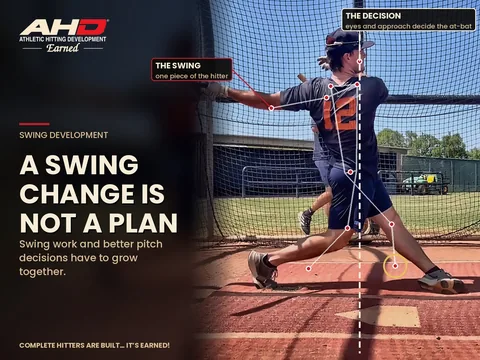
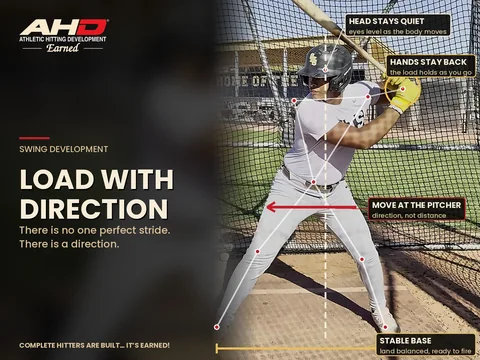
There are efficient positions and productive movement patterns. There are also a lot of individual ways to get there. One hitter needs a narrower stance. Another needs more width. One needs less pre-pitch movement. Another needs rhythm just to get athletic.
What every good hitter shares is the destination: Mechanically Advantaged Angles. Barrel above the ball, barrel working behind the hands, a path that matches the plane of the pitch, and a body that stays athletic through contact. An MAA is an advantage, not a rule. The stance is just the road you take to get there.
The point isn’t to copy Kilby. The point is to ask the right questions before you touch anything.
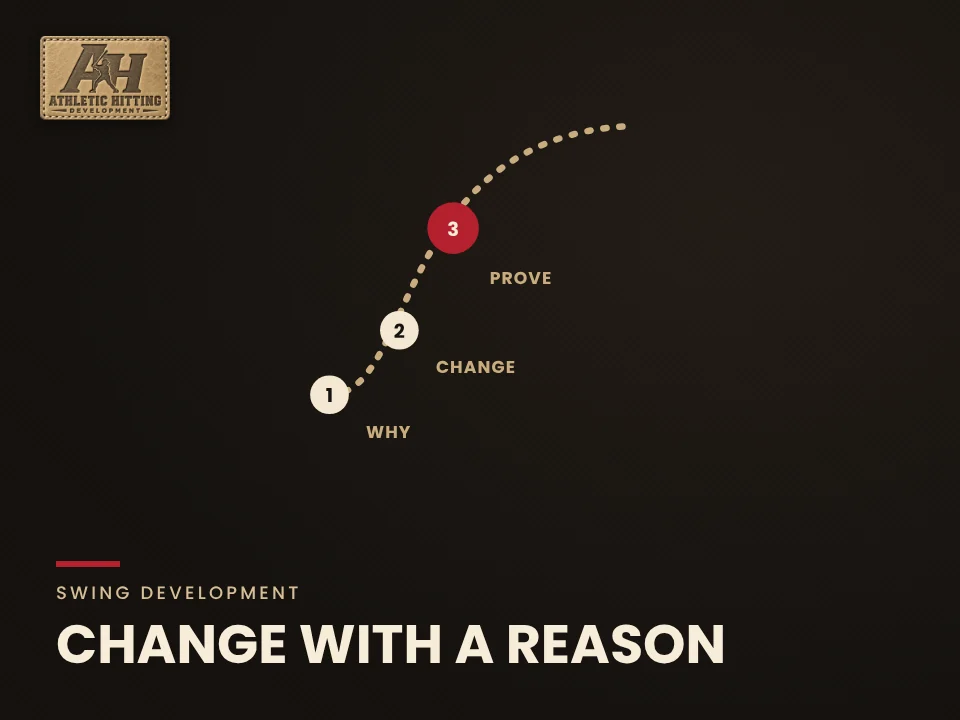
BEFORE YOU CHANGE ANYTHING
NAME IT.PROVE IT.
- What’s the problem?
- What does the video show?
- What job does the change do?
- How will we know it worked?
ONE CHANGE. ONE REASON.
3. Four questions before any change
- What’s the problem?Late on velocity? Losing balance? Not using the ground? Casting the barrel? Can’t adjust to off-speed? Name it.
- What does the video show?Don’t trust feel alone. Compare real reps from setup through contact, from the same angle.
- What job does the new move do?A change has to have a stated job. “Looks cleaner” isn’t a job.
- How will we know it worked?Track a physical checkpoint and a baseball result, not just whether it looks better.
4. The adjustment ladder
Start small. A new rhythm, a little less reach, a better gather or a more athletic forward move can create a big change without rebuilding the whole hitter. A full teardown is rarely the first answer. Kilby’s is a big change, and he’s making it in the fall, away from games that count. That timing matters too.
Give the adjustment enough reps to become usable, then move it into variable work: front toss, mixed locations, velocity and game-like decisions. If the hitter can only do the new move off a tee, he hasn’t built a game-ready change yet.
5. What parents and players should watch
- Don’t chase style. Tall, wide, toe tap, no stride, open or closed. None of it is automatically good or bad.
- Keep the athletic position. Start athletic. Stay athletic. Finish athletic.
- Make the change earn its place. Better balance, better timing, better contact, better decisions.
- Don’t change five things at once. You won’t know what helped, or what broke.
Record a baseline, make one focused change, then compare swings from the same angle on similar pitches. Ask one question: did this make the hitter stronger, more on time and more adjustable? Change with a reason. Test it. Keep what works.
Quick answers
Should my kid change his batting stance?
Only if the stance is causing a problem you can see on video, like being late, losing balance or not using the ground. A stance change should have a clear job.
Is there one right batting stance?
No. Hitters get to efficient positions in different ways. What matters is reaching athletic, Mechanically Advantaged Angles at launch and contact.
How many things should a hitter change at once?
One. Change one thing, give it reps, then test it against live pitching so you know exactly what helped.
How do you know a swing change worked?
Compare before-and-after video from the same angle and track a baseball result such as timing, contact quality or hard-hit balls in the zone.
Is a big swing change a good idea in the middle of the season?
A full teardown is rarely the first answer. Start small with things like rhythm, a better gather or a more athletic forward move, and save bigger rebuilds for time away from games that count, the way Dax Kilby made his in the fall.
Source: MLB.com, Yankees Arizona Fall League overview (October 2026). Quotes are Kilby’s from that article; the coaching read is AHD’s. More breakdowns in MLB Breakdowns and Swing Development.
Don’t collect drills. Build a complete hitter.
Complete Hitters Are Built… It’s Earned!
This article is part of the AHD guide Baseball Swing Mechanics. Start there for the full picture and every related article.