By BK, special contributor Alex Semenik
Complete Hitters Aren’t Born. They’re Built… and Earned.
Key takeaways
- The central nervous system (CNS) is the brain and spinal cord. It processes what the hitter sees, helps make decisions and organizes the swing.
- The CNS can be developed. Neuroplasticity means practice changes how movement is organized, and strength training changes how muscles are recruited.
- Pitch recognition is trainable. A 2024 meta-analysis found real gains from occlusion video training, with some transfer to the field.
- Training gains and game results aren’t the same thing. The ballfield is the final test.
- Don’t just build a pretty swing. Train the hitter to recognize, decide and adjust, aggressive and athletic, under control.
Most hitters spend their time on what they can see. The system that runs it all is the one they can’t.
Yes, you can train the central nervous system to hit better. Practice changes how the brain organizes movement, strength work changes how muscles fire, and pitch-recognition training improves anticipation. The goal isn’t a faster nerve signal. It’s a hitter who sees it sooner, decides better and adjusts the barrel in time.
Train it: Hitting Processor Masterclass →Their stance. Their hands. Their load. Their bat path. Their strength. Their bat speed. All important.
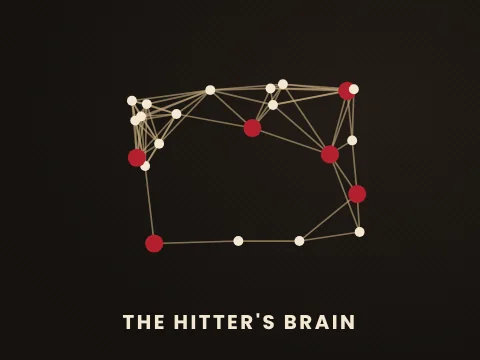
But there’s an entire system coordinating those movements, processing information and helping the body respond to a baseball or softball coming at the plate. It’s called the central nervous system. Understanding how it learns might change how you think about developing hitters.
1. First, what is the CNS?
The central nervous system is the brain and spinal cord. It receives and processes information, contributes to decisions, organizes movement and works with the peripheral nervous system to control the body.
Think about a shortstop fielding a bad-hop ground ball. The eyes detect the change. The nervous system processes it. The body adjusts, the glove moves and balance holds. Most of it happens without the athlete consciously thinking through every piece. That’s a trained athlete responding to a changing environment.
Now consider hitting. A hitter has to recognize the pitch, anticipate where it’s going, control a fast-moving body, deliver the barrel and adjust when the ball doesn’t show up exactly where he or she expected. That’s an enormous perceptual and motor-control challenge, and it’s a big reason hitting is so hard.
2. Can the CNS actually be developed?
Absolutely. One of the core principles of neuroscience is neuroplasticity: the nervous system changes through experience and learning.
- Practice reorganizes movement. Repetition improves how movements are organized and controlled.
- Strength training adapts the nerves too. It changes motor-unit recruitment and firing. That’s one reason athletes get stronger before their muscles get noticeably bigger.
- Faster isn’t the whole goal. Developing the CNS for sport is about reading the right information and producing the right response, not just making signals travel faster.
The goal isn’t a faster nervous system. It’s a more effective athlete.
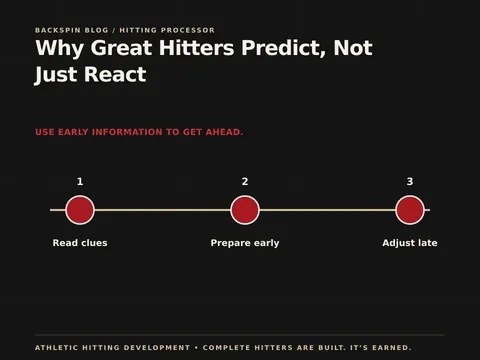
And hitting demands it. The pitcher’s whole job is to disrupt timing, recognition and barrel accuracy, and he gets to change the problem every pitch. Fastball. Slider. Changeup. Curveball. In fastpitch, rise, drop and change. Different speeds, movements and locations. A hitter doesn’t get to repeat one memorized move in identical conditions. A hitter who recognizes the pitch earlier buys time to organize the response, and that time is worth more than trying to move the bat faster.
3. The Hitting Processor: where CNS development becomes real
At Athletic Hitting Development, the Hitting Processor is one of our 4 pillars, taught through five connected abilities:
- See ItGather useful visual information from the pitcher, the release and the ball flight.
- Recognize ItTell pitch characteristics and patterns apart: fastballs, spin, speed changes and location.
- Time ItOrganize the body and swing rhythm around when the ball is expected to arrive.
- DecideSwing or take? Is this the pitch you’re looking for? Can you do damage with it?
- Attack ItTurn perception, timing and the decision into an explosive, adjustable swing.
These stages overlap in live hitting. It’s a practical coaching framework, not five separate switches in the brain.
We can spend months building beautiful batting-practice swings while neglecting the system that applies those swings in games. That’s a problem. A hitter doesn’t earn anything for a great swing against a pitch he never recognized.
PILLAR 3 · THE HITTING PROCESSOR
SEE IT.ATTACK IT.
- See It
- Recognize It
- Time It
- Decide
- Attack It
A GREAT SWING CAN’T HIT A PITCH IT NEVER RECOGNIZED.
4. Can you train pitch recognition and anticipation?
Yes, and this is where some of the most interesting research lives. Researchers have studied temporal occlusion training: athletes watch an opponent’s movement or ball flight, and the video stops before the action finishes. They have to predict the outcome.
For hitters, picture pitcher video that cuts off just after release. Fastball or breaking ball? Where is it going? What gave it away?
12 studies
Occlusion training produced meaningful gains in visual anticipation, including transfer to field-based tests.
24 players
Dynamic vision training improved some batting-practice measures, but not NCAA game stats.
That’s encouraging. It doesn’t mean watching pitch video automatically makes better hitters. It does say anticipation is trainable, and some of it carries beyond the drill. Remember the distinction: training gains and game performance aren’t always the same thing. The next step is critical. Connect recognition to actual hitting. (More on that in Do Reaction Games Help Hitters?)
5. The nervous system also controls how we produce force
Strength and explosiveness aren’t separate from nervous-system development. The nervous system recruits the muscles, coordinates when they fire and regulates how much force they produce.
Take two athletes with similar strength. One makes powerful, well-coordinated moves every time. The other can’t organize them, especially when forced to react. Muscle alone doesn’t explain the difference. Coordination and timing do.
For hitters, that means more than raw bat speed. We want athletes who generate force without losing posture, balance, adjustability or barrel control, using the Mechanically Advantaged Angles (MAA) AHD hitters build. Aggressive and athletic. Controlled violence. Explosive athletes who stay organized.
Power without control can become wasted athletic ability.
6. The missing skill: making adjustments
We spend so much time chasing the perfect swing. But the game doesn’t reward the perfect practice swing. It rewards solid contact on pitches that aren’t always where or when we expected.
Watch an elite hitter handle a pitch a little firmer than he anticipated. The hands may take a different route. The barrel may enter the zone differently. The body has to stay in control while he makes a late adjustment. Now watch the same hitter handle an off-speed pitch. The movement solution changes again.
That ability is a blend of mechanics, perception, motor coordination, timing and experience. It isn’t an isolated reaction-time skill, and it isn’t something to leave to chance.
Train adjustability on purpose.
A hitter who can perform one swing under one set of conditions is limited. A hitter who can organize good movement across many speeds, shapes and locations gives himself or herself a bigger margin for error. That’s what we’re after.
7. How to train CNS-related hitting skills: five areas
1. Pitch-recognition training
Show athletes real pitcher footage with different release patterns and pitch types. Occlude the video at different points and have them predict pitch type, likely location or both. Measure accuracy, not just how fast they press a button. Gradually raise the difficulty and vary the pitchers.
2. Variable-speed hitting
Stop feeding hitters 50 straight pitches at the same speed and spot. Mix speeds and locations. Make them identify, organize and adjust. Start with manageable variety, then add unpredictability.
3. Swing-or-take decisions
Make hitters decide whether a pitch deserves a swing. Not every visible pitch is a hittable pitch. Use real strike-zone challenges, counts and approach goals. Sometimes the best response is not swinging.
4. Explosive movement with body control
Train age-appropriate strength, sprinting, jumping, rotational power, balance and controlled deceleration. These support the physical and neuromuscular qualities behind athletic hitting. But a faster sprint or a better med-ball throw doesn’t automatically produce better pitch recognition. General athletic development and hitting-specific development both matter.
5. Live hitting with real consequences
Eventually the athlete has to face a moving ball, read a real delivery, make a decision and execute. Mix pitches, add game situations and track quality decisions and contact, not just how good the move looks. This is where you find out whether the training transfers.
BRAIN · EYES · BODY
TRAIN THEADJUSTMENT.
- Read real pitchers
- Mix speeds & spots
- Swing or take on purpose
- Explode under control
THE BALLFIELD IS THE FINAL TEST.
8. What an AHD CNS development session might look like
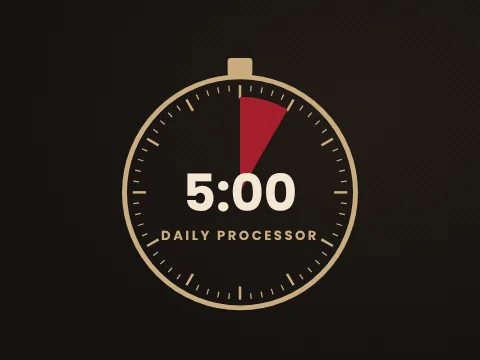
Here’s one practical short block. The times are coaching starting points, not a scientifically established prescription.
| Time | Work | Track |
|---|---|---|
| 3 min | Pitcher-video recognition and prediction | Correct calls |
| 4 min | Variable-speed timing with swing/take decisions | Good decisions |
| 4 min | Live or machine mixed-location hitting | Quality contact |
| 3 min | Review recognition errors, timing, decisions and contact | One fix for next time |
As the hitter improves, make the task more game-like rather than just making a screen flash faster. Track what matters: better pitch identification, fewer wasted swings, better timing, more consistent barrel accuracy and, eventually, better competitive at-bats. Technology can help build a skill. The ballfield is the final test. For a daily version, see The 5-Minute Daily Hitting Processor Plan.
9. Can you develop the CNS without hitting a ball?
Yes, some qualities improve with general training. Strength, coordination and balance can all be built away from the batter’s box, and pitch-recognition video may sharpen parts of anticipation.
But there’s a limit. Getting better at a light-board drill doesn’t prove you’ll hit a slider better. A higher score on a reaction-time app doesn’t guarantee a higher batting average. Transfer depends on how closely the information, decisions and movements look like the sport. That doesn’t make general training worthless. It means we have to be smart about what we expect it to do.
10. The mental side is connected, too
Every hitting coach has watched a kid look tremendous in BP and completely different in the game. Sometimes it’s mechanics. Sometimes the bigger problem is anticipation, uncertainty, attention or decision-making under pressure. The hitter gets tentative, rushes the forward move, chases and loses the ability to adjust.
Training under game-relevant challenge helps athletes learn to manage uncertainty, and a clear plan cuts down the decisions they feel forced to make at the plate. One of my favorite approaches:
Heater, Hanger, Kid.
Look for the heater in your attack zone. Be ready to adjust when you get the hanger. It’s a simple philosophy built on anticipation, timing, decisions and adjustability, and all of it depends on a well-trained athlete, not just a rehearsed swing.
Are we leaving a huge part of hitter development on the table?
I believe we are. Not because coaches ignore the nervous system. Every good hitting lesson already involves motor learning. It’s because we’ve separated swinging the bat from recognizing, deciding and adjusting to pitches. We build the move and hope the athlete figures out how to use it. Why not build both on purpose?
AHD’s 4 Pillars:
- The Swing: movement, sequence, bat path and adjustability.
- Athletic Development: strength, explosiveness, speed and power.
- The Hitting Processor: see it, recognize it, time it, decide and attack it.
- The Mental Approach: confidence, approach, focus and resilience.
The CNS isn’t a fifth pillar. It’s part of the biological system behind every one of them.
A quick science note
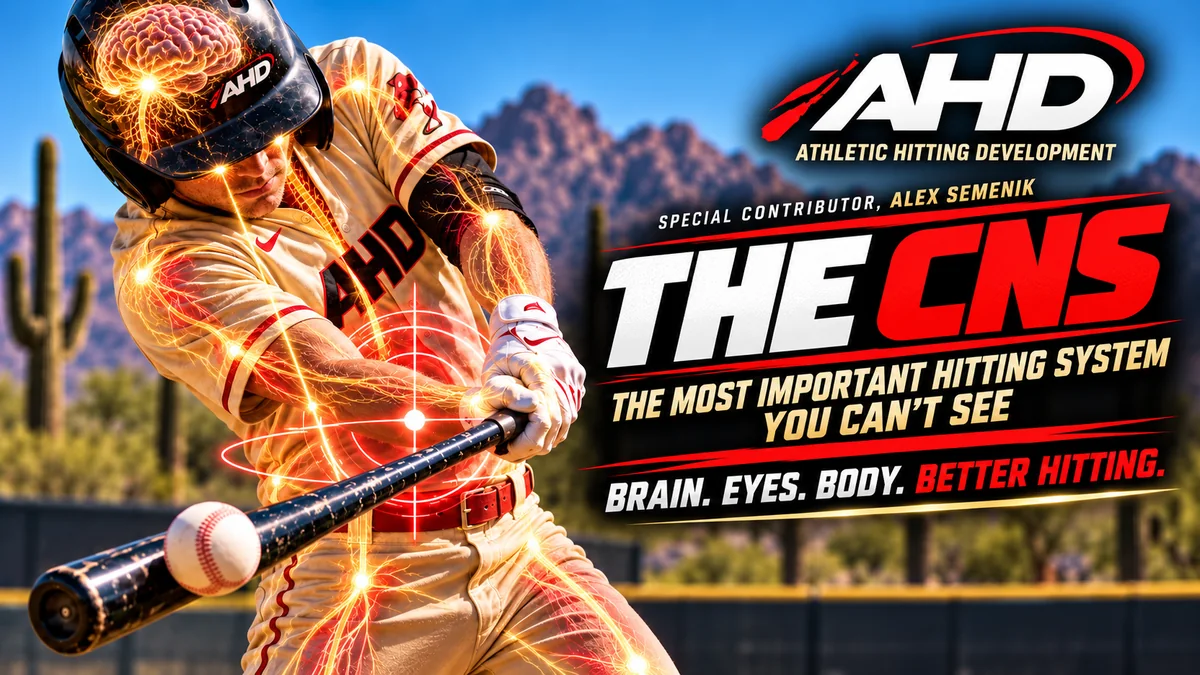
The brain and spinal cord make up the CNS. The nerves running through the rest of the body are the peripheral nervous system. The cover’s electrical imagery shows communication across the whole nervous system, not just the CNS.
Final thought: train the athlete, not just the swing
The question isn’t whether the central nervous system can be developed. We know motor learning and neural adaptation happen through training. The better questions: What are we training it to do? How do we know the athlete is improving? And does that improvement show up when a pitcher is trying to get him or her out?
I don’t want a hitter who just looks great taking swings. I want a hitter who recognizes pitches, produces force, controls the body, makes adjustments and keeps finding ways to put the barrel on the ball. That’s the development of a complete hitter.
Quick answers
Can you train the central nervous system for baseball and softball?
Yes. Neuroplasticity means the nervous system changes with practice. Repetition improves how movements are organized, strength training changes how muscles are recruited, and pitch-recognition work can improve anticipation. The goal is a more effective hitter, not just a faster signal.
Does pitch-recognition video training work?
Research on temporal occlusion training (video that stops early and asks for a prediction) shows real gains in anticipation, including some transfer to field tests. It is not a guarantee of better game stats, so connect it to live hitting.
Do reaction-time apps and light boards make better hitters?
Not by themselves. Getting better at a light board does not prove you will hit a slider better. Transfer depends on how closely the information, decisions and movements look like real hitting.
What is the Hitting Processor?
The Hitting Processor is AHD’s pillar for See It, Recognize It, Time It, Decide and Attack It. It trains the part of hitting that turns a great practice swing into a great game swing.
Is the CNS a fifth pillar of hitting?
No. The CNS is part of the biological system behind all four AHD pillars: the swing, athletic development, the Hitting Processor and the mental approach.
Sources: Müller, Morris-Binelli, Hambrick & Macnamara, Sports Medicine (2024) · Liu et al., Psychology of Sport and Exercise (2020) · Fadde, Frontiers in Psychology (2016) · Škarabot et al., European Journal of Applied Physiology (2021)
Don’t collect drills. Build a complete hitter.
Complete Hitters Aren’t Born. They’re Built… and Earned.
Alex Semenik is a special contributor to the AHD Backspin Blog.
This article is part of the AHD guide Pitch Recognition & Timing. Start there for the full picture and every related article.