By BK, Athletic Hitting Development
Complete Hitters Aren’t Born. They’re Built… and Earned.
Key takeaways
- Good extension goes toward the pitcher, not out in front of the body over the plate.
- The arms make a Power V through the ball, with the back palm still facing up.
- The wrists release first, like a golfer's, and roll over only after extension.
- Rolling the top hand at contact is what turns good pitches into weak ground balls.
Extension in the swing should go toward the pitcher, not out in front of your body over the plate. The arms extend into a Power V through the ball, the wrists release, and only then do the wrists roll over.
Extension should go toward the pitcher, not out over the plate. The arms make a Power V through the ball, the wrists release like a golfer's, and they roll over only after contact.
Train it: Swing Structure & Mechanics → Free tool: Contact Point Trainer →You hear it on every broadcast: "The big guys want to get their arms extended." True... and a circle is round. Every hitter wants extension. The problem is that most hitters chase it in the wrong DIRECTION.
I first wrote about extension in 2015, back when AHD was Krush Athletics. Read the 2015 original. This is how I teach it today.
1. Which way should a hitter extend?
Toward the pitcher. Picture the ball's path coming in, and your barrel driving back out along that same path through the ball.
When a hitter extends out in front of the body over the plate, the hands drift away from the body. That's casting. The barrel goes out over the plate, then has to get rolled back to find the ball. You get rollovers, 5-hoppers to short, and swings that hit the ball instead of driving through it.
Hit THROUGH the ball, not TO the ball.
EXTENSION
WHICHWAY?
- Toward the pitcher
- Not out over the plate
- Power V just past contact
- Back palm up
- Wrists roll AFTER
HIT THROUGH IT, NOT TO IT.
2. What is the Power V?
Just after contact, both arms straighten and make a V with the bat out front. That V is maximum extension. It means the hands drove through the ball toward the pitcher and the barrel stayed on the pitch's path as long as possible.
- Both elbows lock out just through contact, not before.
- The back palm stays up toward the sky as the back arm extends.
- The bat works like a sword. Think about cutting the ball in half, not slapping at it. That one cue takes the roll out for a lot of hitters.
AHD hitters build Mechanically Advantageous Angles (MAA) all the way through the swing, and the Power V is where those angles pay off: the most force going through the ball, in the right direction.
3. What is wrist release, and when should the wrists roll?
This is the part almost nobody teaches. Extension isn't only the arms. The wrists extend too.
Watch a good golfer. The wrists don't roll over at impact; they release. They load and unload side to side, and the club keeps accelerating until they finally roll well after the ball is gone. Hitters do the same thing. The wrists are the last hinge to unload, and the barrel keeps speeding up until they roll.
The wrists WILL roll over. That's fine. The key is that they roll after extension and wrist release, not at contact.
4. Why extension and wrist release matter
- Biggest margin for error. The barrel stays on the pitch's path longer, so mistimed swings still find the ball.
- More force. The hands and barrel deliver energy through the ball instead of around it.
- Cleaner contact. Fewer rollovers, fewer weak top-spin grounders.
- Better ball flight. Line drives and hard balls in the air instead of hooks and choppers.
One BKism says it best: "Get on the backside of one, baby!" Extension toward the pitcher is how the barrel gets behind the ball and drives through the back of it.
5. How to train extension
- Tee, opposite-field line drivesSet the tee slightly back in the zone and drive line drives the other way. Rolling shows up immediately.
- Freeze at the Power VSwing at 70% and hold the finish just past contact. Check: both arms long, back palm up, barrel pointing toward the pitcher.
- Cut it in halfTell yourself to cut the ball in half with the sword. Five swings with that thought, five without, and compare the ball flight.
- Film itShoot from the side and from behind. If the hands drift out over the plate before contact, the fix starts earlier than extension.
I describe the same move a few ways on purpose: Power V, sword, through the ball, toward the pitcher. If one doesn't click, another will. Coaches, do the same.
If extension still won't show up, run SwingChecker™. It usually points to the real cause, like casting or an early open front side. Then start Swing Structure Lesson 1 free.
THELESSON.
- Extension has a direction
- Power V through the ball
- Wrists release, then roll
- Sword, not slap
Complete Hitters Are Built…Earned.
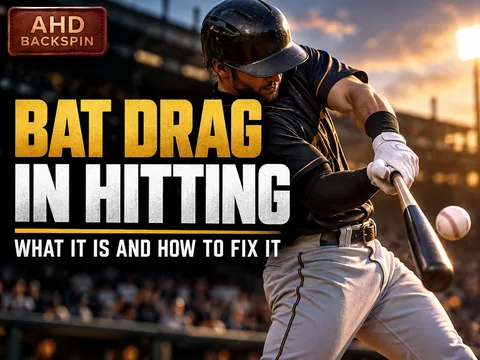
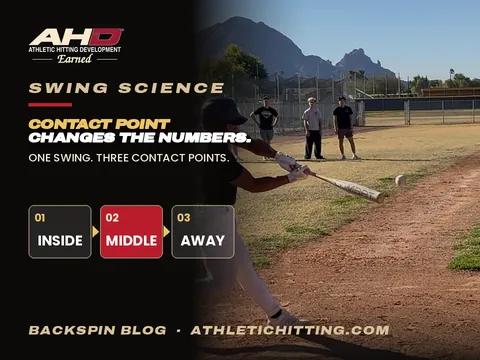
Want to go deeper? Read Bat Drag in Hitting: What It Is, Why It Happens and How to Fix It and Where Should a Hitter Make Contact? Your Contact Point Changes Your Swing Numbers.
Quick answers
Which direction should a hitter extend?
Toward the pitcher, along the path of the pitch. Extending out over the plate pulls the hands away from the body and causes casting and rolling over.
When should the wrists roll over in a swing?
After contact and after extension. The wrists release first, like a golfer's, and roll over later in the finish.
What is the Power V in hitting?
It's the V the two straight arms make with the bat just after contact. It shows the hitter drove the hands through the ball toward the pitcher.
Why does my hitter roll over so many ground balls?
Usually the top hand rolls at contact or the hands cast out over the plate first. Training extension toward the pitcher and wrist release fixes the roll.
Don’t collect drills. Build a complete hitter.
Complete Hitters Aren’t Born. They’re Built… and Earned.