By BK, Athletic Hitting Development
Complete Hitters Are Built… It’s Earned!
Key takeaways
- To hit a baseball, start in an athletic stance, load on time with the pitcher, see the ball out of his hand, swing the barrel on the plane of the pitch and make contact out in front with a balanced finish.
- Timing beats everything. A pretty swing that starts late is still a late swing, so the load has to be synced to the pitcher, not to the ball arriving.
- Good hitters see the ball early and decide fast; that Hitting Processor skill is trained DAILY, not just in games.
- Don’t collect drills. Find his top priority, fix that, then move to the next one.
To hit a baseball, get into an athletic stance, load in time with the pitcher, pick up the ball out of his hand, swing the barrel on the plane of the pitch and meet the ball out in front with a balanced finish. Those six steps, done in order and on time, are the whole job.
To hit a baseball, start in an athletic stance, load on time with the pitcher, see the ball out of his hand, swing the barrel on the plane of the pitch and make contact out in front with a balanced finish. Timing ties all six steps together.
Train it: Complete Hitter Masterclass →I’ve spent 52 years playing, coaching and scouting this game, and hitting is still the hardest thing in it. It’s simple. It’s just not easy.
This is the step-by-step version I give players from about 10 to 18 and the parents standing at the fence. Each step links to a deeper post when your hitter needs more on that piece.
1. What are the steps to hit a baseball?
Every good swing goes through the same order of events. The style changes from hitter to hitter. The order doesn’t.
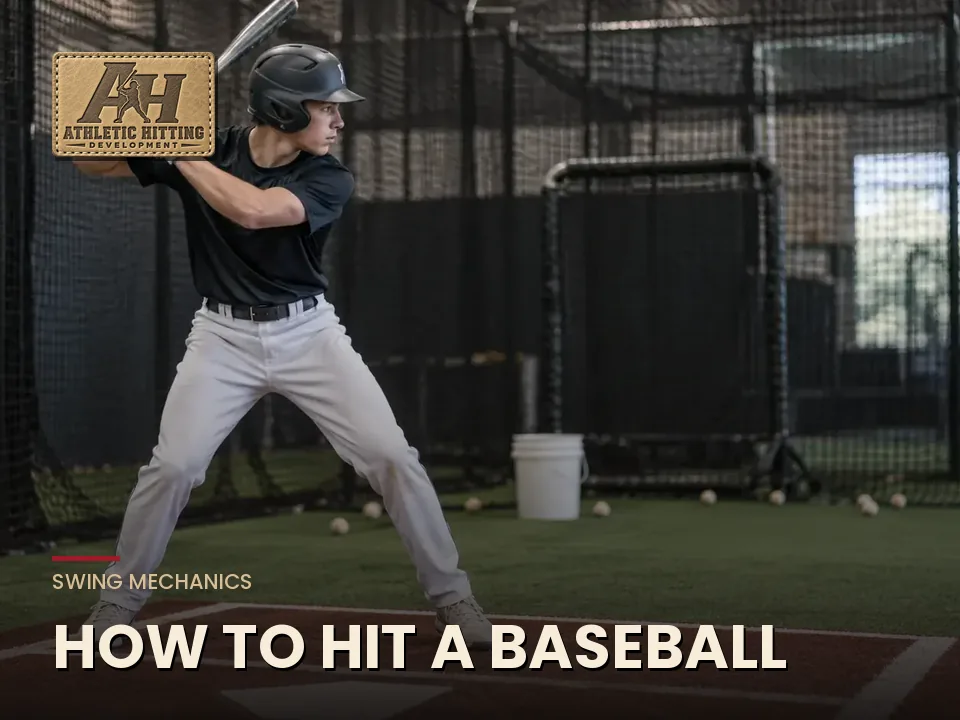
- Get into an athletic stance.Feet a little wider than the shoulders, knees soft, weight off the heels, hands near the back shoulder.
- Load and time it to the pitcher.Shift into the back side as the pitcher’s hands separate so he’s ready before the ball is.
- See the ball out of the hand.Eyes on the release window, so he picks up speed, spin and location early.
- Swing the barrel on the plane of the pitch.A short, direct path that matches the ball’s path instead of chopping down or scooping up.
- Make contact out in front.Contact point changes with location: deeper for the outside pitch, farther out front for the inside pitch.
- Finish balanced.A full turn, head still, able to hold the finish; if he falls over, something earlier went wrong.
When something breaks down, look one step EARLIER than the mistake you see. A pop-up is often a late load. A rolled-over grounder is often a head that left early. Parents usually chase the last thing that went wrong; coaches look for the first.
If the steps look basic, good. The players I’ve seen go furthest did these six things better and more consistently than everyone else. That’s it.
HOW TO HIT
SIX STEPS.IN ORDER.
- Athletic stance
- Load on time with the pitcher
- See it out of the hand
- Barrel on the pitch plane
- Contact out front, finish tall
SIMPLE. NOT EASY.
2. How should you stand and load to hit a baseball?
The stance has one job: let him move. It doesn’t have to look like anyone else’s. It has to be balanced, relaxed and ready to load. The full breakdown, including open vs closed and where to stand in the box, is in our baseball batting stance guide.
The load is the small move back into the rear leg and hands that stores energy. Timing is when that load starts. Most young hitters start too late, then rush everything after it. You’ll see it as a lunge, a head that jumps forward or a swing that’s always a tick behind the fastball.
My rule: start early, be ready early. Begin the load as the pitcher breaks his hands, and have the front foot down and the hands set before the ball is halfway. The stride can be a leg kick, a small step or a toe tap. There is no one perfect stride; there is a stride that gets him on time.
One more thing parents miss: the bat. If he can’t hold it still in his stance, it’s probably too heavy or too long. Check our baseball bat size chart before you change his swing.
3. How do you see the ball better when hitting?
“Watch the ball” isn’t enough. He needs to know WHERE to look. Before the pitch, soft eyes on the pitcher’s chest or hat. As the arm comes through, eyes move to the release window by his throwing-side ear.
Picking the ball up early buys time to decide. Is it a fastball, is it a strike, is it something spinning? That’s the Hitting Processor: see it, time it, decide, attack it. It’s one of the 4 Pillars of a Complete Hitter, and it has to be trained DAILY, not just in games.
You can’t hit what you see late.
Each pitch type asks something different. Start with how to hit a fastball, because everything else is timed off it. Then learn how to hit a changeup and how to hit a slider, and build a plan for when he’s behind with our two-strike approach.
4. What is the right swing path to hit a baseball?
The pitch comes in on a slight downward angle. The barrel should meet it on that same plane, a little early in the zone and stay there through contact. That gives him more room for error on timing.
A swing that chops straight down or scoops hard up only matches the ball at one point. Miss that point by a hair and it’s a pop-up or a roller. MLB’s Statcast calls the barrel’s vertical direction at contact the attack angle and lists 5° to 20° as the ideal range; for youth hitters, the plain-English version is “slightly up, through the ball.”
Good hitters get into strong positions that let the body do the work. At AHD we call them Mechanically Advantaged Angles (MAA), and every hitter we develop builds them. They let the barrel get on plane early and stay there.
Contact point: inside pitches are hit farther out front, outside pitches a little deeper, over the plate. Finish: a full turn with the back foot rotated and the head still. For more on squaring the ball up, read how to hit line drives. When he’s ready to drive it farther, see how to hit for power and our contact point lesson.
5. How should a young hitter practice hitting a baseball?
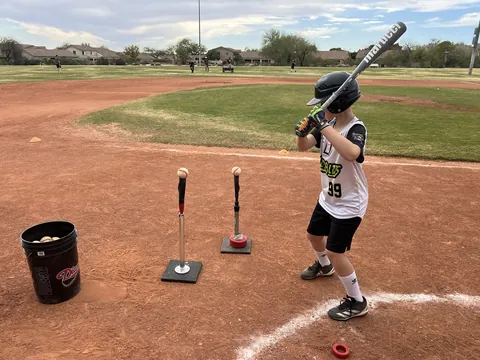
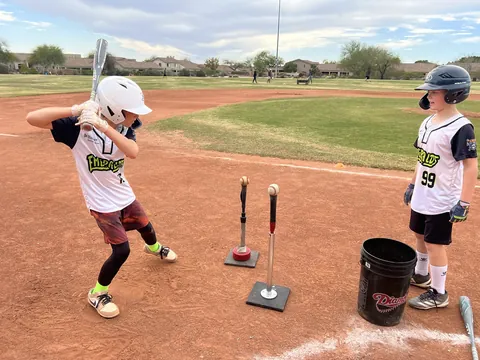
Short, daily, focused work beats one long weekend session. Ten to twenty minutes a day with a tee, some front toss and a phone to film is enough to build real habits. Our baseball hitting drills at home post gives a simple 15-minute plan.
What he works on should match his age and stage:
- Ages 8–10: balance, a simple stance, solid contact and having fun. See hitting drills for 8-year-olds and 10-year-olds. For parent-led lessons at these ages, our sister site 46/60 Academy is built for you.
- Ages 11–12: timing to the pitcher, a consistent load and a real contact point. See hitting drills for 12-year-olds.
- Ages 13–14: bat path, seeing spin and getting stronger as the field gets bigger. See hitting drills for 14-year-olds.
- Ages 15–18: pitch recognition, approach, strength and explosiveness, and owning a plan in every count.
Softball family too? The fastpitch version of this guide is How to Hit a Softball.
The fastest way to stop guessing is to know his #1 priority. The free SwingChecker takes about 3 minutes and ranks it across the 4 pillars. The Complete Hitter Masterclass builds all four pillars in 24 lessons, and if you want me watching his swings and game at-bats directly, that’s our online hitting instruction.

THELESSON.
- Start early, be ready early
- See it, time it, decide
- Match the plane of the pitch
- Fix his #1 priority first
Complete Hitters Are Built…Earned.
Want to go deeper? Read MAA: Mechanically Advantaged Angles and Baseball Hitting Drills at Home: A 15-Minute Daily Plan.
Quick answers
What is the most important part of hitting a baseball?
Timing. A good swing that starts late still loses, so the load has to be synced to the pitcher and the hitter has to be ready before the ball arrives. Seeing the ball early is what makes good timing possible.
How do you teach a kid to hit a baseball for the first time?
Start with a tee, a light bat and a simple stance, and focus on balance and solid contact. Keep sessions short and fun, then move to soft front toss once he can hit the tee consistently.
Should you keep your eye on the ball when hitting?
Yes, but the real skill is knowing where to look. Pick the ball up at the pitcher’s release point and track it as long as you can; the head should stay still through contact.
How long does it take to get good at hitting a baseball?
There’s no set timeline. Hitters who do short, focused work most days and fix one priority at a time improve much faster than hitters who only swing at practice.
Sources: MLB.com Statcast glossary: Attack Angle
Don’t collect drills. Build a complete hitter.
Complete Hitters Are Built… It’s Earned!