By BK, Athletic Hitting Development
Complete Hitters Are Built… It’s Earned!
Key takeaways
- To bunt in softball, set up early, hold the bat at the top of the zone with the barrel above the hands, and catch the ball with the bat.
- Pivot vs square: the pivot hides the bunt longer and keeps her balanced; the square is simpler but tips off the defense.
- Aim for zones, not the ball: a few feet inside the first- or third-base line, away from the charging corner.
- A bunt that goes foul on strike three is a strikeout, so with two strikes the bunt has to stay fair.
To bunt in softball, set up early, hold the bat out front at the top of the strike zone with the barrel slightly above the hands, and “catch” the ball with the bat so it dies on the ground toward a target away from the charging corners. Bend the knees for low pitches; don’t drop the barrel.
To bunt in softball, set up early, hold the bat at the top of the zone with the barrel above the hands, and catch the ball softly so it dies a few feet inside a foul line. With two strikes, a foul bunt is a strikeout.
Train it: Bunting & Small Ball →I coached high school and college softball in Arizona and Texas for 30 years. In fastpitch, the corners play close and charge hard, so a bunt that’s a little too firm or a little too late becomes a double play. A good bunt is a skill. It has to be practiced like one.
Here’s the grip, the setup, the four bunts every fastpitch hitter should know, where to aim and when to use them.
1. How do you hold the bat to bunt in softball?
The grip controls everything. The bottom hand stays near the knob with a loose grip. The top hand slides up toward the label and pinches the bat between the thumb and the side of the index finger, with the fingers BEHIND the bat so a pitch can’t catch them.
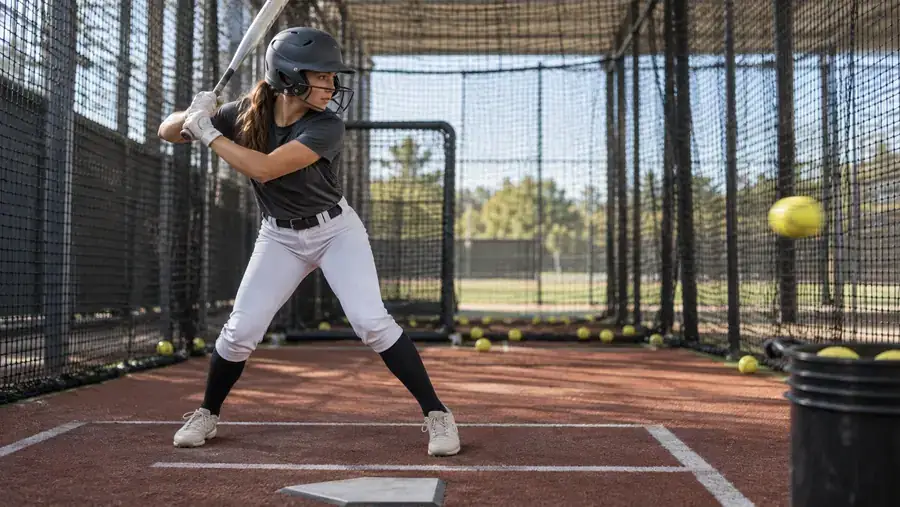
- Get the bat out front early.Arms comfortably extended, the bat in front of the plate so a bunt lands fair.
- Start at the top of the zone.Set the bat at the top of her strike zone; anything above it is a ball, so she pulls back and takes it.
- Barrel slightly above the hands.A slight upward angle keeps the ball off the top of the bat and on the ground.
- Use the legs for low pitches.Bend the knees to go down to the ball; dropping the barrel pops bunts up.
- Catch it with the bat.Soften the hands at contact so the ball dies in front of the plate instead of rolling to the fielder.
To take a pitch, pull the bat back and away from the ball. The rule books describe taking a pitch that way, and a bat left hanging over the plate invites a strike call. More on the rules below.
BUNTING BASICS
CATCH ITWITH THE BAT.
- Top hand up, fingers behind
- Bat at the top of the zone
- Barrel above the hands
- Knees bend, barrel stays
SET UP EARLY
2. Should you pivot or square around to bunt in softball?
There are two common setups for a sacrifice bunt. Both work. The pivot is my default for most hitters.
- Pivot. The feet stay in place and she turns on the balls of both feet so the hips and chest face the pitcher. It’s quick, it keeps her balanced and it hides the bunt a little longer.
- Square. She moves the back foot up so both feet face the pitcher. It’s easy to learn, but it shows the defense early and she can step on the plate or out of the box if she’s careless.
Whichever she uses, show the bunt early enough to get the bat in position before the pitch is released. Late setups produce rushed, stabbing bunts. Keep the eyes behind the bat, close to the barrel, so she sees the ball all the way in. Knees stay bent and the weight stays slightly forward, ready to go down for a low pitch or pull back from a high one.For younger kids, the step-by-step progression in How to Teach a Kid to Bunt is a good place to start.
3. What are the different types of bunts in softball?
| Bunt | What it is | When to use it |
|---|---|---|
| Sacrifice | She shows bunt early and gives herself up to move a runner | Runner on first or second, fewer than two outs, one run matters |
| Drag | She shows late and bunts for a hit, often while starting toward first | Corners playing back; she has speed |
| Push | A firmer bunt pushed past the pitcher toward the right side | First baseman charges hard and second base is slow to cover |
| Safety squeeze | Runner on third breaks only when the ball is bunted on the ground | Tight game, good bunter, runner who reads the ball well |
| Suicide squeeze | Runner on third breaks on the pitch; the hitter must get the bat on the ball | Coach wants the run now and trusts the bunter |
The drag and the slap bunt overlap a lot for left-side hitters. If she’s working on that, read Softball Slapping Basics, and if you’re deciding whether she should slap at all, see Should My Daughter Slap or Hit Away?
4. Where should you aim a bunt in softball?
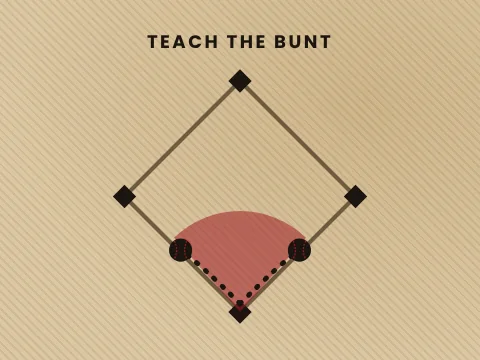
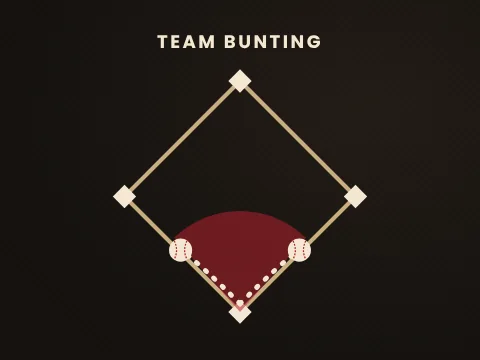
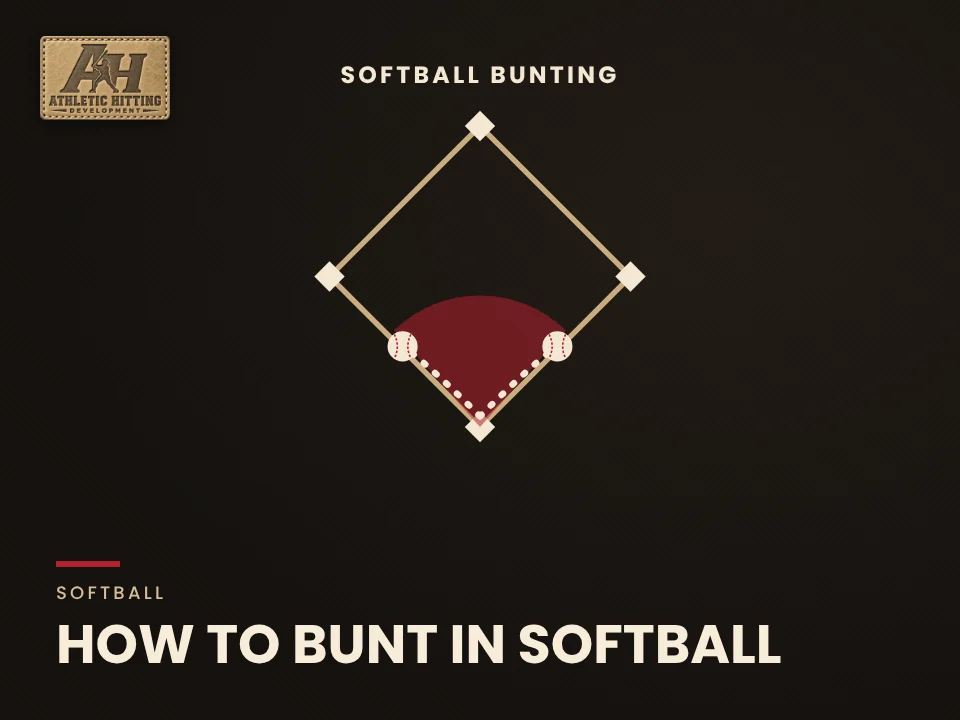
Aim for zones, not just “fair.” The best sacrifice bunts die a few feet inside the first-base or third-base line, about halfway to the bag. That forces a corner to field it on the move and throw across her body or turn.
- Third-base side: when the third baseman plays back or is slow to charge.
- First-base side: when the first baseman stays home to hold a runner or the pitcher falls off toward third.
- Past the pitcher (push): when both corners crash and the middle is open.
- Never back to the pitcher: a firm bunt right at her is the easiest force at second.
Aiming is done with the angle of the bat, not by swinging at the ball. For a righty bunting down the first-base line, the barrel points slightly toward third. Small angle changes move the ball a lot.
A great bunt is caught, not hit.
5. When should you bunt in softball, and what are the rules?
Bunt when one run matters more than a big inning, when the defense is giving her the bunt, or when her speed makes the bunt a hit. Don’t bunt just because she’s struggling. That’s a swing problem, and bunting won’t fix it.
Know these rules before she squares around:
- A foul bunt on strike three is a strikeout. With two strikes, a bunt has to stay fair. That’s why most coaches take the bunt off with two strikes; see our softball two strike approach.
- To take a pitch, pull the bat back and away. USA Softball and NCAA definitions say the bat must be withdrawn to take a pitch. Leaving it over the plate invites a strike call, and levels handle it a little differently.
- Stay in the box. Hitting the ball with a foot completely outside the box is an out in USA Softball and NFHS play, and NCAA is stricter.
Bunting belongs to a complete hitter. AHD hitters build Mechanically Advantaged Angles (MAA) in the full swing, and the same bat control shows up in the bunt. Run the free SwingChecker to see her top priority, get softball coaching through Online Softball Hitting Lessons, and drill every bunt with the Bunting & Small Ball course. Coaches can run the scored game in Team Bunting Practice. When she’s ready to swing away, start with How to Hit a Softball.
THELESSON.
- Pivot hides it longer
- Aim inside the lines
- Never back to the pitcher
- No foul bunt on strike 3
Complete Hitters Are Built…Earned.
Want to go deeper? Read How to Teach a Kid to Bunt: A Step-by-Step Guide and Team Bunting Practice: Drills and a Scored Game for Coaches.
Quick answers
Is it a strike if you pull the bat back on a bunt in softball?
If she pulls the bat back and away from the ball and the pitch is out of the zone, it’s a ball. Leaving the bat over the plate can be ruled a bunt attempt and a strike, depending on the level.
Can you bunt with two strikes in softball?
Yes, but if the bunt goes foul on strike three, the batter is out. That’s why most coaches only bunt with two strikes when they’re confident it will stay fair.
What is the difference between a drag bunt and a sacrifice bunt?
A sacrifice bunt is shown early to move a runner, and the hitter expects to be out. A drag bunt is shown late and is meant to be a hit, usually by a fast hitter.
How do you practice bunting at home?
Use soft toss or a partner tossing from 15 to 20 feet. Place targets a few feet inside each line and score points for bunts that stop in the zone.
Sources: USA Softball: 2026 Rule Differences (USA Softball, NCAA, NFHS) — bunt definitions, taking a pitch, batter’s box · Referee.com: Watch the Hands, Please (bunt vs swing ruling; foul bunt on a third strike)
Don’t collect drills. Build a complete hitter.
Complete Hitters Are Built… It’s Earned!
This article is part of the AHD guide Fastpitch Softball Hitting. Start there for the full picture and every related article.