By BK, Athletic Hitting Development
Complete Hitters Are Built… It’s Earned!
Key takeaways
- A softball two strike approach widens the zone a little, shortens the swing a little and expects the pitcher’s out pitch.
- With two strikes most pitchers go to their put-away pitch: a rise ball up, a drop ball down, or a changeup to steal timing.
- Battle, don’t panic. Fouling off a tough pitch is a win; it buys another look at a mistake.
- Don’t overhaul the swing with two strikes. If her swing and zone are already sound, the change should be small.
A good softball two strike approach widens the zone a little, shortens the swing a little and looks for the pitcher’s out pitch, so the hitter can put the ball in play hard or foul off the tough one. The swing doesn’t get rebuilt with two strikes. The plan does.
A softball two strike approach means widening the zone slightly, choking up or shortening the swing, and expecting the pitcher’s out pitch, usually a rise ball up or a drop ball down. The goal is to battle: hit it hard or foul off the tough pitch and wait for a mistake.
Train it: Mental Approach →I coached high school and college softball in Arizona and Texas for 30 years. The hitters who won the most at-bats weren’t always the most talented. They were the ones who stayed dangerous at 0-2.
Here’s what changes with two strikes, what pitch is coming, how to battle, and when a hitter shouldn’t change much at all.
1. What is a two strike approach in softball?
A two strike approach is a small, planned adjustment a hitter makes once she has two strikes. Early in the count she’s hunting one pitch in one zone. With two strikes she can’t afford to take a borderline strike, so she protects the plate.
The pitcher’s plan changes too. Ahead in the count, she stops throwing strikes she has to and starts throwing the pitch she wants the hitter to chase. In fastpitch that pitch usually starts like a strike and ends somewhere the barrel can’t reach well.
And the clock is short. From 43 feet, a 70 mph pitch gives a hitter roughly the reaction time of a mid-90s baseball fastball. There’s no time to figure it out after the ball is out of the hand. The plan has to be set before the pitch.
Ahead in the count she hunts. With two strikes she battles.
2. How should a softball hitter adjust with two strikes?
Keep it to a few simple changes she can make in the time between pitches. Here’s the order I teach it:
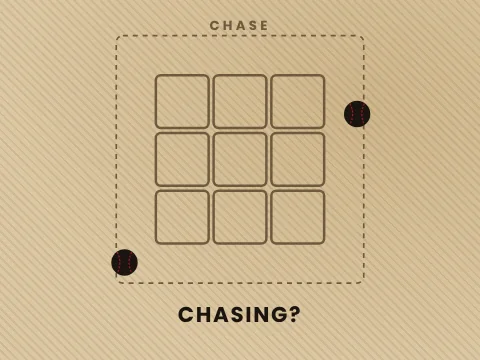
- Widen the zone a little.Expand about a ball width on the edges she struggles with, not a foot in every direction; she still takes pitches that are clearly balls.
- Choke up or shorten the swing.Slide the hands up an inch or two or get the load started a touch earlier so the barrel gets to the ball with less margin for error.
- Look middle, react to the edges.Eyes on the middle of the plate and middle of the field; a hitter who looks middle can still adjust to the inside or outside pitch.
- Expect her out pitch.Know what this pitcher went to with two strikes the first time through and set the eyes for it.
- Swing to hit it hard, not to make contact.Short is not soft; a defensive poke turns into weak ground balls and pop-ups.
Notice what’s not on that list: a new stance, a new stride or a new swing. If you want the timing piece in depth, read How to Time a Fastpitch Pitcher, and for velocity, How to Hit Fast Pitching in Softball.
3. What pitch will a softball pitcher throw with two strikes?
Every pitcher is different, but most go to the same few put-away pitches. Simple rule I give hitters: the out pitch usually goes UP or DOWN.
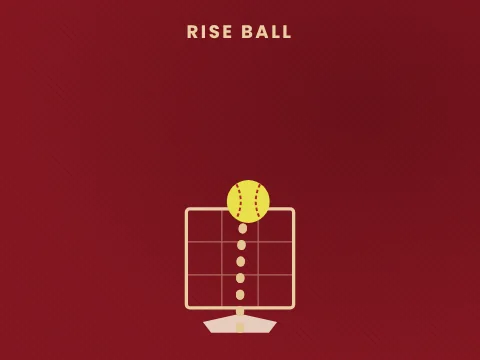
- Rise ball up. Softball pitches are released low, so a rise ball can genuinely travel up through the zone. It carries more backspin and drops less than she expects. With two strikes, lay off anything starting at the hands or higher. More in How to Hit a Rise Ball.
- Drop ball down. It has topspin and is thrown down through the zone. Hitters who chase it beat it into the ground. Set the eyes at the knees and let the low one go. More in How to Hit a Drop Ball.
- Changeup to steal timing. Same arm action, less speed. Stay loaded and let it travel. See How to Hit a Changeup in Softball.
- Curve or screw away and in. Movement off the edge of the plate. See How to Hit a Curveball in Softball.
The trap with two strikes isn’t usually the strike she takes. It’s the ball she chases. A pitcher who knows a hitter will expand everywhere just throws further off the plate.
TWO STRIKES
BATTLE.DON’T PANIC.
- Widen the zone a little
- Choke up or start early
- Look middle of the field
- Expect the out pitch
SHORT IS NOT SOFT
4. How do you foul off pitches and battle with two strikes?
Battling means making the pitcher throw one more pitch, and then one more. Every extra pitch is another look at her stuff and another chance she misses over the middle.
Hitters don’t really aim foul balls. A foul ball with two strikes is what happens when a hitter is a little late or a little off on a tough pitch but stays on it and gets a piece. That comes from a short, on-time swing and a clear zone, not from trying to tick it back.
One warning: don’t try to bunt it foul to stay alive. In softball, a bunt that goes foul on strike three is a strikeout. If a bunt is called with two strikes, it has to be fair. See How to Bunt in Softball for when that call makes sense.
The mindset matters as much as the mechanics. A scared two-strike hitter gets tight, gets late and chases. A competitive one breathes, simplifies and wants the next pitch. The hitters I trusted most with two strikes also had the swing to back it up: AHD hitters build Mechanically Advantaged Angles (MAA), so a shorter swing is still a strong one. If she tightens up in the box, start with a breathing routine between pitches.
A foul ball with two strikes is a small win.
5. When should a hitter NOT change much with two strikes?
Here’s the honest part. Some hitters shouldn’t change much at all.
- Her swing is already short and her zone is good. Then the two-strike adjustment is mostly mental: same swing, slightly wider zone.
- She’s young. At 10U and younger, teaching a separate “defensive” swing usually costs more than it gains. Teach the zone and a good swing first.
- She chases already. Telling a chaser to “protect” makes it worse. Her two-strike work is learning the zone, not expanding it.
- She’s a slapper or a gap hitter with a sound swing. Keep the same tool. Changing her whole approach makes her easier to pitch to.
If her two-strike at-bats fall apart, the cause is often somewhere else: timing, pitch recognition or a swing that’s too long to begin with. The free SwingChecker takes about 3 minutes and ranks her top priority across the 4 pillars. If timing is the issue, How to Hit a Softball covers the basics.
To practice it, play a two-strike game: every round of front toss or live starts 0-2, and she earns another round only by putting the ball in play hard or taking the pitch out of the zone. Build the plan and routine behind it with our Mental Approach course, or get softball-specific coaching through Online Softball Hitting Lessons.
THELESSON.
- Same swing, new plan
- Out pitch goes up or down
- Fouls buy another look
- Never bunt foul on strike 3
Complete Hitters Are Built…Earned.
Want to go deeper? Read How to Hit a Rise Ball in Fastpitch Softball and How to Hit a Drop Ball in Fastpitch Softball.
Quick answers
Should you choke up with two strikes in softball?
Choking up an inch or two is a simple way to shorten the swing and gain a little control with two strikes. If she already has a short swing, she may not need it.
Is a foul bunt with two strikes an out in softball?
Yes. If a batter bunts the ball foul on strike three, she is out. With two strikes, a bunt has to stay fair.
How do you stop chasing with two strikes?
Know what the pitcher’s out pitch is and set the eyes for it, usually up for the rise ball or down for the drop. Expand the zone a little, not everywhere, and train it with 0-2 rounds in practice.
What is a good two strike drill for softball?
Start every round of front toss or live pitching at 0-2. She earns the next round only by hitting the ball hard or taking a pitch out of the zone, which trains decisions and compete level together.
Sources: Referee.com: Watch the Hands, Please (softball bunt ruling on a third-strike foul)
Don’t collect drills. Build a complete hitter.
Complete Hitters Are Built… It’s Earned!
This article is part of the AHD guide Fastpitch Softball Hitting. Start there for the full picture and every related article.