By BK, Athletic Hitting Development
Complete Hitters Are Built… It’s Earned!
Key takeaways
- To hit a softball, a hitter needs an athletic stance, a load timed to the pitcher’s windmill, a clear look at the release, a direct swing path, contact out in front and a balanced finish.
- Timing starts with the pitcher, not the ball: she loads as the arm circle starts and is ready to launch as the ball leaves the hip.
- The pitch is released low and only 43 feet away from 14U up, so seeing the release and matching the pitch plane matter more than a pretty swing.
- Hitting is a system: the swing, strength, the Hitting Processor and the mental approach all have to be trained, not just the mechanics.
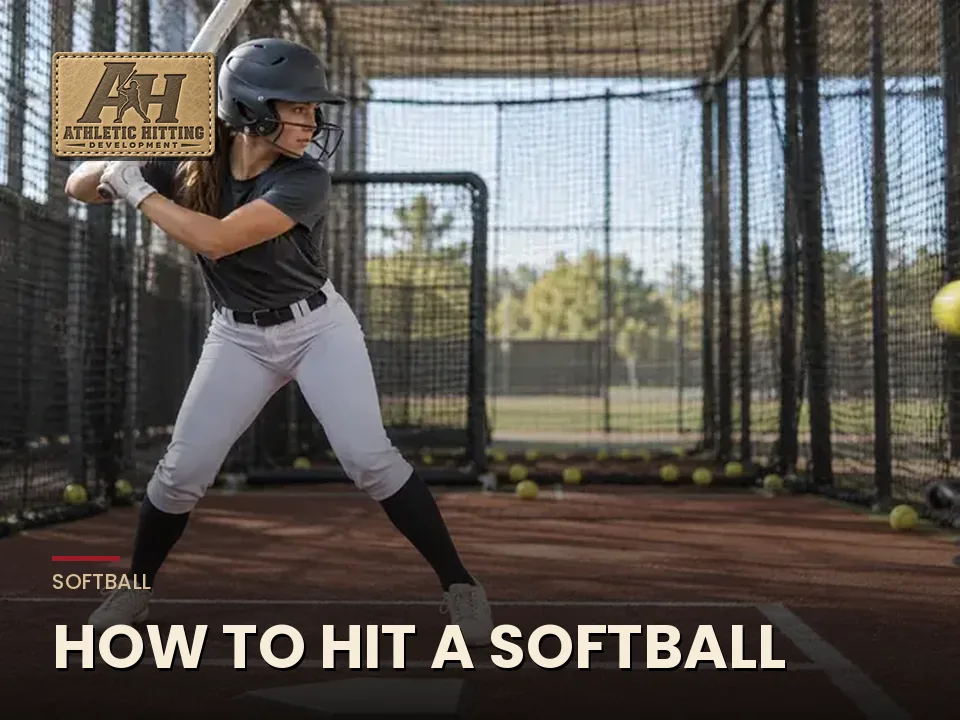
To hit a softball, set up in an athletic stance, load as the pitcher’s arm starts its circle, see the ball out of her hip, swing on a direct path that matches the pitch, make contact out in front and finish in balance. That’s the whole job in six steps; the work is doing all six on time against a pitch that gets on her fast.
To hit a softball, set up in an athletic stance, load as the pitcher’s arm starts its circle, see the ball out of her hip, swing on a direct path that matches the pitch, make contact out in front and finish in balance.
Train it: Complete Hitter Masterclass →I coached high school and college softball in Arizona and Texas for 30 years. The hitters who struggled almost never lacked effort. They were missing one or two of these steps and nobody had told them which.
This is the pillar guide. Each step below links to a deeper post when she’s ready for more. Parents: you don’t need to be a hitting coach to use it. You just need to know what to look for.
1. How do you hit a softball, step by step?
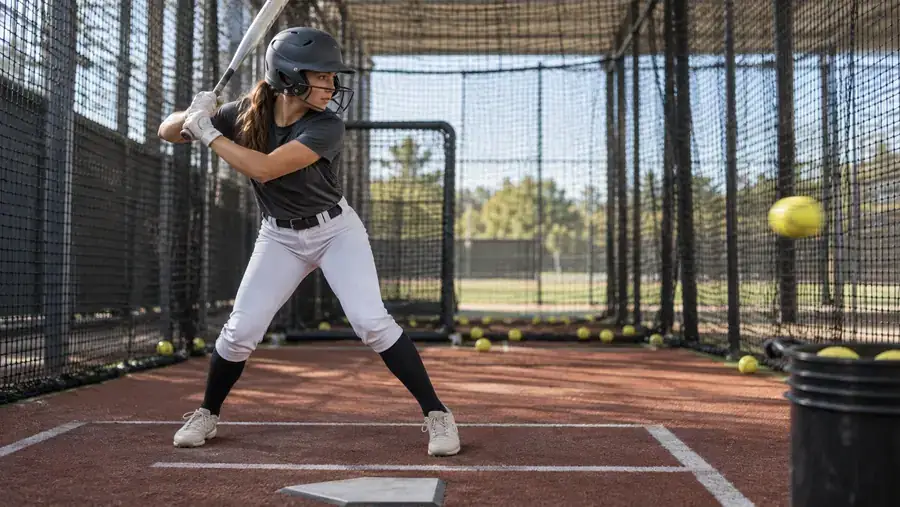
Here is how to hit a softball in the order the body actually does it. Every step sets up the next one. If step two is late, steps three through six are rushed.
- Stance: set up so she can move.Feet a little wider than shoulders, knees soft, weight on the balls of the feet, hands relaxed near the back shoulder.
- Load: gather on time with the windmill.As the pitcher’s arm starts its circle, she shifts slightly into her back side and the hands move back to get ready.
- See it: lock eyes on the release.The ball comes out by the pitcher’s hip; her eyes should be there before the ball is, not on the glove or the plate.
- Swing path: get the barrel on the pitch plane.The back elbow works down and in, the hands stay inside the ball and the barrel enters the hitting zone early and stays there.
- Contact: hit it out in front.Contact happens in front of the body with the front leg athletic, the head still and the barrel behind the ball.
- Finish: stay balanced through the ball.The barrel keeps going through the middle of the field and she finishes on her feet, not falling off to one side.
Parents, here’s what to watch from the stands. Is she ready before the ball is released, or is she still getting set? Does her head stay quiet at contact? Does she finish on her feet? Those three checks tell you more than any batting average over a weekend.
Step one gets its own post: Softball Batting Stance: Setup That Lets Her Move. The rest of this guide covers what parents ask about most.
2. When should a softball hitter start her load?
Most young hitters start too late. They wait for the ball, then try to load and swing all at once. Against a 10U pitcher that might work. Against a good 14U pitcher it won’t.
Under USA Softball rules, girls pitch from 35 feet at 10U, 40 feet at 12U and 43 feet from 14U through 18U. College is also 43 feet. Every step up shortens her time to react, so the load has to start off the pitcher’s motion, not off the ball.
Start early. Get ready. Then decide.
A good load is small. A slight shift into the back hip, the hands drifting back a few inches, the front side staying closed. It is not a big leg kick or a hitch with the hands. Big moves are hard to repeat, and they eat the time she doesn’t have.
The simple version: she begins the load as the arm circle starts and is in her ready, launch-able position as the ball leaves the hip. Early and slow beats late and rushed every time. For a full breakdown of reading the windmill, see How to Time a Fastpitch Pitcher. When the velocity jumps, How to Hit Fast Pitching in Softball goes deeper.
HOW TO HIT A SOFTBALL
SIX STEPS.IN ORDER.
- Athletic stance
- Load with the arm circle
- Eyes on the hip release
- Barrel on the pitch plane
- Contact out front, finish
EARLY AND SLOW BEATS LATE
3. How can she see the softball better?
Seeing the ball isn’t just “watch the ball.” It’s knowing WHERE to look and WHEN. A softball pitch is released low, near the pitcher’s hip, and travels to the plate on its own plane. If her eyes are parked on the pitcher’s face or chest, she finds the ball late.
- Soft focus on the pitcher, hard focus on the release. Relaxed eyes during the windup, sharp eyes at the hip.
- Keep the head still through contact. A head that pulls off the ball takes the eyes with it.
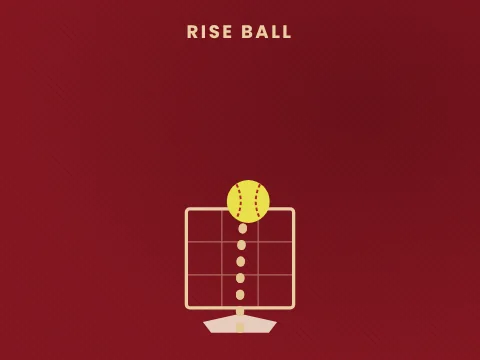
- Learn the spin. A rise ball and a drop ball leave the hand looking alike for a moment, then go opposite ways.
This is the Hitting Processor: see it, time it, decide, attack it. It has to be trained DAILY, the same as the swing. Our posts on how to hit a rise ball, how to hit a drop ball and how to hit a curveball in softball cover each pitch. For eye work without a bat, see Perceptual Training for Softball Hitters.
4. What is the right swing path for fastpitch?
The right swing path is the one that gets the barrel on the plane of the pitch early and keeps it there. Because the ball is released low and comes in on a flatter or rising line, a swing that chops straight down at it misses under it, and a long, looping swing is late.
What I look for: the hands stay close and inside the ball, the back elbow slots down toward the side, and the barrel turns behind the ball instead of pushing at it. Contact is out in front of the front hip on an inside pitch and deeper on an outside pitch.
Good hitters share positions, not identical swings. AHD hitters build what I call Mechanically Advantaged Angles (MAA): body and bat angles that let them deliver the barrel with speed and control. You can read more about MAA here.
The three swing-path mistakes I see most in young fastpitch hitters: casting the hands away from the body, which makes the swing long and slow; dropping the back shoulder to “lift” the ball, which leaves the barrel under the pitch; and pulling the front shoulder open early, which drags the barrel across the ball instead of through it. All three show up clearly on side-view video in slow motion.
Some of this is the same as baseball and some isn’t. If she plays both, or just switched, read Softball vs Baseball Swing: What’s the Same and What Changes. When she’s making solid contact and wants more carry, How to Hit a Softball Farther is the next step.
5. How should a young softball player practice hitting?
Don’t collect drills. Build a complete hitter. A 15–20 minute daily session beats a two-hour Saturday. Here’s how I’d set it up by age.
| Age | Main focus | Daily work |
|---|---|---|
| 10U–12U | Stance, load timing, contact out front | Tee and front toss, 30–50 quality swings |
| 13U–14U | Timing to 43 feet, seeing spin | Front toss with mixed speeds, live arm when possible |
| 15U–18U | Pitch plane, decisions, power | Live pitching, approach work, strength training |
Check the gear too. A bat that is too long or heavy ruins timing; use our softball bat size chart. For home work, Softball Hitting Drills at Home has a plan. As she gets older, add strength training for softball hitters, a real two-strike approach, and short-game tools like bunting. If she has speed from the left side, read Slap or Hit Away? before anyone switches her.
Not sure where to start? Run the free SwingChecker. It takes about three minutes and ranks her top priority across the 4 pillars. For coaching built for fastpitch, see our Online Fastpitch Softball Lessons. And if you want the whole system in one place, the Complete Hitter Masterclass covers all four pillars in 24 lessons, with Lessons 1–3 free.
THELESSON.
- Time the pitcher, not the ball
- See the release at the hip
- Match the pitch plane
- Train all 4 pillars daily
Complete Hitters Are Built…Earned.
Want to go deeper? Read Softball Hitting Drills at Home (No Cage Needed) and How to Hit a Rise Ball in Fastpitch Softball.
Quick answers
What is the most important thing in hitting a softball?
Timing. A hitter with a good swing who is late will still miss or foul it off. Start the load with the pitcher’s arm circle so she is ready before the ball arrives.
How do you hit a softball harder?
Make contact out in front with the barrel on the plane of the pitch, then build bat speed through strength training and quality swings. A bat she can control matters more than a heavier bat.
Why does my daughter keep popping up in softball?
Pop-ups usually come from being late, dropping the back shoulder, or swinging under a pitch that rides higher than expected, like a rise ball. Film her from the side to see which one it is.
How many swings a day should a softball player take?
For most 10U to 14U hitters, 30 to 50 focused swings a day beats hundreds of tired ones. Quality and consistency matter more than volume.
Sources: USA Softball: 2026 Rule Differences (USA Softball, NCAA, NFHS) — pitching distances · USA Softball: Junior Olympic Program
Don’t collect drills. Build a complete hitter.
Complete Hitters Are Built… It’s Earned!
This article is part of the AHD guide Fastpitch Softball Hitting. Start there for the full picture and every related article.