
By BK, Athletic Hitting Development
Complete Hitters Aren’t Born. They’re Built… and Earned.
Key takeaways
- Reading the release starts before the pitch: find the arm slot and the release window during the windup, not after the ball is out.
- At release you can see the slot, the hand, early spin and the first piece of the ball’s path. You are collecting clues, not reading minds.
- Tipping cues are worth watching, but treat them as hints, not guarantees. Your plan still has to handle the heater AND the hanger.
- Release reading is a skill you train DAILY, a few minutes at a time, then test against live arms.
To read a pitcher’s release, find his arm slot and release window before he throws, keep your eyes soft on that spot, and lock in hard at release to pick up the slot, the hand and the first few feet of the ball. The earlier you see it, the sooner you can decide.
Find the pitcher's arm slot and release window before you step in, keep a soft focus on him during the windup, and lock in hard on the release spot. At release, read the slot, the hand, early spin and the first few feet of the ball, then decide.
Train it: Hitting Processor → Free tool: Tunnel Read →Every hitter has heard “see the ball out of the hand.” Few have been taught HOW. Most kids stare at the pitcher’s face or the glove, then try to find the ball after it’s already on its way. That’s late, and late hitters guess.
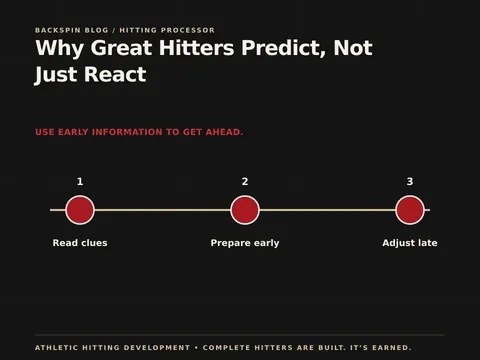
Here’s how I teach it. It’s the first step of our Hitting Processor: See It → Recognize It → Time It → Decide → Attack It. If you don’t see it early, the rest of the chain runs out of time.
1. Step one: find the release window before he throws
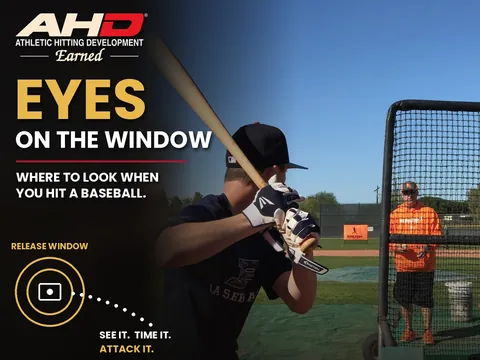
Your read doesn’t start at release. It starts on the first pitch you watch from the dugout or on deck. Where does his hand come out? High three-quarters? Low three-quarters? Sidearm? That spot is his release window, and it’s where your eyes need to be waiting.
I want hitters to have the slot picked out before they ever step in. On deck, time his delivery and look at his hand, not his face. Ask yourself one question: where does the ball appear?
In the box, keep a soft focus on the general area of the pitcher, then narrow it to that window as he gets to his release. If you want the full breakdown of where the eyes go and when, read what to look at when hitting a baseball.
If you don’t know where the ball will appear, you can’t see it early.
2. What can you actually read at release?
Let’s be honest about this. You are not reading the pitcher’s mind. You’re collecting clues in a tiny window of time and turning them into a better decision. Here’s what’s available:
- The arm slot. Is this pitch coming from the same slot as his fastball? A changed slot can be a clue.
- The hand and wrist. Behind the ball and driving through, or turning to the side? Coaches call it a “karate chop” look on some breaking balls.
- Early spin. Some pitches show a dot or a blur of seams. You won’t see it every time, and that’s okay.
- The first few feet of the path. A pitch that pops up out of the hand or starts on a different line than his heater is giving you information.
- Arm speed vs. ball speed. Same arm speed, slower ball out of the hand? Think changeup.
AT RELEASE
READTHE HAND.
- The arm slot
- The hand and wrist
- Early spin
- The first few feet of path
- Arm speed vs. ball speed
CLUES, NOT GUARANTEES
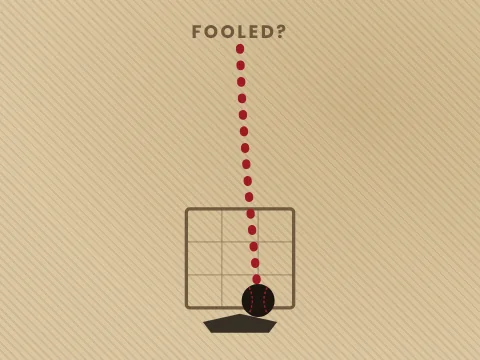
None of these is a guarantee. Good pitchers work hard to make everything look the same out of the hand. That’s why we train recognition and timing together. Read more on that in why hitters get fooled by off-speed.
3. Does the pitcher tip his pitches?
Sometimes. In my experience coaching and scouting, younger pitchers especially give little hints: a different glove position, a slower windup on the breaking ball, a wrist that wraps early, a grip you can see in the glove.
Watch for them from the dugout. Share them with your teammates. But here’s my rule: a tip is a hint, not a plan. If you sell out for the curveball because you THINK you saw something, and he throws a heater, you’re done. Your approach still has to handle the heater or the hanger.
4. A pre-pitch routine to find the slot every time
- On deckTime his delivery with your own load. Find where the ball appears and lock in that window.
- Step inGet set, breathe, and pick your soft-focus spot: the pitcher’s general area, not the catcher or the crowd.
- As he startsLet your eyes settle quiet and still. No big head movement.
- As he gets to releaseNarrow to the release window. Hard focus on the hand as the ball appears.
- Ball outTrack the first few feet: slot, spin, path. Then decide.
Do it the same way every pitch. Routine is what makes the read show up under pressure.
5. 4 drills to train the release read
Don’t collect drills. Build a complete hitter. These four go straight at the release read, and each one should be part of a plan:
- Slot call (no swing)Stand in against live throwing or a bullpen. Before the ball crosses, call the arm slot out loud: high, three-quarter, low. 10–15 pitches.
- Hand callA partner holds a ball in a fastball or breaking-ball grip and shows it to you from the release spot for a split second. Call it. Then do it with a real throw from short distance. 15 reps.
- Heater or hangerFront toss or short-distance throwing with two pitch types mixed. Call it the instant you recognize it, before you swing. Track how many you get right.
- Release window freezeFrom a bullpen or video of a pitcher, pause at release and name the slot, hand position and expected pitch. Then play it and check yourself.
Want a quick, free way to start? Try the Tunnel Read and Guess the Pitch games in the Player Lab, then take it to live arms.
6. How reading the release ties to timing
Seeing the ball early only matters if you use it. The read buys you time to decide. Timing is what lets you act on the decision. If your load is late, the best read in the world won’t save you.
That’s why our Processor work trains them together, every day: see it, recognize it, time it, decide, attack it. A few minutes DAILY beats an hour once a week. If you want to know whether the Processor is your hitter’s top priority, run the free SwingChecker™.
Ready to train it with a plan? Start Hitting Processor Lesson 1 free, and if spin is what’s beating you, the Off-Speed course is the next step.

THELESSON.
- Find the slot on deck
- Soft focus, then hard at release
- Tips are hints, not plans
- Train it DAILY
Complete Hitters Are Built…Earned.
See it early, decide sooner, and attack. It’s a great day to hit!!
Want to go deeper? Read What Should You Look at When Hitting a Baseball? and Why Your Hitter Gets Fooled by Changeups and Curveballs.
Quick answers
How do you pick up the ball out of the pitcher's hand?
Find his release window before you step in, keep a soft focus on the pitcher as he winds up, then narrow your eyes to the release spot as his hand comes through. Track the first few feet of the ball and decide.
Can you tell what pitch is coming from the release?
Sometimes. The arm slot, hand position, early spin and the first part of the ball's path can all be clues. Good pitchers try to make everything look the same, so treat these as clues, not guarantees.
Where should a hitter look before the pitch?
At the pitcher's general area with soft focus, then narrow to the release window as he gets to release. Don't stare at his face or glove the whole time.
How do I practice reading a pitcher's release?
Use short daily reps: call the arm slot and pitch type out loud during bullpens or front toss, pause video at release to name what you see, and play recognition games, then test it against live pitching.
Don’t collect drills. Build a complete hitter.
Complete Hitters Aren’t Born. They’re Built… and Earned.