By BK, Athletic Hitting Development
Complete Hitters Are Built… It’s Earned!
Key takeaways
- To time a fastpitch pitcher, start the load early off the windmill, usually when the pitcher’s hands separate, so she is loaded and ready before the ball is released.
- Gear to the fastball. Be on time for the hardest pitch and adjust to slower pitches, never the other way around.
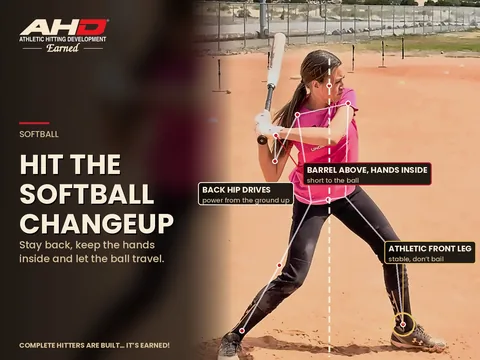
- Against a changeup, keep the same early start and let the front side and hands wait; don’t start late to guess on it.
- Timing is a skill you train daily with rhythm drills and live looks, not something a hitter is born with or without.
To time a fastpitch pitcher, start your load early off the windmill, on a cue like the pitcher’s hands separating, so you are loaded, balanced and ready to swing before the ball leaves her hand. Gear your timing to her fastball and adjust to slower pitches from there.
To time a fastpitch pitcher, start your load when her hands separate at the start of the windmill so you are loaded and landed before release. Gear your timing to the fastball, keep the same start every pitch, and adjust to slower pitches after you read them.
Train it: Hitting Processor →I coached high school and college softball in Arizona and Texas for 30 years. The most common hitting problem I saw wasn’t the swing. It was the start. Good swings showed up late, every time.
Softball hitting timing is its own animal. Here’s when to start, how to stay on time for the fastball, how to adjust to the change, and the rhythm drills I’d use to build it.
1. Why is softball hitting timing so different from baseball?
Distance and delivery. High school varsity softball moved its pitching distance to 43 feet, and the windmill hides a lot. The arm circle is fast, the release is low by the hip, and the stride takes the pitcher closer to the plate before she lets go.
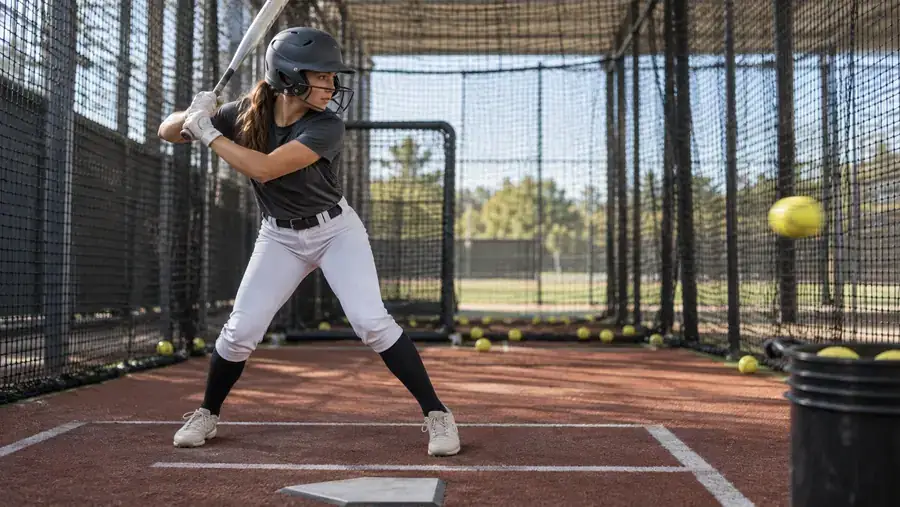
That means there is no time to “see it and then start.” A softball hitter who waits for the ball to come out of the hand before she loads is already late. The swing has to begin from a loaded, ready position, not from a standstill.
In fastpitch, late starts look like slow bats.
Parents see a hitter fouling everything back or swinging under the ball and assume she needs more bat speed. Often she has plenty. She just started too late to use it.
2. How do you time a fastpitch pitcher’s windmill?
Pick ONE visual cue on the pitcher and attach your load to it. Every pitcher has a slightly different rhythm, so the cue has to be something every pitcher does. Here are the ones I teach, from earliest to latest:
- Hands separate.When the ball leaves the glove to start the circle, she starts her load: weight gathers into the back side and the hands set.
- Arm at the top of the circle.By the time the pitching arm is straight up, she should be well into her load and starting her stride.
- Stride foot lands before release.Her front foot should be down, balanced, before the pitcher’s arm comes through the bottom of the circle.
- Ready at release.Eyes locked on the release window at the hip, loaded and ready, so all that’s left is see it, decide, attack it.
Most young hitters do best with “hands separate” as the start cue. Against a slower pitcher, she can start a touch later, like as the arm reaches the top. Against a hard thrower, start even earlier and slower. Early and slow beats late and rushed.
Where she stands and how she sets up affects this too. If her stance is busy or tight, the load gets rushed. See Softball Batting Stance for the setup that makes an early, easy load possible.
WINDMILL TIMING
EARLY AND SLOW.NOT LATE AND FAST.
- Hands separate: start load
- Arm at top: stride begins
- Foot down before release
- Ready at the hip release
START BEFORE THE BALL
3. How does a hitter stay on time for the fastball?
Gear to the fastball. Every hitter has to be on time for the hardest pitch she will see that day. It is much easier to slow down and wait on a slower pitch than to speed up and catch a fast one.
- Watch the warm-up pitches. From the on-deck circle, time her loads to the pitcher’s live warm-ups. Say “separate, load, land” out loud.
- Land early. If she is late on the first fastball, start the load earlier next pitch, not faster.
- Keep the move short. A big leg kick or a long stride is hard to time at 43 feet. Smaller and earlier wins.
- Trust the ready position. Once she is loaded and landed, the swing should be one decision away.
Adjust inside the at-bat too. If she fouls a fastball straight back, she was close; keep the same start. If she fouls it hard to the opposite side, start a hair earlier. If she pulls it foul early, she can start a hair later. Small changes, one at a time, based on what the ball tells her.
Every pitcher has her own rhythm, too. Some pause at the top, some rush the circle, some take a long stride. The cue stays the same; she just watches the pitcher more closely in warm-ups and adjusts by the first pitch, not the third at-bat.
I wrote about that ready position in Launch Position Timing: Let the Arrow Go. The idea holds in fastpitch: get to the launch spot early, then let it go. For pitchers in the 60s and up, the plan in How to Hit Fast Pitching in Softball goes deeper.
4. How do you adjust your timing to a changeup?
Here’s the mistake: a hitter gets fooled by one change and starts her load late to “wait for it.” Now the next fastball eats her up. The pitcher wins both pitches.
The fix is to keep the same early start every pitch and adjust AFTER she recognizes the pitch. On a changeup, the front side stays closed a beat longer, the hands stay back, and the weight stays loaded until the ball gets there. Same start, later finish.
That only works if she recognizes the change early. Arm speed often looks the same, so she has to read the ball’s speed and spin out of the hand. My full plan is in How to Hit a Changeup in Softball, and pitches that move sideways are covered in How to Hit a Curveball in Softball.
5. What drills improve softball hitting timing?
Don’t collect drills. These four train the start, the rhythm and the adjustment. Ten to fifteen minutes a day is plenty.
- Shadow loads to pitcher video.Play game film or online video of windmill pitchers and do 15 dry loads, saying “separate, load, land” on each one.
- Live-arm front toss with a fake circle.From behind an L-screen, the feeder does a short arm circle before each toss so the hitter has to start off a motion, not a hand.
- Fast-slow mix.The feeder mixes firm tosses with slower ones; the hitter keeps the same start and adjusts only after reading the ball.
- Bullpen tracking.Stand in, helmet on, during a teammate’s bullpen and time loads to live pitches without swinging; call each pitch.
Timing is part of what we call the Hitting Processor: see it, time it, decide, attack it. It is trained DAILY, just like the swing. Our Hitting Processor course builds it in short daily lessons, and Perceptual Training for Softball Hitters adds no-swing eye work.
Good timing also lets a good swing show up. AHD hitters build Mechanically Advantaged Angles (MAA), and those angles only pay off when the hitter is on time. Run the free SwingChecker to see whether timing or mechanics is her top priority, and see our Online Softball Hitting Lessons for fastpitch-specific coaching.
THELESSON.
- Gear to the fastball
- Same start every pitch
- Adjust after you read it
- Train rhythm daily
Complete Hitters Are Built…Earned.
Want to go deeper? Read How to Hit a Changeup in Fastpitch Softball and Train the Eyes Without Swinging.
Quick answers
When should you start your load in softball?
Most hitters should start the load when the pitcher’s hands separate at the start of the windmill. Against harder throwers start earlier and slower; the goal is to be loaded and landed before the ball is released.
Why am I always late on fastpitch pitches?
Usually the load starts too late or the stride is too big, not that the bat is too slow. Start earlier off a cue like the hands separating, shorten the move, and get the front foot down before release.
Should a softball hitter use a leg kick?
A big leg kick is hard to time from 43 feet. Most fastpitch hitters do better with a small toe tap or short stride that starts early and lands on time.
How do you not get fooled by a changeup in softball?
Gear your timing to the fastball, keep the same start every pitch, and adjust after you read the ball’s speed and spin. Starting late to wait on the change just makes you late on the fastball.
Sources: OHSAA: 2010 NFHS softball rule changes (pitching distance to 43 feet)
Don’t collect drills. Build a complete hitter.
Complete Hitters Are Built… It’s Earned!
This article is part of the AHD guide Pitch Recognition & Timing. Start there for the full picture and every related article.