By BK, Athletic Hitting Development
Complete Hitters Are Built… Not Given. Earned!
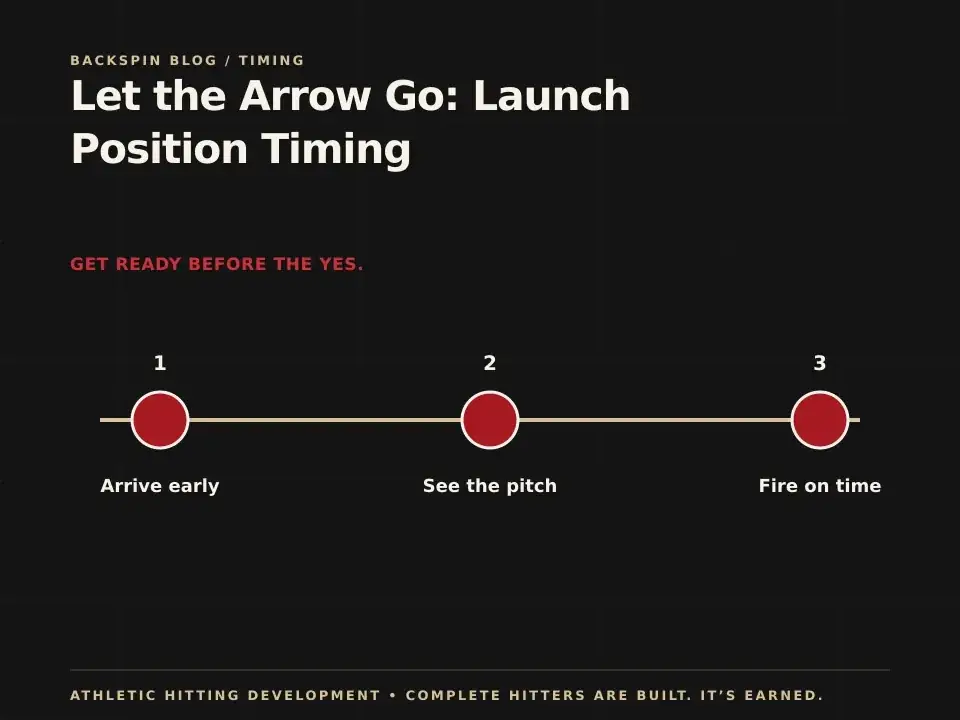
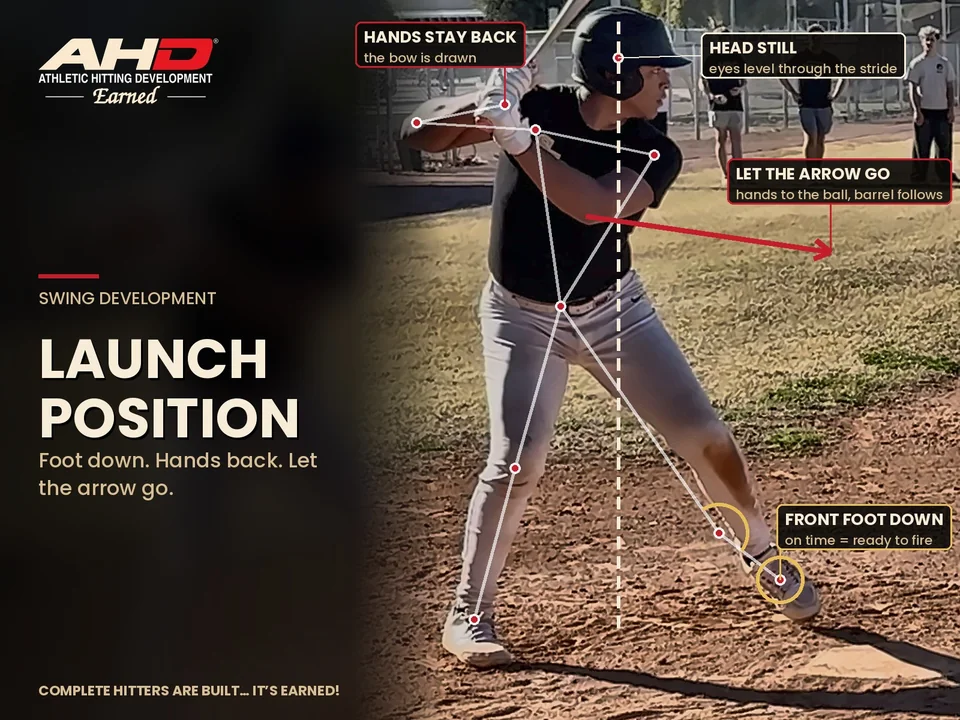
Picture an archer at full draw. The arrow is set, the bow is loaded, the eyes are locked on the target. When the decision is made, there’s only one thing left to do: let the arrow go.
Good launch timing means being in an efficient launch position so the swing fires the moment the eyes tell the brain “yes.” Most hitters add one more small move, like a hand load, hitch or re-set, so any extra move must be finished before the decision, and loading earlier is the most common fix.
Train it: Swing Structure & Mechanics Masterclass →That’s what the launch position should be for a hitter. And I believe the lack of it is one of the biggest issues in competitive baseball and softball.
1. The question every swing has to answer
Is the hitter in the most efficient launch position, so that when the eyes tell the brain “yes,” the most efficient and timely launch of the bat happens?
That’s it. That’s the whole timing mechanism. And when it works the way it should, the swing feels effortless and on time. When it doesn’t, even a good swing shows up late.
2. The hidden delay
Plainly said: most hitters have a delay, physical or mental, between the decision and the swing. That delay is why they’re not as efficient as they could be when the decision is made.
Some hitters can drop the front side and immediately launch. But the great majority make one more small move before they actually let the arrow go. An extra hand load. A little hitch. A re-set of the barrel. A tiny pause to gather.
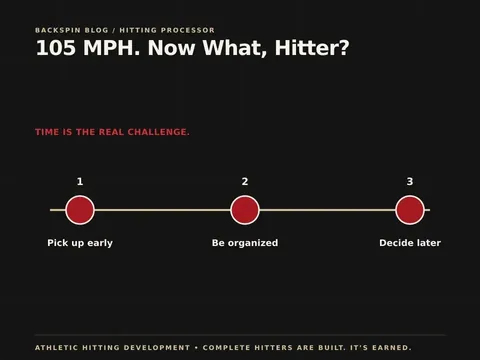
It may only be a fraction of a second. But remember, against a 95 or 105 mph fastball, a fraction of a second is the whole at-bat.
The swing should start the moment the brain says yes. Not one move later.
3. Two ways to launch
Here’s the interesting thing: there are positives and negatives to both techniques.
1. The direct launch
What it is: the front side drops and the swing fires straight from that position. No extra move.
Positives: fastest possible launch, the least wasted time, great against velocity.
Negatives: less built-in rhythm, and the hitter must be on time early. If the timing is off, there’s less room to adjust.
2. The extra-move launch
What it is: one more small gather or load before the barrel goes.
Positives: rhythm and feel, a little more stored energy, and some hitters adjust better to off-speed with it.
Negatives: it costs time, and it’s a timing problem if the move is still happening when the decision is made. That’s when hitters get beat by velocity and look fooled by everything else.
So the goal isn’t one “right” style. The goal is this: whatever extra move a hitter has must be finished before the eyes say yes. When the decision comes, the bow should already be drawn.
TWO WAYS TO LAUNCH
FINISH ITEARLY.
- Direct launch: fastest.
- Extra move: rhythm, costs time.
- Either can work.
- Done before the eyes say yes.
WHEN THE DECISION COMES, THE BOW IS DRAWN.
4. What it looks like at the highest level
I think this is a big part of why talented hitters can look like two different players. Austin Riley of the Braves is an example I watch closely. When he’s right, he’s as dangerous as anyone. When he’s not, he can be streaky. In my opinion, a lot of that comes down to how consistently his launch timing lines up with his decision.
Brandon Wood is the classic case. He crushed minor league pitching and was one of the top prospects in baseball, but he never figured out big league pitching. My belief: in the minors, his launch timing was good enough. Against big league velocity and movement, any delay between “yes” and “go” got exposed.
That’s the point. The higher you go, the less time you get, and the less delay you can afford.
5. Is this part of “the zone”?
Hitters talk about being “in the zone,” when the ball looks bigger and everything feels on time. I think a big part of that feeling is exactly this: the whole timing mechanism working as efficiently as it can. The load is done, the launch position is ready, the eyes say yes, and the arrow goes. No extra move. No hesitation.
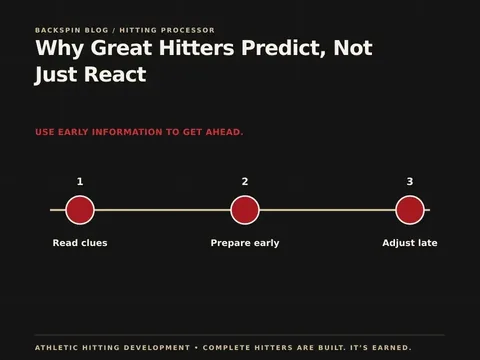
It also connects to the hitting processor. A hitter who reads the pitch early gets the “yes” earlier, and an early yes gives a clean launch the time it needs.

THE HIDDEN DELAY
NO EXTRAMOVE.
- The load is done.
- The launch is ready.
- The eyes say yes.
- The arrow goes.
START THE MOMENT THE BRAIN SAYS YES.
6. How to check your hitter
The slow-motion test
1. Film from the side, in slow motion, in live at-bats or firm BP.
2. Find the moment the front foot gets down. That’s roughly launch position.
3. Watch the hands and barrel from there. Do they go straight to the ball? Or do they make one more move first: a drop, a hitch, an extra load?
4. Compare good at-bats to bad ones. Many hitters only show the extra move when they’re unsure, under pressure or facing velocity.
7. How to train a cleaner launch
The launch plan
1. Launch-position holds. Stride, get to launch position, and hold. The coach says “go” at random. Fire immediately, with no extra move.
2. Go/no-go front toss. Two colors of balls. Swing at one, take the other. The swing has to start the instant the decision is made.
3. Mixed speeds. Front toss or machine with changing speeds, so the hitter learns to be ready early and stay ready.
4. Load earlier. Start the load sooner so it’s finished before the pitch is read. A late load is the most common cause of the extra move.
5. Mental reps. Visualize the pitch and the launch together, like the Galvan Method. See it, say yes, let it go.
For the positions themselves, see my early posts on The Launch Position and The Timing Stride. The ideas still hold.

THELESSON.
- Load earlier.
- Get to launch on time.
- Eyes say yes.
- Let the arrow go.
- No extra move.
- Film it from the side.
Complete Hitters Are Built…Earned.
8. Build the complete hitter
Don’t collect drills. Build a complete hitter.
Launch timing lives where the swing and the hitting processor meet, which is why AHD trains them together. Run the free SwingChecker™ to find out what your hitter is doing well and what needs work. The AHD Complete Hitter Masterclass trains all four pillars, starting with Lesson 1 free, or send me video through online remote baseball and softball training.
Quick answers
What is the launch position in hitting?
The launch position is where the hitter has finished the load and stride and is ready to swing. From there, the only move left should be the swing itself, the moment the eyes and brain say yes.
Why are some hitters always late even with good bat speed?
Often there is a delay between the decision and the swing. The hitter makes one more small move, like an extra hand load, a hitch or a re-set, after the brain says yes. That move costs time, and against good pitching it costs the at-bat.
Is it better to launch directly from foot strike or to have a small extra move?
Both can work. A direct launch is the fastest and best against velocity but leaves less time to adjust. A small extra move can add rhythm and adjustability, but it must be finished before the decision is made. The problem is any move that still has to happen after the brain says yes.
How do you train launch position timing?
Use go/no-go drills, launch-position holds, mixed-speed front toss and machine work, and slow-motion video from the side to see whether the barrel goes straight to the ball or the hands make one more move first.
How do I check my hitter for a hitch or extra move?
Film from the side in slow motion and find the moment the front foot gets down. Watch the hands and barrel from there: if they make one more move before going to the ball, that’s the delay. Compare good at-bats to bad ones.
From the 2015 archive: Swing Tempo: Find Your Number for Hard Contact and Launch Position in Hitting: The Power-Load Position.
This article is part of the AHD guide Baseball Swing Mechanics. Start there for the full picture and every related article.