By BK, Athletic Hitting Development
Complete Hitters Are Built… Not Given. Earned!
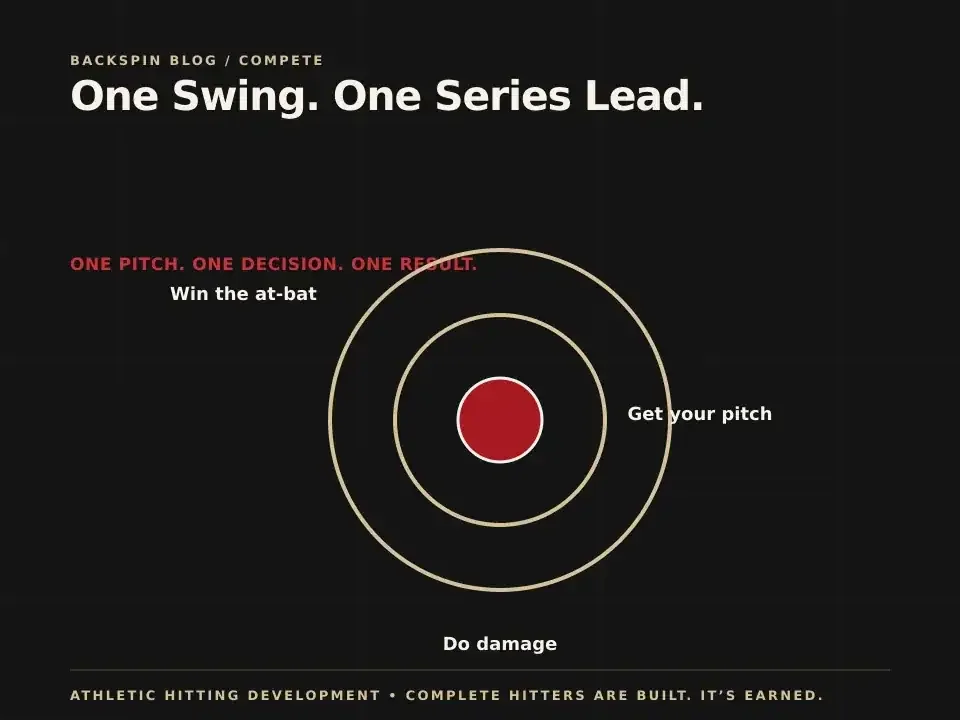
The White Sox opened the ALDS in Cleveland with a 3–0 win, and one swing decided it.
Munetaka Murakami’s 440-foot homer shows that big moments are won before the pitch: know your pitch, commit to it, trust your swing and reset. It takes all four pillars working together, not just power.
Train it: Complete Hitter Masterclass →In the fourth inning, Munetaka Murakami hit a two-run homer that went about 440 feet. He also singled, which made him the only player on either team with two hits. It wasn’t one lucky swing. He was on time all day.
Both teams got chances. One hitter was ready when his pitch came.

ALDS GAME 1, IN CLEVELAND
ONESWING.
- Two-run homer. About 440 feet.
- Only player with two hits.
- On time all day.
ONE HITTER WAS READY WHEN HIS PITCH CAME.
1. The other side of the game
Cleveland loaded the bases twice, in the third and the fourth, and scored nothing. Bryan Hudson got a flyout to end the third. Anthony Kay got the last out in the fourth. After that, Grant Taylor struck out six over four innings and finished it with a four-out save.
That’s the lesson. The Guardians had the bigger chances. The White Sox had the hitter who was ready.
2. Big moments are won before the pitch
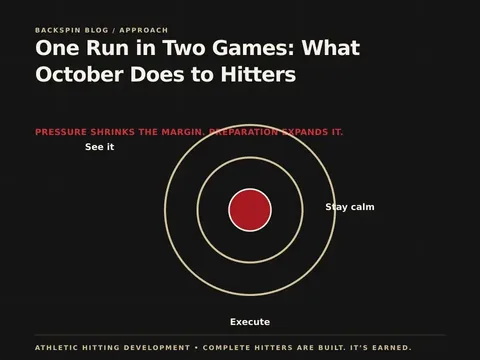
When the bases are loaded, most hitters change. They squeeze the bat, chase the first thing they see, and try to do too much. That’s a mental approach and hitting processor problem, not a swing problem. It’s the same thing that happens when hitters face elite velocity.
The big-moment plan
1. Know your pitch. Decide the pitch and the zone you are hunting before you step in.
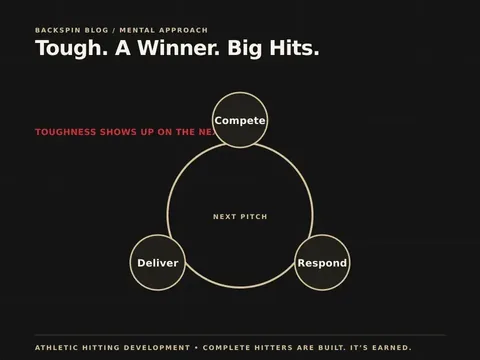
2. Commit to it. Lay off what isn’t yours. One good pitch is all you need.
3. Trust the swing. Use the swing you built in practice. The damage comes from a good swing, not a bigger one.
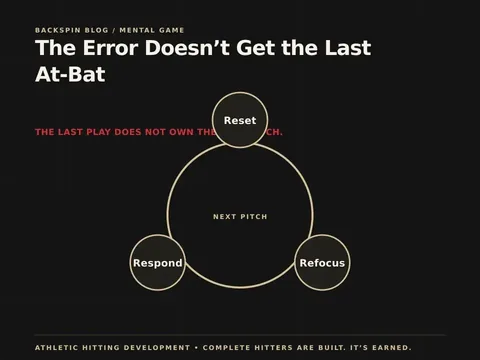
4. Reset. Breathe, step out if you need to, and get back to your plan.
THE BIG-MOMENT PLAN
WON BEFORETHE PITCH.
- Know your pitch.
- Commit to it.
- Trust the swing.
- Reset.
THE DAMAGE COMES FROM A GOOD SWING.
3. Why it takes all four pillars
A 440-foot homer looks like pure power. It really comes from four things working together.
1. The swing
A sound, repeatable move that holds up when the game speeds up.
2. Athletic development
The strength and speed to drive the ball when you get it.
3. The hitting processor
Seeing the pitch early and choosing well. See It → Recognize It → Time It → Decide → Attack It.
4. The mental approach
Staying calm when the game is on the line, so the first three can work.
Train only one or two of these and you get a hitter who looks great in the cage but disappears with the bases loaded. Train all four and you get the hitter who takes over a playoff game.
4. For players and parents
- Players: before every at-bat with runners on, say your plan in one sentence. “Fastball, middle-in, I’m swinging.”
- Parents: after a big at-bat, ask, “What was your plan?” before you ask what happened.
- Coaches: put pressure into practice. Bases loaded, two outs, one pitch to win the round.

THELESSON.
- Know your pitch and zone.
- Lay off what isn't yours.
- Say your plan out loud.
- Put pressure into practice.
- Train all four pillars.
Complete Hitters Are Built…Earned.
5. Build the complete hitter
Don’t collect drills. Build a complete hitter.
Start with SwingChecker™ to find your #1 priority for free. The AHD Complete Hitter Masterclass trains all four pillars together, starting with Lesson 1 free. Want a plan built for your hitter? See online remote baseball and softball training with BK.
Source note: Game details come from Bleacher Report’s Game 1 recap. This article is AHD’s coaching interpretation.
Quick answers
How do hitters stay calm with the bases loaded?
Have a plan before you step in. Know the pitch and zone you are hunting, commit to it, and trust the swing you built in practice. Pressure doesn't change the process. Squeezing the bat, chasing the first pitch and trying to do too much is what loses those at-bats.
Why do some hitters fail in big moments?
Usually it isn't the swing. It's the mental approach and the hitting processor. The moment speeds them up, they stop seeing the ball early, and they swing at the pitcher's pitch instead of their own.
How do you train a hitter for pressure situations?
Train all four pillars together: the swing, athletic development, the hitting processor and the mental approach. Put situations into practice, like bases loaded with two outs, and make the hitter name his plan out loud before every rep.
What should a hitter think about with runners on base?
Say your plan in one sentence before the at-bat, like “Fastball, middle-in, I’m swinging.” Lay off what isn’t yours and trust the swing you built. The damage comes from a good swing, not a bigger one.